Methylcobalamin vs Cyanocobalamin
Methylcobalamin and Cyanocobalamin compared on absorption, gut tolerance, and real cost per dose — the cheapest of each pulled live from the Amazon US catalog.
Updated October 2026
Side by side
| Attribute | Methylcobalamin | Cyanocobalamin |
|---|---|---|
| Form | Active coenzyme | Provitamin (converted) |
| Shelf stability | Good | Very stable |
| Cyanide trace | None | Yes (minute) |
| Cost | Premium | Lowest |
| Active deals tracked | 81 | 12 |
| Cheapest cost per dose | $0.04 (per 1000 mcg) | $0.02 (per 800 mcg) |
Methylcobalamin is an active coenzyme form the body uses directly; cyanocobalamin is converted to active B12 in the body (releasing a tiny, harmless amount of cyanide) and is more shelf-stable and cheaper.
Which to avoid / caveats
- Compare cost per elemental / active content, not the compound milligrams printed on the label — a bigger number on the front can hide less of what you actually absorb.
- The cheapest sticker price isn’t always the best value: our “cheapest per dose” figures normalise price across bottle sizes, so a larger count only wins if it truly costs less per serving.
Methylcobalamin
Best for: Those wanting the active form, avoiding cyanide traces, or with conversion concerns.
Best Methylcobalamin by cost per doseCyanocobalamin
Best for: Lowest cost, maximum shelf stability, and the most study-backed form.
Best Cyanocobalamin by cost per doseCheapest Methylcobalamin
NEW
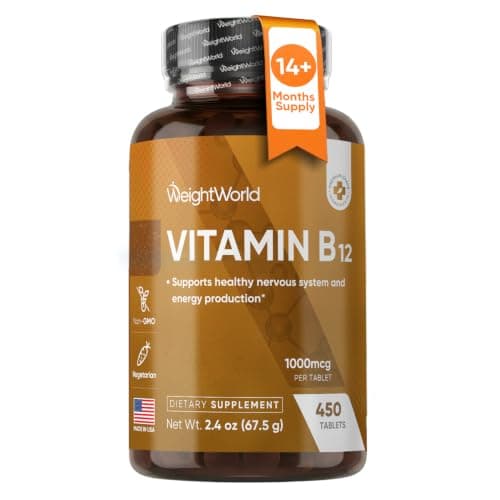
💉 Methylcobalamin
WeightWorld Vitamin B12 1000 mcg Supports Healthy Nervous…
Cost per serving
$0.04
Cheap·−90%450 servings · ~450-day supply
$16.99Price from Amazon.com
WeightWorld · Amazon.com 0
See the offer Cheapest Cyanocobalamin
NEW

💉 Cyanocobalamin
NOW Supplements, Folic Acid 800 mcg + B-12 (Cyanocobalamin)…
Cost per serving
$0.02
Cheap·−87%250 servings · ~250-day supply
$6.11Price from Amazon.com
NOW · Amazon.com 0
See the offer Frequently asked
Is methylcobalamin better than cyanocobalamin?+
For most people both correct a B12 deficiency equally well. Methylcobalamin is the active form and avoids the trace cyanide in cyanocobalamin, which is why it is often preferred; cyanocobalamin is cheaper and more stable. Choose methyl for the body-ready form, cyano for the cheapest proven option.
Is the cyanide in cyanocobalamin dangerous?+
No. The amount is minute and the body clears it easily, and cyanocobalamin has a long safety record. Some people still prefer methylcobalamin simply to avoid it entirely.
Is Methylcobalamin or Cyanocobalamin cheaper per dose?+
The cheapest Methylcobalamin we track is $0.04 per serving; the cheapest Cyanocobalamin is $0.02 per serving — so Cyanocobalamin costs less per dose right now (October 2026).
What form of B12 is best absorbed?+
For most people, cyanocobalamin and methylcobalamin are both absorbed well from supplements, and the dose you actually take matters more than the form. Some small studies suggest methylcobalamin may be retained a little longer in the body (cyanocobalamin tends to be cleared in urine more readily), but both reliably raise B12 levels. Cyanocobalamin is usually cheaper per dose, so it is often the better value for simply correcting a low B12 level. Anyone with a known absorption problem (such as pernicious anemia or after gastric surgery) should ask a clinician about higher doses or injections.
Which B12 is best for MTHFR?+
Some people with MTHFR gene variants prefer methylcobalamin, the already-methylated form, on the idea that their bodies handle synthetic B12 less efficiently. It is worth being clear that there is little solid evidence methylcobalamin is actually better for people with these variants, and many do perfectly well on cyanocobalamin (MTHFR mainly affects how the body processes folate, not B12). If you still want the methylated form, know that it usually costs more per dose, so comparing prices helps. Because this involves a genetic result, it is reasonable to discuss it with a clinician before building a routine around it.
What is the disadvantage of methylcobalamin?+
The main practical downsides of methylcobalamin are that it is less stable than cyanocobalamin (more sensitive to light) and usually costs more per dose, so you are often paying a premium for the active form. Side effects are uncommon with either form but can include mild nausea, headache, or diarrhea. If your goal is simply raising a low B12 level, the cheaper cyanocobalamin often works just as well. Methylcobalamin's possible edge is mostly discussed for neurological support, where the evidence is still limited.
Why avoid cyanocobalamin?+
Most people have no reason to avoid cyanocobalamin. It is widely used, very stable, and the trace cyanide it contains is far too small to be harmful for healthy people. The usual reasons someone picks methylcobalamin instead are a preference for the ready-to-use form, possibly better retention, or specific situations such as impaired kidney function or certain rare conditions, where a clinician may suggest a different form. For routine supplementing on a budget, cyanocobalamin remains a cheap, effective option. Ask a healthcare provider if a specific medical situation applies to you.
How much Vitamin B12 do you need per day?+
The RDA for adults 19+ is 2.4 mcg daily; 2.6 mcg in pregnancy and 2.8 mcg during lactation. Adolescents 14-18 also need 2.4 mcg. Younger children need 0.9-1.8 mcg. Infants have an Adequate Intake of 0.4 mcg (0-6 months) and 0.5 mcg (7-12 months). — per the NIH Office of Dietary Supplements; general information, not medical advice.
Can you take too much Vitamin B12?+
The Food and Nutrition Board did not establish a Tolerable Upper Intake Level (UL) for vitamin B12 because of its low potential for toxicity. Even at large doses, vitamin B12 is generally considered safe because the body does not store excess amounts. — per the NIH Office of Dietary Supplements; general information, not medical advice.
Dosage & safety answers sourced from the NIH Office of Dietary Supplements. General information, not medical advice.
What the research says
Groups most likely to be deficient include older adults (especially those with atrophic gastritis), people with pernicious anemia, people with gastrointestinal disorders such as celiac or Crohn's disease, those who have had gastrointestinal surgery, people who follow vegetarian or vegan diets, and the breastfed infants of women who follow vegan diets. Effects can include megaloblastic anemia, fatigue, glossitis of the tongue, palpitations, low blood cell counts, and neurological changes such as numbness and tingling in the hands and feet, with early intervention important to avoid irreversible damage. Because the body stores about 1 to 5 mg of vitamin B12, symptoms can take several years to appear — per the NIH Office of Dietary Supplements.
Vitamin B12 is present naturally in foods of animal origin, including fish, meat, poultry, eggs, and dairy products. The richest sources listed are beef liver and clams; oysters and fortified nutritional yeasts are also very high. Plant foods do not naturally contain vitamin B12, but fortified breakfast cereals and fortified nutritional yeasts are readily available sources with high bioavailability — per the NIH Office of Dietary Supplements.
Related
Best Methylcobalamin by cost per doseBest Cyanocobalamin by cost per doseMethylcobalamin dosage & factsCyanocobalamin dosage & factsSupplement price-spread study
People also compare
References & sources
- Health Professional fact sheet — NIH Office of Dietary Supplements
- USP Verified product participants — U.S. Pharmacopeia
- NSF certified products — NSF
We link primary sources and paraphrase their findings — never copy their text, tables, or images. Cost-per-dose figures are our own first-party catalog data.