Zinc Picolinate vs Zinc Gluconate
Zinc Picolinate and Zinc Gluconate compared on absorption, gut tolerance, and real cost per dose — the cheapest of each pulled live from the Amazon US catalog.
Updated October 2026
Side by side
| Attribute | Picolinate | Gluconate |
|---|---|---|
| Absorption | Good | Good (slightly less by some data) |
| Typical use | Daily capsule | Lozenges / budget daily |
| Best for | Well-absorbed daily dose | Value & lozenges |
| Active deals tracked | 34 | 11 |
| Cheapest cost per dose | $0.06 (per 50 mg) | $0.03 (per 30 mg) |
Picolinate (zinc bound to picolinic acid) is frequently reported to absorb somewhat better than gluconate, though direct head-to-head data are limited; gluconate is well absorbed enough for everyday use and dominates lozenges.
Which to avoid / caveats
- Compare cost per elemental / active content, not the compound milligrams printed on the label — a bigger number on the front can hide less of what you actually absorb.
- The cheapest sticker price isn’t always the best value: our “cheapest per dose” figures normalise price across bottle sizes, so a larger count only wins if it truly costs less per serving.
Elemental zinc: Zinc Picolinate vs Zinc Gluconate
By weight, Zinc Picolinate is about 20% elemental zinc (~200 mg per 1,000 mg), while Zinc Gluconate is about 14% (~140 mg per 1,000 mg). A higher elemental percentage isn’t automatically the better buy — a well-absorbed low-percentage form can beat a poorly-absorbed high-percentage one, so weigh this against absorption above and compare the “zinc” line in the Supplement Facts panel, not the number on the front of the bottle.
It’s also why the per-serving costs above aren’t strictly comparable per milligram of elemental zinc: some labels state the elemental amount while others list the heavier salt weight (so a bigger “mg” number can actually be less zinc). For a true per-elemental-mg comparison, divide the price by the elemental milligrams shown on the Supplement Facts panel.
Zinc PicolinateWell absorbed
Best for: A well-absorbed daily zinc capsule.
Best Zinc Picolinate by cost per doseZinc GluconateWell absorbed
Best for: Lowest cost, lozenges, and general supplementation.
Best Zinc Gluconate by cost per doseCheapest Zinc Picolinate
NEW
🛡️ Zinc
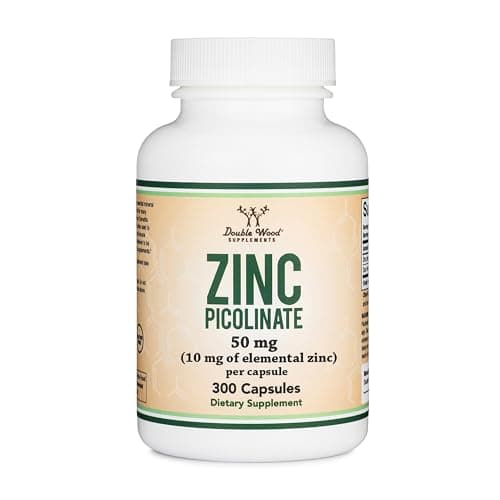
Zinc Picolinate 50mg, 10mg Elemental Zinc, Immune + Skin…
Cost per serving
$0.06
300 servings · ~300-day supply
Well absorbed
$17.95Price from Amazon.com
Double Wood Supplements · Amazon.com 0
See the offer Cheapest Zinc Gluconate
NEW
🛡️ Zinc
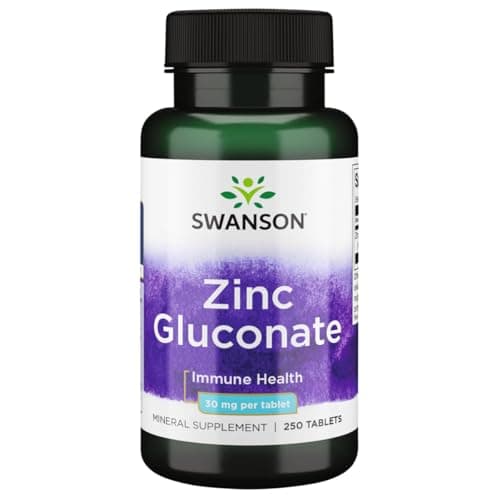
Swanson Zinc Gluconate
Cost per serving
$0.03
250 servings · ~250-day supply
Well absorbed
$8.32last seen · confirm on Amazon.com
Swanson · Amazon.com 0
See the offer Frequently asked
Is zinc picolinate better than zinc gluconate?+
Picolinate is often cited as slightly better absorbed, but the difference is modest and the evidence limited. Gluconate is well studied and cheaper. For most people either is fine — pick picolinate for a well-absorbed daily capsule, gluconate for value and lozenges.
Should I take zinc with food?+
Zinc can cause nausea on an empty stomach, so taking it with food improves tolerance. Keep it away from high-dose iron and calcium, which compete with zinc for absorption.
Is Zinc Picolinate or Zinc Gluconate cheaper per dose?+
The cheapest Zinc Picolinate we track is $0.06 per serving; the cheapest Zinc Gluconate is $0.03 per serving — so Zinc Gluconate costs less per dose right now (October 2026).
Is Zinc Picolinate or Zinc Gluconate higher in elemental zinc?+
By weight, Zinc Picolinate is about 20% elemental zinc (~200 mg per 1,000 mg) and Zinc Gluconate is about 14% (~140 mg per 1,000 mg). A higher elemental percentage isn't automatically better value — absorption differs by form, so weigh the "zinc" line in the Supplement Facts panel against price and absorption, not the front-label number.
How much Zinc do you need per day?+
The RDA for adults 19+ is 11 mg for men and 8 mg for women. Pregnancy is 11 mg and lactation 12 mg (ages 19+). For ages 14-18, it is 11 mg (male) and 9 mg (female), with 12 mg in pregnancy and 13 mg in lactation. Children: 2-8 mg by age; birth-6 months has an AI of 2 mg. — per the NIH Office of Dietary Supplements; general information, not medical advice.
Can you take too much Zinc?+
Yes. The Tolerable Upper Intake Level is 40 mg for adults (34 mg for ages 14-18; 4-23 mg for younger ages). High intakes cause nausea, dizziness, headaches, gastric distress, vomiting, and loss of appetite. Doses of 50 mg or more over weeks can inhibit copper absorption, reduce immune function, and lower HDL cholesterol. — per the NIH Office of Dietary Supplements; general information, not medical advice.
Dosage & safety answers sourced from the NIH Office of Dietary Supplements. General information, not medical advice.
What the research says
High zinc intakes can cause nausea, dizziness, headaches, gastric distress, vomiting, and loss of appetite, and if used for weeks, doses of 50 mg zinc or more can interfere with copper absorption, reduce immune function, and lower HDL cholesterol levels. The amount of zinc obtained from food is rarely as high as 50 mg, so foods are unlikely to cause toxicity. The Tolerable Upper Intake Level for zinc is 40 mg for adults, ranging from 4 to 34 mg for infants, children, and adolescents depending on age — per the NIH Office of Dietary Supplements.
Groups more likely to have inadequate zinc include people with gastrointestinal disorders or who have had bariatric surgery, people who follow vegetarian or vegan diets, women who are pregnant or lactating, older infants who are exclusively breastfed, children with sickle cell disease, and people with alcohol use disorder. Manifestations vary by age: in infants and children, diarrhea is a common sign, while older children can develop alopecia, delayed growth, and frequent infections; deficiency can also impair growth and interfere with the senses of taste and smell. In older adults it can cause delays in wound healing and changes in cognitive and psychological function — per the NIH Office of Dietary Supplements.
Related
Best Zinc Picolinate by cost per doseBest Zinc Gluconate by cost per doseZinc Picolinate dosage & factsZinc Gluconate dosage & factsSupplement price-spread study
People also compare
References & sources
- Health Professional fact sheet — NIH Office of Dietary Supplements
- USP Verified product participants — U.S. Pharmacopeia
- NSF certified products — NSF
We link primary sources and paraphrase their findings — never copy their text, tables, or images. Cost-per-dose figures are our own first-party catalog data.