Calcium citrate vs carbonate: which one your body actually absorbs
Quick answer
Citrate absorbs without food or stomach acid, so it suits older adults and anyone on acid-reducers; carbonate is cheaper per milligram but needs a full meal to work. Take calcium in doses of 500 mg or less at a time, and compare by cost per elemental-calcium dose.
Alex Soto, Founder, VitaminDB
6 min readUpdated 6/11/2026 NIH-sourced
Calcium citrate
more forgiving
Calcium carbonate
cheapest per mg
Needs food & stomach acid
Elemental calcium
Cost per mg
Best for
Verdict: No single winner — carbonate is cheaper mg-for-mg if you take it with a full meal; citrate is more forgiving if you are older, on acid-reducers, or dislike timing it to food.
On this page
Calcium is the highest-volume mineral on most supplement shelves, and the two forms that dominate — carbonate and citrate — behave very differently in your gut. Picking the wrong one for your situation means you paid for milligrams that washed straight through.
The two forms that matter
Calcium carbonate
The cheapest calcium per milligram, and the most concentrated (40% elemental calcium by weight, so the pills are smaller for a given dose). The catch: it needs stomach acid and food to dissolve. Take it on an empty stomach, or while on a proton-pump inhibitor or H2 blocker, and absorption drops sharply. It is also the form most likely to cause gas and constipation.
Buy carbonate if: you take it with meals, you have normal stomach acid, and you want the lowest cost per dose. Most budget "calcium 600 mg + D3" bottles are carbonate.
Calcium citrate
Roughly half the elemental calcium by weight (21%), so the pills are bigger or you take more of them — and it costs more per milligram. In exchange, it absorbs with or without food and does not depend on stomach acid. It is the safer default for older adults, anyone on acid-reducing medication, and people prone to the GI side effects of carbonate.
Buy citrate if: you are over 60, take antacids or PPIs, have had calcium-related constipation, or simply want to dose it away from meals.
One detail decides more than the form does: the percentage of calcium absorbed from a supplement depends not only on the source but on the total amount of elemental calcium taken at one time, per the NIH — which is the argument for splitting a daily total rather than buying a bigger single tablet.
The cost-per-dose reality
On US Amazon, carbonate bottles routinely land around $0.04–0.06 per serving, while citrate sits closer to $0.10–0.30. That gap is real, but it only matters if you are actually absorbing the carbonate. A cheap bottle you take on an empty stomach is more expensive per absorbed milligram than a citrate bottle you take correctly.
The cofactors worth having on the label
Calcium does not act alone in bone. The combinations worth a small premium:
- Vitamin D3 — required for intestinal calcium absorption. Look for 600–1000 IU on the label.
- Vitamin K2 (MK-7) — helps route calcium into bone rather than soft tissue and arteries. The pairing showing up on better calcium products is calcium + D3 + K2.
- Magnesium — works alongside calcium in bone metabolism; many "bone complex" products bundle it.
A plain calcium-only bottle is fine if you get D3 elsewhere, but the combo products often cost no more.
Bottom line
Carbonate with meals if your digestion is normal and you want the cheapest cost per dose. Citrate if you are older, on acid reducers, or want to dose it anytime. Either way, check that vitamin D3 is on the label or in your routine — without it, you are absorbing a fraction of what you paid for.
Covered nutrients: Calcium, Vitamin D3
See the live cost-per-dose data
This guide is editorial — the prices below are real and current.
Frequently asked questions
Can I just take calcium carbonate with breakfast?
Yes — that is exactly the condition carbonate needs. It depends on stomach acid, so a meal (any meal with some fat and protein) raises absorption substantially. The problem is only on an empty stomach or for people on acid-reducing drugs.
Do I need vitamin D with calcium?
Vitamin D3 is what lets your gut absorb calcium at all. Most clinical bone-density trials dose them together. Many calcium products already bundle 600–1000 IU D3, so check the label before buying a separate bottle.
How much calcium per day from supplements?
Aim to fill the gap between your diet and roughly 1000–1200 mg/day total, not to hit 1200 mg from pills alone. More is not better — high supplemental calcium without enough K2 and magnesium has been linked in some studies to arterial calcification.
Where these numbers come from
Cost figures on this page are computed from 430 active Calcium / Vitamin D3 listings we track, last re-priced . Cost per dose is price ÷ (servings × dose), computed per listing — not a price we are quoted. Listings under $1 or with fewer than 3 servings are excluded, because both are usually a parse error rather than a bargain.
- Amazon.com · 428
- SuperSmart · 2
Prices move. Figures written into the text are re-checked against live data on a schedule; the ranking pages are always the current number.
Sources
Health claims on this page are drawn from these sources. Prices and cost-per-dose figures come from our own tracked listings, not from the sources below.
- 1.Calcium: Fact Sheet for Health Professionals — NIH Office of Dietary Supplements
- 2.Vitamin D: Fact Sheet for Health Professionals — NIH Office of Dietary Supplements
Deals on these nutrients
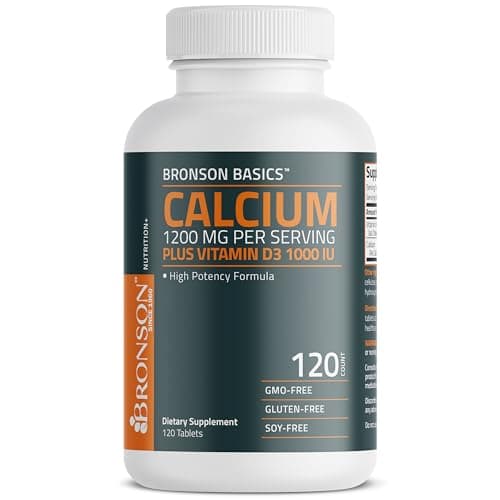
Bronson Calcium 1200mg Per Serving Plus Vitamin D3 1000 IU…
Cost per serving
$0.08
120 servings · ~120-day supply

Solgar Vitamin D3 (Cholecalciferol) 250 MCG (10,000 IU)
Cost per serving
$0.12
120 servings · ~120-day supply
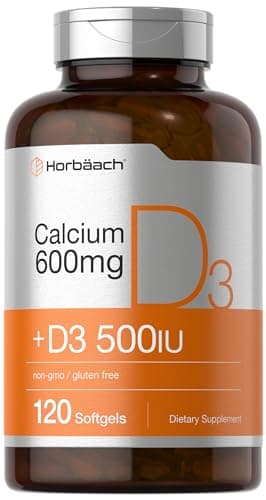
Horbäach Calcium Supplement with Vitamin D3 | 600 mg…
Cost per serving
$0.04
120 servings · ~120-day supply
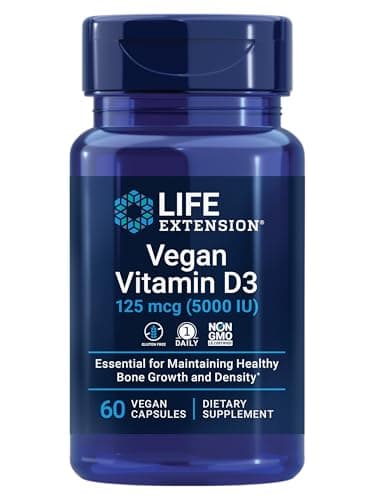
Life Extension Vegan Vitamin D3, 125 mcg (5000 IU)
Cost per serving
$0.28
60 servings · ~60-day supply
Related guides
Can you take too much? The supplement upper limits that actually matter
Water-soluble vitamins you flush out; fat-soluble vitamins and minerals accumulate and have real ceilings. The NIH upper limits worth knowing — vitamin A, D, iron, zinc, B6, selenium — and why megadoses backfire.
We Analyzed 3,397 Supplements: How Much You Overpay
We tracked 3,397 supplements across 194 nutrients. For the same nutrient at the same dose, cost per unit of active ingredient varies by a median of 7.3x — and up to about 34x. Here's why, and how to check any bottle in ten seconds.
The cheapest supplements to support GLP-1s, by cost per dose
Protein, fibre, electrolytes and a few key vitamins are the supplements most often paired with GLP-1 medications. Review sites list a price and a dose but never divide the two — so here's the same list ranked the only way that tells you what you're really paying: cost per dose.
Vitamin D on Ozempic and other GLP-1s: why it slips, and what a day of it costs
Vitamin D is the deficiency most often reported in people on GLP-1 medications — one 2026 review found about 14% were deficient at a year. It's also one of the cheapest supplements per dose. Here's the why, the sensible numbers, and the cost per 1,000 IU.