
🌿
Fenugreek
herbal · 17 active deals
How much does Fenugreek cost?
The best-value Fenugreek right now is about $0.05 per dose — across the 17 we can price per dose the median is $0.104/dose, so shopping on cost-per-dose can cut your cost several-fold. Every Fenugreek deal here is ranked by cost per dose — what you actually pay per serving, not the sticker price — because forms and absorption differ, so the cheapest bottle isn’t always the cheapest dose.
Prices checked · live from the Amazon US catalog.
Right now the best value across our full Fenugreek catalog is at $0.05 per serving.
Median $0.104/servingCheapest quartile under $0.066across 17 tracked Fenugreek deals
Goals:
What Fenugreek does
Fenugreek is a clover-like herb native to the Mediterranean region, southern Europe, and western Asia whose seeds have been used as a spice and in traditional medicine, including as a tonic or laxative and to stimulate milk production during breastfeeding. It has been studied for type 2 diabetes (research suggests it may help lower blood sugar, but many studies were not high quality), for menstrual cramps (only a small number of low-quality studies, with uncertain effects), and for breast milk supply (studies have had mixed results); overall there is not enough high-quality evidence to determine whether fenugreek is useful for diabetes or menstrual cramps — per the NIH National Center for Complementary and Integrative Health; not medical advice.
What the evidence shows for Fenugreek
Research suggests fenugreek may help lower blood sugar in type 2 diabetes, but many of the studies were not high quality; evidence for menstrual cramps is low-quality and uncertain, results for boosting breast-milk supply are mixed, and evidence for other conditions is too limited for conclusions — per the U.S. National Center for Complementary and Integrative Health (NCCIH).
Food sources of Fenugreek
Fenugreek seeds are used as a spice and as a flavoring agent in foods, beverages, and tobacco; amounts commonly found in foods are considered safe — per the NIH National Center for Complementary and Integrative Health.
Can you get too much Fenugreek?
Potential side effects of fenugreek include diarrhea, nausea, and other digestive tract symptoms, and large doses may cause a harmful drop in blood sugar; fenugreek can also cause allergic reactions, including serious ones, in some people. There is not enough information to say whether it is safe for children to take fenugreek in amounts larger than those found in foods — per the NIH National Center for Complementary and Integrative Health.
Fenugreek — interactions & cautions
Fenugreek is not safe for use during pregnancy in amounts greater than those found in food, as its use has been linked to increased risks of birth defects, and little is known about whether it is safe while breastfeeding in amounts greater than those found in food. If you take any type of medicine, talk with your health care provider before using fenugreek or other herbal products, since some herbs and medicines interact in harmful ways — per the NIH National Center for Complementary and Integrative Health.


Nootropics Depot Fenugreek Extract Capsules | 500mg | 180 ct…
Nootropics DepotAmazon.com
$0.37/serving
$66.990°
Nootropics Depot Fenugreek Extract Capsules | 500mg | 60 ct…
Nootropics DepotAmazon.com
$0.45/serving
$26.990°


Bronson Fenugreek Seed Extract 240 mg, 300 Vegetarian Capsules
BronsonAmazon.com
$0.05/serving
$14.970°


Pure Mountain Botanicals Fenugreek Capsules 600mg Organic…
Pure Mountain BotanicalsAmazon.com
$0.19/serving
$16.770°


VH Nutrition Fenugreek+ | 1400mg Extra Strength Fenugreek…
VH NutritionAmazon.com
$0.23/serving
$13.950°
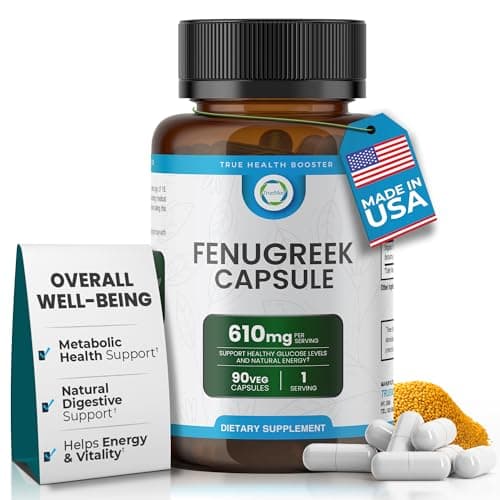

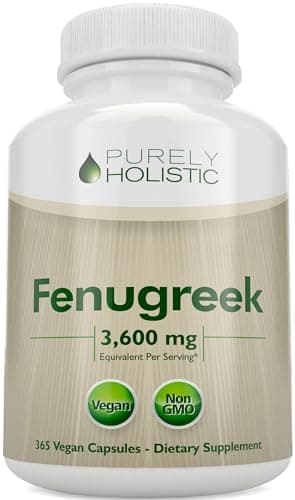
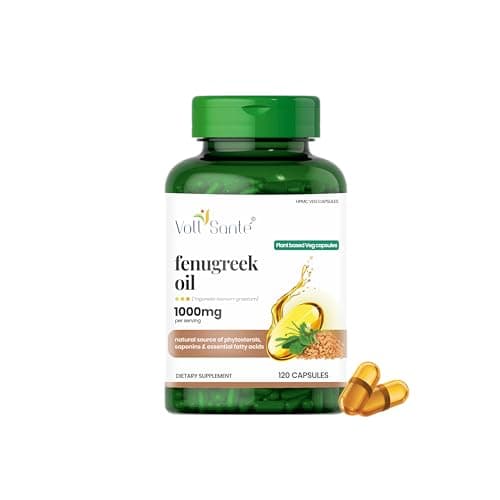

NOW Foods Supplements, Fenugreek (Trigonella foenum-graecum)…
NOW FoodsAmazon.com
$0.07/serving
$6.910°

Every Fenugreek deal above is ranked by real cost per dose with no paid placement — see our and .
Independent testing
Independent third-party testing is a voluntary check of a product's identity, potency and contaminants by an outside lab. It's a quality signal, not a value or efficacy claim. Confirm any brand's current status on the official registries:
Testing status is self-reported by the brand or drawn from public certification and may change — always verify on the official registry before purchase.
Fenugreek — dosage, safety & deals FAQ
- What is fenugreek used for?
Fenugreek has been studied for conditions such as diabetes, menstrual cramps, and supporting milk production during breastfeeding, but there is not enough high-quality evidence to determine whether it is useful for diabetes or menstrual cramps, and research on milk supply has shown mixed results. — per the NIH National Center for Complementary and Integrative Health; general information, not medical advice.
- How much fenugreek is typically taken?
As a non-essential nutrient, fenugreek has no recommended daily allowance, and this page does not specify typical supplement doses; it distinguishes between the smaller amounts commonly found in foods and the larger amounts used in supplements without giving specific measurements. — per the NIH National Center for Complementary and Integrative Health; general information, not medical advice.
- Is fenugreek safe, and what are the side effects?
Fenugreek may cause side effects such as diarrhea, nausea, and other digestive tract symptoms, and large doses may cause a harmful drop in blood sugar; allergic reactions, including serious ones, can also occur in some people. — per the NIH National Center for Complementary and Integrative Health; general information, not medical advice.
- Does fenugreek interact with any medications?
The page advises that if you take any type of medicine you should talk with your health care provider before using fenugreek or other herbal products, since some herbs and medicines can interact in harmful ways. — per the NIH National Center for Complementary and Integrative Health; general information, not medical advice.
Fenugreek guides
Related herbal supplements
References & sources
- Fenugreek — NIH National Center for Complementary and Integrative Health
- USP Verified product participants — U.S. Pharmacopeia
- NSF certified products — NSF
We link primary sources and paraphrase their findings — never copy their text, tables, or images. Cost-per-dose figures are our own first-party catalog data.