Creatine Monohydrate vs Creatine HCl
Creatine Monohydrate and Creatine HCl compared on absorption, gut tolerance, and real cost per dose — the cheapest of each pulled live from the Amazon US catalog.
Updated October 2026
Side by side
| Attribute | Monohydrate | HCl |
|---|---|---|
| Evidence | Extensive | Limited |
| Typical dose | 3–5 g | ~1.5–2 g |
| Cost per gram | Lowest | Higher |
| Solubility | Lower | Higher |
| Active deals tracked | 50 | 8 |
| Cheapest cost per dose | $0.11 (per 1 g) | $0.11 (per 750 mg) |
Both deliver creatine effectively. Monohydrate is essentially fully absorbed at the studied 3–5 g dose; HCl dissolves more easily and is taken at smaller doses, but higher solubility has not translated into better results in studies.
Which to avoid / caveats
- Creatine HCl is often the cheaper option, but it’s the lower-absorption form here — More water-soluble and marketed as gentler (less bloating) at smaller doses, but evidence that it outperforms monohydrate for results is weak.
- Compare cost per elemental / active content, not the compound milligrams printed on the label — a bigger number on the front can hide less of what you actually absorb.
- The cheapest sticker price isn’t always the best value: our “cheapest per dose” figures normalise price across bottle sizes, so a larger count only wins if it truly costs less per serving.
Creatine MonohydrateHigh absorption
Best for: Proven results and the best value per gram.
Best Creatine Monohydrate by cost per doseCreatine HClWell absorbed
Best for: Anyone who gets bloating or GI upset from monohydrate.
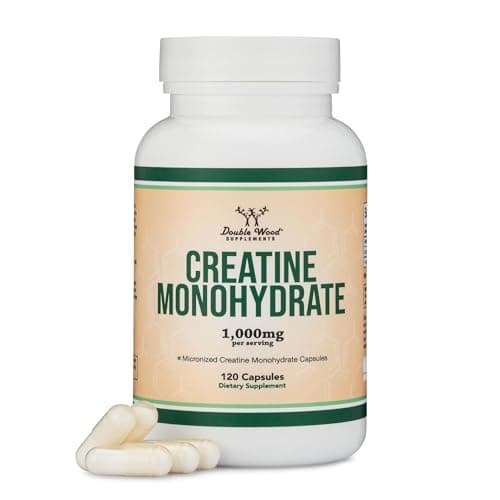
Best Creatine HCl by cost per doseCheapest Creatine Monohydrate
NEW
💪 Creatine
Creatine Monohydrate Capsules - 1g per Serving
Cost per serving
$0.11
120 servings · ~120-day supply
High absorption
$12.95Price from Amazon.com
Double Wood Supplements · Amazon.com 0
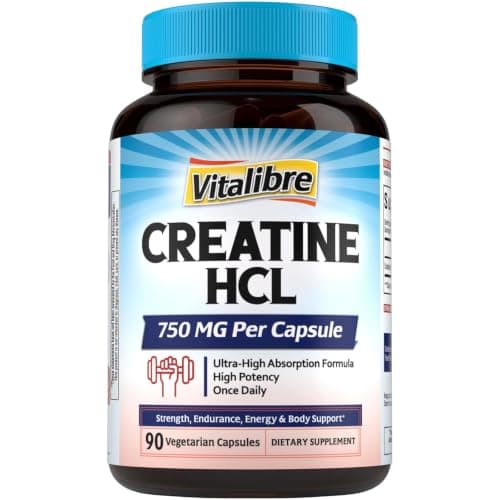
See the offer Cheapest Creatine HCl
NEW
💪 Creatine
Vitalibre Creatine HCl Capsule
Cost per serving
$0.11
90 servings · ~90-day supply
Well absorbed
$9.99Price from Amazon.com
Vitalibre · Amazon.com 0
See the offer Frequently asked
Is creatine HCl better than monohydrate?+
No good evidence shows HCl produces better results. Monohydrate is the most-studied form and the cheapest per gram. HCl’s advantages are higher solubility and smaller doses, which can help if monohydrate causes bloating — but for most people monohydrate is the better-value, equally effective choice.
How much creatine should I take per day?+
Monohydrate is typically 3–5 g/day; HCl labels use smaller servings (~1.5–2 g). Daily consistency matters more than the form or timing. General reference, not medical advice.
Is Creatine Monohydrate or Creatine HCl cheaper per dose?+
The cheapest Creatine Monohydrate we track is $0.11 per serving; the cheapest Creatine HCl is $0.11 per serving — so Creatine Monohydrate costs less per dose right now (October 2026).
What the research says
Few safety concerns have been reported at typical doses (e.g., a loading dose of 20 g/day for up to 7 days and 3–5 g/day for up to 12 weeks), per the NIH Office of Dietary Supplements. Reported adverse effects include weight gain due to water retention, plus anecdotal reports of nausea, diarrhea, muscle cramps, muscle stiffness, and heat intolerance. NIH NCCIH adds that there have been reports creatine may impair liver and kidney function and that it has been linked to an increased risk of compartment syndrome; it also states there are no data documenting the safety of creatine in children or adolescents, and that the American Academy of Pediatrics and the American College of Sports Medicine warn teens should not use performance-enhancing supplements, including creatine.
Creatine is produced endogenously (the body makes about 1 gram a day) and is obtained from the diet in small amounts from animal-based foods, such as beef and salmon (about 500 milligrams in a 4-ounce serving), per the NIH Office of Dietary Supplements. Dietary supplements provide much larger amounts than can be obtained from food.
Related
Best Creatine Monohydrate by cost per doseBest Creatine HCl by cost per doseCreatine Monohydrate dosage & factsCreatine HCl dosage & factsSupplement price-spread study
People also compare
References & sources
- Health Professional fact sheet — NIH Office of Dietary Supplements
- USP Verified product participants — U.S. Pharmacopeia
- NSF certified products — NSF
We link primary sources and paraphrase their findings — never copy their text, tables, or images. Cost-per-dose figures are our own first-party catalog data.