
🧂
Iodine
mineral · 17 active deals
How much does Iodine cost?
The best-value Iodine right now is about $0.04 per dose — across the 17 we can price per dose the median is $0.056/dose, so shopping on cost-per-dose can cut your cost several-fold. Every Iodine deal here is ranked by cost per dose — what you actually pay per serving, not the sticker price — because forms and absorption differ, so the cheapest bottle isn’t always the cheapest dose.
Prices checked · live from the Amazon US catalog.
Right now the best value across our full Iodine catalog is at $0.04 per serving.
Median $0.056/servingCheapest quartile under $0.050across 17 tracked Iodine deals
Recommended daily intake
Daily Value 150 mcgUpper limit 1,100 mcg
Both too little and too much affect the thyroid; stay near the DV unless advised. General FDA/NIH adult guidance — not medical advice.
What Iodine does
Iodine is a trace element that is an essential component of the thyroid hormones thyroxine (T4) and triiodothyronine (T3), which regulate many biochemical reactions including protein synthesis and enzymatic activity and are critical determinants of metabolic activity; the thyroid hormones are also required for proper skeletal and central nervous system development in fetuses and infants. The NIH notes iodine may have other physiological functions, as it appears to play a role in immune response and might have a beneficial effect on mammary dysplasia and fibrocystic breast disease. Iodine has been studied for fetal and infant development and childhood cognitive function, where mild to moderate iodine insufficiency during pregnancy may subtly affect fetal development, though the effects of iodine supplements during pregnancy on infant and child neurodevelopment are described as inconclusive. The fact sheet also discusses research into iodine's role in fibrocystic breast disease and radiation-induced thyroid cancer. — per the NIH Office of Dietary Supplements; not medical advice.
Forms & absorption
In dietary supplements, iodine is often present as potassium iodide or sodium iodide, and supplements containing kelp (a seaweed that contains iodine) are also available; many multivitamin/mineral supplements contain iodine, often at a dose of 150 mcg. The sheet states a small study found that people absorb potassium iodide almost completely (96.4%). More generally, it notes that iodide is quickly and almost completely absorbed in the stomach and duodenum, while iodate is reduced in the gastrointestinal tract and absorbed as iodide.
Food sources of Iodine
Seaweed (such as kelp, nori, kombu, and wakame) is one of the best food sources of iodine; other good sources include fish and other seafood as well as eggs. Dairy products contain iodine, though amounts vary, and commercially prepared bread can be a substantial source when potassium iodate or calcium iodate dough conditioners are used; iodized table salt also provides iodine. Most fruits and vegetables are poor sources of iodine — per the NIH Office of Dietary Supplements.
Iodine deficiency — who's at risk
Groups most likely to have inadequate iodine status include people who do not use iodized salt, pregnant women, vegans and others who eat few or no dairy products, seafood, and eggs, and people living in regions with iodine-deficient soils. Iodine deficiency is the most common cause of preventable intellectual disability in the world; if intake falls below about 10–20 mcg/day, hypothyroidism occurs, frequently accompanied by goiter (usually the earliest clinical sign), and in pregnancy it can cause neurodevelopmental deficits, growth retardation, miscarriage, stillbirth, and, in severe cases, cretinism — per the NIH Office of Dietary Supplements.


Swanson Premium Brand Kelp Iodine Source, 225 mcg, 250 Tablets
SwansonAmazon.com
$0.04/serving
$11.090°


Potassium Iodide KI 200mcg - SuperSmart | Stable Iodine - High…
SuperSmart USA LLCSuperSmart
$0.23/serving
$14.000°

Potassium Iodide Tablets 130 mg (Pack of 2) - (120 Tablets)…
Nature's FusionsAmazon.com
$0.19/serving
$22.990°
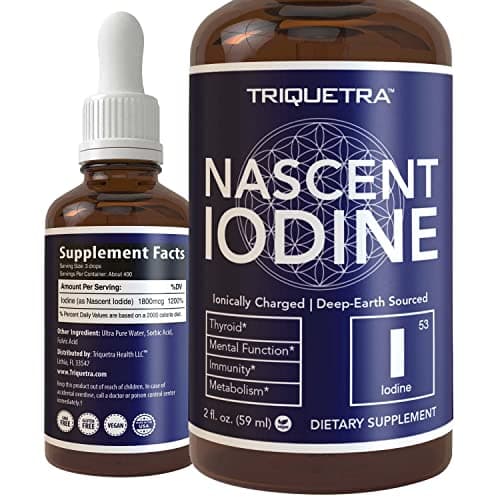
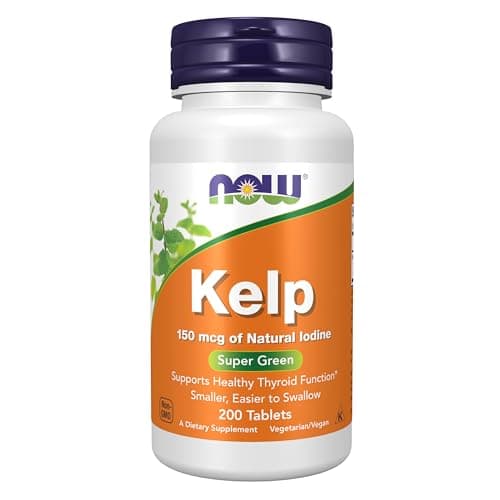


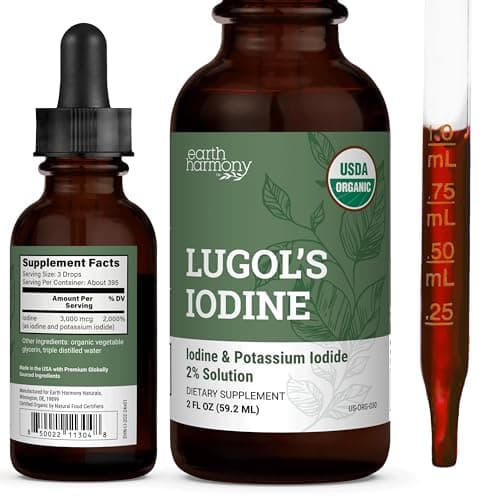

Dr. Berg Sea Kelp Enhanced Iodine - 200 mcg of Premium Iodine…
Dr. BergAmazon.com
$0.38/serving
$33.990°

Every Iodine deal above is ranked by real cost per dose with no paid placement — see our and .
Independent testing
Independent third-party testing is a voluntary check of a product's identity, potency and contaminants by an outside lab. It's a quality signal, not a value or efficacy claim. Confirm any brand's current status on the official registries:
Testing status is self-reported by the brand or drawn from public certification and may change — always verify on the official registry before purchase.
Iodine — dosage, safety & deals FAQ
- How much Iodine do you need per day?
The is 150 mcg/day for males and females 19+ years, 220 mcg during pregnancy, and 290 mcg during lactation. Teens 14-18 also need 150 mcg. Children: 90 mcg (1-8 years), 120 mcg (9-13). Infants have an Adequate Intake of 110 mcg (birth-6 months) and 130 mcg (7-12 months). — per the NIH Office of Dietary Supplements; general information, not medical advice.
- Can you take too much Iodine?
Yes. The for adults 19+ (including pregnancy and lactation) is 1,100 mcg/day. High intakes can cause goiter, elevated TSH, hypothyroidism, iodine-induced hyperthyroidism, thyroiditis, and thyroid papillary cancer. Acute iodine poisoning is rare, usually from doses of many grams, causing burning of the mouth, throat, and stomach, fever, abdominal pain, nausea, vomiting, diarrhea, weak pulse, and coma. — per the NIH Office of Dietary Supplements; general information, not medical advice.
- What are the signs of Iodine deficiency?
Goiter (thyroid enlargement) is usually the earliest clinical sign. Deficiency causes hypothyroidism and is the most common cause of preventable intellectual disability worldwide. In pregnancy it can cause neurodevelopmental deficits, growth retardation, miscarriage, and stillbirth; severe in-utero deficiency causes cretinism. In children, deficiency can lower IQ; in adults, goiter and impaired mental function and work productivity. — per the NIH Office of Dietary Supplements; general information, not medical advice.
- Who is most likely to need more Iodine?
Related minerals
References & sources
- Iodine: Fact Sheet for Health Professionals — NIH Office of Dietary Supplements
- USP Verified product participants — U.S. Pharmacopeia
- NSF certified products — NSF
We link primary sources and paraphrase their findings — never copy their text, tables, or images. Cost-per-dose figures are our own first-party catalog data.