
⛏️
Manganese
mineral · 15 active deals
How much does Manganese cost?
The best-value Manganese right now is about $0.04 per dose — across the 12 we can price per dose the median is $0.086/dose, so shopping on cost-per-dose can cut your cost several-fold. Every Manganese deal here is ranked by cost per dose — what you actually pay per serving, not the sticker price — because forms and absorption differ, so the cheapest bottle isn’t always the cheapest dose.
Prices checked · live from the Amazon US catalog.
Right now the best value across our full Manganese catalog is at $0.04 per serving.
Median $0.086/servingCheapest quartile under $0.051across 12 tracked Manganese deals
What Manganese does
Manganese is an essential trace element that acts as a cofactor for many enzymes, including manganese superoxide dismutase, arginase, and pyruvate carboxylase; through these enzymes it is involved in amino acid, cholesterol, glucose, and carbohydrate metabolism, reactive oxygen species scavenging, bone formation, reproduction, and immune response, and it also plays a role in blood clotting and hemostasis in conjunction with vitamin K. Because of its role as an enzyme cofactor in bone formation, scientists have examined associations between circulating manganese levels, bone mineral density, and osteoporosis, but per the NIH the evidence is very limited and inconsistent, no clinical trials have evaluated manganese supplementation alone on bone health, and more research is needed. Manganese has also been studied in relation to diabetes since it is involved in glucose, carbohydrate, and lipid metabolism; however, studies have found associations with both increased and decreased blood manganese levels and type 2 diabetes (including a U-shaped association), human clinical trials are lacking, and more research is needed to determine whether manganese plays any role in the development of diabetes. — per the NIH Office of Dietary Supplements; not medical advice.
Forms & absorption
In dietary supplements, manganese is present in many different forms, including amino acid chelates (such as manganese bisglycinate chelate, manganese glycinate chelate, and manganese aspartate), as well as manganese gluconate, manganese picolinate, manganese sulfate, manganese citrate, and manganese chloride. According to the NIH, no data are available on the relative bioavailability of these different forms of supplemental manganese, and the Supplement Facts label declares the amount of elemental manganese rather than the weight of the entire manganese-containing compound.
Food sources of Manganese
Manganese is present in a wide variety of foods, including whole grains, clams, oysters, mussels, nuts, soybeans and other legumes, rice, leafy vegetables, coffee, tea, and many spices such as black pepper; the top sources in U.S. adults' diets are grain products, tea, and vegetables. Among selected foods, cooked blue mussels are especially rich (5.8 mg, 252% DV per 3 ounces), followed by dry-roasted hazelnuts, pecans, and brown rice — per the NIH Office of Dietary Supplements.
Manganese deficiency — who's at risk
Manganese deficiency is very rare in humans, and its signs and symptoms have not been firmly established; according to the fact sheet, no known groups of people are likely to have inadequate manganese intakes. The very limited evidence suggests deficiency might cause bone demineralization and poor growth in children; skin rashes, hair depigmentation, decreased serum cholesterol, and increased alkaline phosphatase activity in men; and altered mood and increased premenstrual pain in women — per the NIH Office of Dietary Supplements.


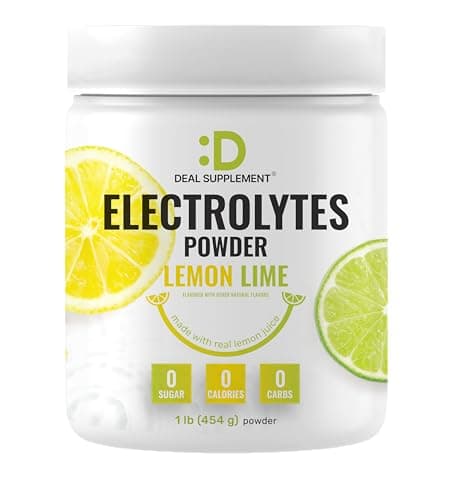
Electrolytes Powder, 1lb (69 Servings) – No Sugar, Lemon Lime…
DEAL SUPPLEMENTAmazon.com
$0.35/serving
$23.990°
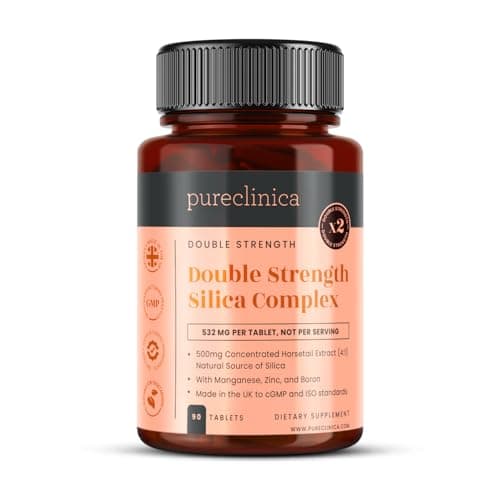
Double Strength Silica Complex – 500mg Horsetail Extract (4:1)…
pureclinicaAmazon.com
$0.42/serving
$37.990°
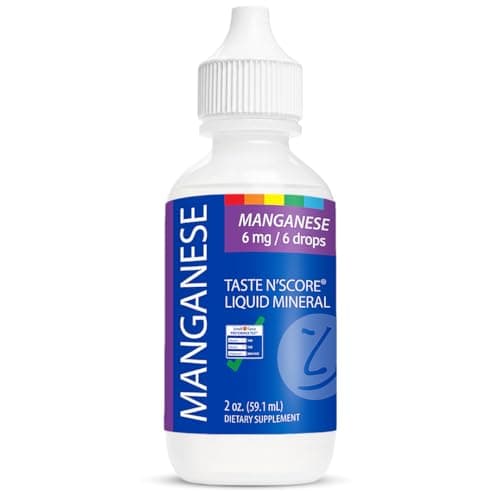
Taste N' Score Manganese Liquid Ionic Mineral Supplement; 100%…
SENSEable SupplementsAmazon.com
$0.16/serving
$18.500°
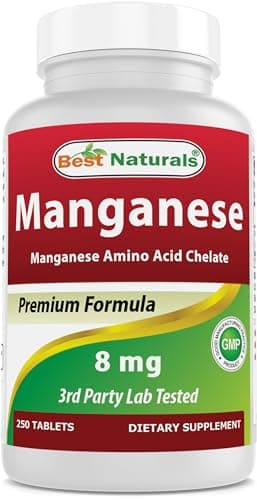
Best Naturals Manganese (Manganese Amino Acid Chelate) 8 mg…
Best NaturalsAmazon.com
$0.04/serving
$9.990°
Every Manganese deal above is ranked by real cost per dose with no paid placement — see our and .
Independent testing
1 of 11 tracked Manganese brands here are flagged as carrying independent third-party testing — a voluntary check of a product's identity, potency and contaminants by an outside lab. It's a quality signal, not a value or efficacy claim. Confirm any brand's current status on the official registries:
Testing status is self-reported by the brand or drawn from public certification and may change — always verify on the official registry before purchase.
Manganese — dosage, safety & deals FAQ
- How much Manganese do you need per day?
Manganese uses Adequate Intakes (AIs), not an . For adults 19+, the AI is 2.3 mg/day for men and 1.8 mg/day for women. During pregnancy it is 2.0 mg and during lactation 2.6 mg. AIs for children range from 0.003 mg (birth-6 months) up to 1.9 mg (boys 9-13). — per the NIH Office of Dietary Supplements; general information, not medical advice.
- Can you take too much Manganese?
Yes. The is 11 mg/day for adults 19+ (9 mg for ages 14-18, less for younger children). Toxicity mainly affects the central nervous system, causing tremors, muscle spasms, tinnitus, hearing loss, and unsteadiness, and can progress to Parkinson's-like neuromotor impairments. — per the NIH Office of Dietary Supplements; general information, not medical advice.
- What are the signs of Manganese deficiency?
Manganese deficiency is very rare in humans, and signs have not been firmly established. Very limited evidence suggests it might cause bone demineralization and poor growth in children; skin rashes, hair depigmentation, decreased serum cholesterol, and increased alkaline phosphatase activity in men; and altered mood and increased premenstrual pain in women. — per the NIH Office of Dietary Supplements; general information, not medical advice.
- Who is most likely to need more Manganese?
According to the fact sheet, no known groups of people are likely to have inadequate manganese intakes. — per the NIH Office of Dietary Supplements; general information, not medical advice.
Related minerals
References & sources
- Manganese: Fact Sheet for Health Professionals — NIH Office of Dietary Supplements
- USP Verified product participants — U.S. Pharmacopeia
- NSF certified products — NSF
We link primary sources and paraphrase their findings — never copy their text, tables, or images. Cost-per-dose figures are our own first-party catalog data.