Vitamin B12 (Cobalamin) vs B-Complex
Vitamin B12 (Cobalamin) and B-Complex compared on absorption, gut tolerance, and real cost per dose — the cheapest of each pulled live from the Amazon US catalog.
Updated October 2026
Side by side
| Attribute | B12 | B-complex |
|---|---|---|
| Contains | B12 only | All 8 B vitamins |
| B12 per serving | Usually 250–1,000+ mcg | Varies — check the label |
| Best for | A specific B12 need | General B coverage |
| Side note | — | Bright-yellow urine (riboflavin), harmless |
| Active deals tracked | 197 | 88 |
| Cheapest cost per dose | $0.02 (per 800 mcg) | $0.04 (per serving) |
At supplement doses, B12 is absorbed partly through intrinsic factor and partly by passive diffusion (about 1% of a large dose), which is why pills use 250–1,000 mcg. The B12 in a B-complex behaves the same; the difference is the dose and what comes with it.
Which to avoid / caveats
- Compare cost per elemental / active content, not the compound milligrams printed on the label — a bigger number on the front can hide less of what you actually absorb.
- The cheapest sticker price isn’t always the best value: our “cheapest per dose” figures normalise price across bottle sizes, so a larger count only wins if it truly costs less per serving.
Vitamin B12 (Cobalamin)
Best for: Vegans, adults over 50, metformin or acid-reducer users, a low B12 test.
Best Vitamin B12 (Cobalamin) by cost per doseCheapest Vitamin B12 (Cobalamin)
NEW

💉 Cyanocobalamin
NOW Supplements, Folic Acid 800 mcg + B-12 (Cyanocobalamin)…
Cost per serving
$0.02
250 servings · ~250-day supply
$6.11Price from Amazon.com
NOW · Amazon.com 0
See the offer Cheapest B-Complex
NEW
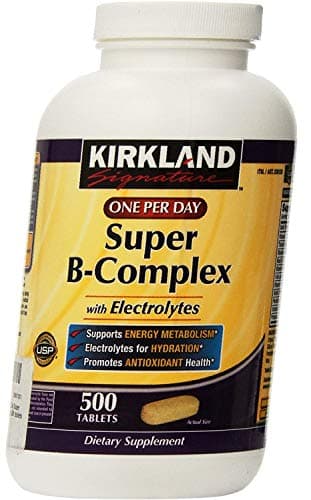
🅱️ B-Complex
KIRKLAND SIGNATURE One Per Day Super B-Complex…
Cost per serving
$0.04
Cheap·−92%1000 servings · ~1000-day supply
$36.00Price from Amazon.com
Kirkland Signature · Amazon.com 0
See the offer Frequently asked
Should I take B12 or a B-complex?+
Take B12 alone if B12 is the concern — it is the vitamin vegans, older adults and people on metformin or acid reducers most often run low on. Choose a B-complex if you want all the B vitamins. Not medical advice.
Can you take B12 and a B-complex together?+
Yes; B12 has no upper limit. Watch vitamin B6 instead: long-term intake above 100 mg a day (the upper limit) can cause nerve damage, and B6 from a B-complex plus other products adds up. Not medical advice.
Is Vitamin B12 (Cobalamin) or B-Complex cheaper per dose?+
The cheapest Vitamin B12 (Cobalamin) we track is $0.02 per serving; the cheapest B-Complex is $0.04 per serving — so Vitamin B12 (Cobalamin) costs less per dose right now (October 2026).
How much Vitamin B12 do you need per day?+
The RDA for adults 19+ is 2.4 mcg daily; 2.6 mcg in pregnancy and 2.8 mcg during lactation. Adolescents 14-18 also need 2.4 mcg. Younger children need 0.9-1.8 mcg. Infants have an Adequate Intake of 0.4 mcg (0-6 months) and 0.5 mcg (7-12 months). — per the NIH Office of Dietary Supplements; general information, not medical advice.
Can you take too much Vitamin B12?+
The Food and Nutrition Board did not establish a Tolerable Upper Intake Level (UL) for vitamin B12 because of its low potential for toxicity. Even at large doses, vitamin B12 is generally considered safe because the body does not store excess amounts. — per the NIH Office of Dietary Supplements; general information, not medical advice.
Dosage & safety answers sourced from the NIH Office of Dietary Supplements. General information, not medical advice.
What the research says
Groups most likely to be deficient include older adults (especially those with atrophic gastritis), people with pernicious anemia, people with gastrointestinal disorders such as celiac or Crohn's disease, those who have had gastrointestinal surgery, people who follow vegetarian or vegan diets, and the breastfed infants of women who follow vegan diets. Effects can include megaloblastic anemia, fatigue, glossitis of the tongue, palpitations, low blood cell counts, and neurological changes such as numbness and tingling in the hands and feet, with early intervention important to avoid irreversible damage. Because the body stores about 1 to 5 mg of vitamin B12, symptoms can take several years to appear — per the NIH Office of Dietary Supplements.
Vitamin B12 is present naturally in foods of animal origin, including fish, meat, poultry, eggs, and dairy products. The richest sources listed are beef liver and clams; oysters and fortified nutritional yeasts are also very high. Plant foods do not naturally contain vitamin B12, but fortified breakfast cereals and fortified nutritional yeasts are readily available sources with high bioavailability — per the NIH Office of Dietary Supplements.
Related
Best Vitamin B12 (Cobalamin) by cost per doseBest B-Complex by cost per doseVitamin B12 (Cobalamin) dosage & factsB-Complex dosage & factsSupplement price-spread study
People also compare
References & sources
- Health Professional fact sheet — NIH Office of Dietary Supplements
- USP Verified product participants — U.S. Pharmacopeia
- NSF certified products — NSF
We link primary sources and paraphrase their findings — never copy their text, tables, or images. Cost-per-dose figures are our own first-party catalog data.