
👁️
Lutein
other · 27 active deals
How much does Lutein cost?
The best-value Lutein right now is about $0.06 per dose — across the 23 we can price per dose the median is $0.135/dose, so shopping on cost-per-dose can cut your cost several-fold. Every Lutein deal here is ranked by cost per dose — what you actually pay per serving, not the sticker price — because forms and absorption differ, so the cheapest bottle isn’t always the cheapest dose.
Prices checked · live from the Amazon US catalog.
Right now the best value across our full Lutein catalog is at $0.06 per serving.
Median $0.135/servingCheapest quartile under $0.100across 23 tracked Lutein deals
Goals:
What Lutein does
Lutein and zeaxanthin are carotenoids (plant pigments) that, unlike beta-carotene, are not converted into vitamin A; the NIH Office of Dietary Supplements classifies them as non-provitamin A carotenoids that "might have other important activities not involving vitamin A formation." They have antioxidant functions and accumulate in the retina, the tissue in the eye that is damaged by age-related macular degeneration (AMD), so supplements containing them "might be useful for preventing or treating this condition." In the AREDS2 trial, adding lutein (10 mg) and zeaxanthin (2 mg) to the AREDS formulation produced no additional benefit overall, but participants with the lowest dietary intakes of these carotenoids had a 26% lower risk of advanced AMD when they took a supplement containing them. Replacing beta-carotene with lutein and zeaxanthin reduced the risk of advanced AMD (18% lower) and, after 10 years of follow-up, gave an additional 20% reduced risk of progression to late AMD compared with beta-carotene. The source notes that individuals who have or are developing AMD should talk to their health care provider about their vitamin A intakes and the supplement formulations used in the AREDS studies. — per NIH Office of Dietary Supplements; not medical advice.
Forms & absorption
Lutein and zeaxanthin are fat-soluble carotenoids. Per the source, the various forms of vitamin A are solubilized into micelles in the intestinal lumen and absorbed by duodenal mucosal cells, and provitamin A carotenoids are likewise absorbed there; the body absorbs about 10%–30% of beta-carotene from foods in most cases. The fact sheet does not specify a single supplemental form for lutein/zeaxanthin, but they were studied at 10 mg lutein plus 2 mg zeaxanthin in the AREDS2 formulation.
Food sources of Lutein
Lutein and zeaxanthin are plant pigments (non-provitamin A carotenoids). The source groups dietary carotenoid sources among plant foods such as leafy green vegetables and orange and yellow vegetables; the fact sheet's food tables quantify vitamin A/provitamin A content rather than lutein or zeaxanthin specifically.
Can you get too much Lutein?
The NIH Office of Dietary Supplements does not establish a Tolerable Upper Intake Level (UL) for lutein or zeaxanthin; the fact sheet's UL and toxicity discussion applies to preformed vitamin A, not these non-provitamin A carotenoids. In the AREDS2 trial, it was beta-carotene — not lutein and zeaxanthin — that was associated with increased lung cancer risk (chiefly in former smokers), which is why the final AREDS2 formulation replaced beta-carotene with lutein and zeaxanthin. Individuals who have or are developing AMD should talk to their health care provider about the supplement formulations used in the AREDS studies.

Natural Factors, Lutein 40 mg, Antioxidant Support for Healthy…
Natural FactorsAmazon.com
$0.38/serving
$23.070°


Lutein and Zeaxanthin Supplement - AREDS 2 Plus+ Eye Vitamins
FIDERNICAmazon.com
$0.10/serving
$29.990°


Carlyle Lutein and Zeaxanthin 20mg | 300 Softgels | Eye Health…
CarlyleAmazon.com
$0.06/serving
$18.490°


Astaxanthin 12mg & Lutein 40mg with Zeaxanthin Supplements
Echoes of the springAmazon.com
$0.17/serving
$19.990°

Lutein and Zeaxanthin Supplement - AREDS 2 Plus+ Eye Vitamins…
FIDERNICAmazon.com
$0.13/serving
$19.990°


Lutein 20mg - SuperSmart | Marigold Extract - Lutein for Eyes…
SuperSmart USA LLCSuperSmart
$0.29/serving
$17.400°
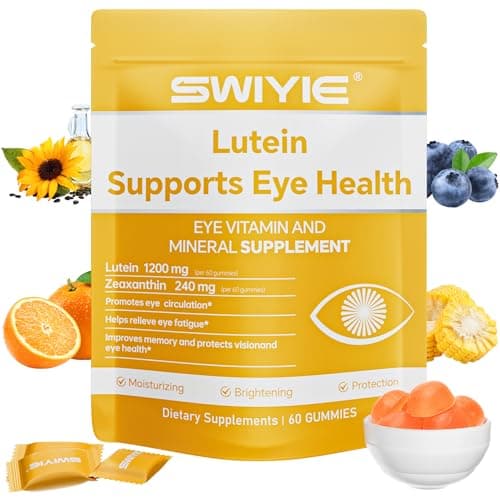


ML Naturals Lutein & Zeaxanthin with Bilberry – 40mg Lutein
ML NaturalsAmazon.com
$0.17/serving
$20.990°
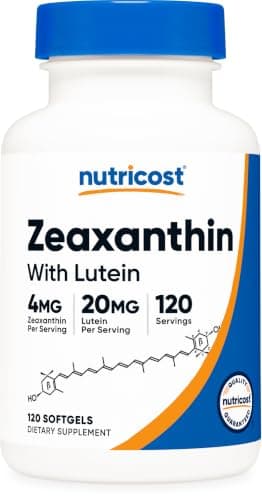

Carlyle Lutein and Zeaxanthin Supplement | 40mg | 180 Softgels…
CarlyleAmazon.com
$0.10/serving
$17.990°
Every Lutein deal above is ranked by real cost per dose with no paid placement — see our and .
Independent testing
1 of 18 tracked Lutein brands here are flagged as carrying independent third-party testing — a voluntary check of a product's identity, potency and contaminants by an outside lab. It's a quality signal, not a value or efficacy claim. Confirm any brand's current status on the official registries:
Testing status is self-reported by the brand or drawn from public certification and may change — always verify on the official registry before purchase.
Lutein deals — FAQ
- How much does Lutein cost?
The cheapest lutein we track works out to $0.06 , against a typical $0.13 across the 23 we can price per dose — about $1.85 a month at the cheapest. That is real from live Amazon US prices, not the sticker price. The full ranking is on the Best Lutein page.
- What is the best-value Lutein per dose?
Carlyle Lutein and Zeaxanthin 20mg | 300 | Eye Health Vitamins at $0.06 — the lowest cost-per-dose lutein in our catalog. See the full ranking on the Best Lutein page.
- How many Lutein deals are live right now?
We're tracking 27 active Lutein deals across Amazon US and partner retailers, ranked by community votes and cost-per-dose — not paid placement.
- What's a good price for Lutein per dose?
Across the 23 Lutein deals we can price per dose (combination products are left out — their single label dose belongs to whichever ingredient the product is built around) the median cost-per-dose is $0.135; the cheapest quartile comes in under $0.100 . Anything below the median is a solid deal for the same molecule.
- How does VitaminDB rank Lutein deals?
Deals are submitted by the community and ranked by net votes (hot minus cold) plus cost-per-dose normalised across container sizes. We take no affiliate kickbacks for ordering; sponsored slots, when present, are clearly badged.
Lutein guides
Related supplements
References & sources
- Vitamin A and Carotenoids: Fact Sheet for Health Professionals — NIH Office of Dietary Supplements
- USP Verified product participants — U.S. Pharmacopeia
- NSF certified products — NSF
We link primary sources and paraphrase their findings — never copy their text, tables, or images. Cost-per-dose figures are our own first-party catalog data.