Eye health supplements: what AREDS2 actually covers, and what it costs per dose
Quick answer
The AREDS2 eye formula is real science — but it was studied for slowing one specific eye disease, not for keeping healthy eyes sharp or fixing screen fatigue. Here's what the trial found, the exact ingredients and doses, and how little the components actually cost per dose.
Alex Soto, Founder, VitaminDB
8 min readUpdated 7/3/2026 NIH-sourced
On this page
If you have searched "best supplements for eye health," you have met a wall of bottles promising sharper vision, less strain, and protection against "blue light." Almost none of that is what the actual research studied. There is one solid body of evidence here — and understanding exactly what it covers (and what it does not) saves you both from false hope and from overpaying. This guide is a value comparison, not medical advice.
The one eye formula with real evidence: AREDS2
The reference point every honest article comes back to is AREDS2 — the second Age-Related Eye Disease Study, run by the U.S. National Eye Institute. It was a large, multi-year randomized trial, and it asked a narrow question: in people who already have intermediate or advanced age-related macular degeneration (AMD), does a specific nutrient formula slow the disease from getting worse?
The answer was a qualified yes: the formula modestly reduced the risk of progression to advanced AMD. That is a real, useful result — and it is the source of nearly every "eye vitamin" on the shelf.
But notice the fine print, because the marketing usually erases it:
- It was tested in people who already had AMD, not in healthy eyes.
- It slows progression of an existing disease. It was not shown to prevent
AMD in people who do not have it, and it does nothing for screen fatigue, general "sharpness," or a prescription you have outgrown.
- The benefit was modest, not a cure.
So the accurate framing is: AREDS2 is a disease-management formula that belongs to a conversation with an eye doctor — not a daily vitamin for normal vision.
What is actually in the formula
Here is the exact AREDS2 formula the trial used. These are public figures from the National Eye Institute, listed so you can compare any bottle against the real thing — not a dosing recommendation from us.
- Vitamin C — 500 mg: antioxidant.
- Vitamin E — 400 IU: antioxidant.
- Zinc — 80 mg (a 25 mg version worked about as well): the core mineral concentrated in the retina.
- Copper — 2 mg: included specifically to prevent the copper deficiency that high-dose zinc can cause.
- Lutein — 10 mg: a macular-pigment carotenoid.
- Zeaxanthin — 2 mg: the other macular-pigment carotenoid.
Two absences matter as much as what is present:
- Beta-carotene is gone. The original AREDS used it, but AREDS2 removed it
after it was linked to a higher lung-cancer risk in current and former smokers. If a bottle still lists beta-carotene, it is following the older, superseded formula.
- Omega-3 was tested and did nothing here. AREDS2 specifically added EPA/DHA
to one arm of the trial, and it produced no measurable benefit for AMD progression. Omega-3 has its own reasons to exist in a diet, but "for your macula" is not one the trial supported.
Where the money actually goes
Here is the part the supplement aisle would rather you not run the numbers on: the AREDS2 formula is a bundle of commodity nutrients. Vitamin C, vitamin E, zinc, and copper are among the cheapest supplements in existence per dose. Lutein is the only relatively pricey component, and even that is inexpensive at 10 mg.
A branded "eye health" capsule mostly sells you convenience — one pill instead of five — plus a label. That can be worth paying for. What is not worth paying for is a several-times markup over the cost of the same commodity ingredients, dressed up with "vision support" claims the research never made.
Rather than quote prices here (they move daily), check the live cost-per-dose for each real component and do the arithmetic yourself:
- Lutein — the one carotenoid that carries most of the cost
- Zinc — pennies per dose; the AREDS core mineral
- Vitamin C and Vitamin E — commodity antioxidants
- Copper — a rounding error, but necessary alongside high-dose zinc
If a finished "eye formula" costs meaningfully more than the sum of those parts, you now know exactly what the premium is buying.
A note on the zinc dose
The 80 mg of zinc in the classic AREDS formula is high — well above the [40 mg adult upper limit](https://ods.od.nih.gov/factsheets/Zinc-HealthProfessional/) — which is precisely why the formula pairs it with 2 mg of copper. Taking high-dose zinc on its own for months can quietly deplete copper and cause problems. This is another reason AREDS2 is a "with an eye doctor, for a reason" formula rather than a casual daily habit. If you are simply topping up a normal diet, the AREDS dose is almost certainly not what you want.
The honest bottom line
- If an eye doctor has told you that you have intermediate or advanced AMD, the
AREDS2 formula has real evidence behind it — take the conversation seriously.
- If you have healthy eyes and want to "protect" them, the strongest moves are not
in a bottle: regular eye exams, not smoking, UV protection, managing blood pressure and blood sugar, and an actual diet with leafy greens and fish.
- If you do buy an eye formula, buy on cost per dose. The ingredients are cheap;
the markup often is not.
Always confirm what applies to your eyes with a qualified clinician. This page is a cost comparison built on public trial data, and it is not medical advice.
Covered nutrients: Lutein, Zinc, Vitamin C, Vitamin E, Copper, Omega-3 EPA/DHA
See the live cost-per-dose data
This guide is editorial — the prices below are real and current.
Frequently asked questions
Do eye vitamins actually work?
For one specific situation, yes: the AREDS2 formula was shown in a large National Eye Institute trial to slow the progression of intermediate or advanced age-related macular degeneration (AMD). For healthy eyes, for preventing AMD in the first place, or for screen fatigue and general 'sharper vision', there is no strong evidence that these supplements help. The honest summary is: AREDS2 is a treatment-adjacent formula for an existing disease, not a daily tune-up for normal eyes. Ask an eye doctor whether it applies to you. Not medical advice.
What is in the AREDS2 formula and at what doses?
The AREDS2 formula tested by the National Eye Institute contains vitamin C 500 mg, vitamin E 400 IU, zinc 80 mg (a 25 mg version worked about as well), copper 2 mg (added to prevent zinc-induced copper deficiency), lutein 10 mg and zeaxanthin 2 mg. Note what is NOT in it: beta-carotene was dropped from the original AREDS because it raised lung-cancer risk in smokers, and omega-3 was tested but added no measurable benefit. These are public trial figures, not our recommendation — confirm any dose with a clinician.
Is it cheaper to buy the ingredients separately than a branded eye formula?
Usually, yes — often by a wide margin. Branded 'eye health' bottles bundle the same commodity nutrients (vitamin C, vitamin E, zinc, copper, lutein) that each cost very little per dose on their own. The premium is for the convenience of one pill, not for a special ingredient. Our per-nutrient cost-per-dose pages let you check the raw math; if a branded formula costs several times the sum of its parts, you are paying for the label. Whether one capsule is worth that to you is a personal call.
Does lutein help with screen time and eye strain?
The evidence is weak and mixed. Lutein and zeaxanthin are the pigments that concentrate in the macula, and some small studies suggest a modest effect on glare recovery and contrast, but this is not settled science and is very different from the AMD-progression finding in AREDS2. If your eyes feel tired from screens, the boring interventions (breaks, blinking, lighting, an eye exam to rule out an uncorrected prescription) have far better support than any supplement. Not medical advice.
Can taking zinc for my eyes cause a problem?
It can if you take the high AREDS dose long-term without copper. 80 mg of zinc a day is well above the 40 mg adult upper limit and can, over time, deplete copper and cause anemia or neurological issues — which is exactly why the AREDS2 formula includes 2 mg of copper. This is one reason the formula is meant to be used under an eye doctor's guidance for a diagnosed reason, not taken casually. See our zinc upper-limit notes and speak to a clinician. Not medical advice.
Where these numbers come from
Cost figures on this page are computed from 476 active Lutein / Zinc / Vitamin C / Vitamin E / Copper / Omega-3 EPA/DHA listings we track, last re-priced . Cost per dose is price ÷ (servings × dose), computed per listing — not a price we are quoted. Listings under $1 or with fewer than 3 servings are excluded, because both are usually a parse error rather than a bargain.
- Amazon.com · 461
- SuperSmart · 15
Prices move. Figures written into the text are re-checked against live data on a schedule; the ranking pages are always the current number.
Sources
Health claims on this page are drawn from these sources. Prices and cost-per-dose figures come from our own tracked listings, not from the sources below.
- 1.Vitamin A and Carotenoids: Fact Sheet for Health Professionals — NIH Office of Dietary Supplements
- 2.Zinc: Fact Sheet for Health Professionals — NIH Office of Dietary Supplements
- 3.Vitamin C: Fact Sheet for Health Professionals — NIH Office of Dietary Supplements
- 4.Vitamin E: Fact Sheet for Health Professionals — NIH Office of Dietary Supplements
- 5.Copper: Fact Sheet for Health Professionals — NIH Office of Dietary Supplements
- 6.Omega-3 Fatty Acids: Fact Sheet for Health Professionals — NIH Office of Dietary Supplements
Deals on these nutrients

Nature Made Maximum Strength Dosage Vitamin C 1000mg per…
Cost per serving
$0.18
80 servings · ~80-day supply
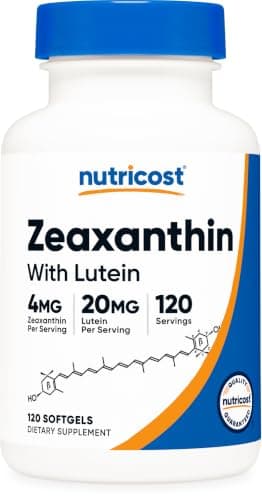
Nutricost Zeaxanthin with Lutein 20mg
Cost per serving
$0.12
120 servings · ~120-day supply
Viteey Vitamin B Complex Gummies with Vitamin C - 120 Count…
Cost per serving
$0.22
120 servings · ~120-day supply

Regeskr Liposomal Glutathione Supplement
Cost per serving
$0.37
60 servings · ~60-day supply
Related guides
Best time to take your supplements: a per-nutrient cheat sheet
Fat-soluble vitamins with a meal, magnesium in the evening, iron on an empty stomach with vitamin C, and the pairs you should NOT take together. A practical, evidence-based timing guide.
What a supplement should cost per dose — and how to tell if you're overpaying
The sticker price on the bottle is the wrong number. Cost per dose — price ÷ servings ÷ active amount — is what you actually pay each day, and the same dose can cost many times more just depending on the brand.
Turmeric vs fish oil: which for inflammation, joints, and heart
Both support a healthy inflammatory response — by different mechanisms, so they aren't interchangeable. Fish oil leans cardiovascular and general; curcumin leans joints. Doses and cost per dose.
Which supplements not to take together: an honest timing guide
A practical guide to spacing supplements for absorption and safety: calcium vs iron and zinc, iron with vitamin C, zinc and copper, fat-soluble vitamins, and medications.