Testosterone Supplements: What the Evidence Actually Supports
Quick answer
Most "testosterone booster" blends have not been shown to raise testosterone in men whose levels are already normal. The nutrients with some supporting evidence — zinc, magnesium, vitamin D, and possibly ashwagandha — appear to work mainly by correcting an underlying deficiency, not by pushing testosterone higher in already-replete men. If you have symptoms of low testosterone, that warrants a doctor and a blood test, not a proprietary formula; the value move is to fix an identified deficiency with cheap single-ingredient supplements that can cost as little as around $0.01 per serving. This is general information, not medical advice.
Alex Soto, Founder, VitaminDB
7 min readUpdated 7/4/2026 NIH-sourced
On this page
Search "testosterone supplement" and you get a wall of proprietary blends promising to restore your edge for $30 to $50 a bottle. The honest version of this topic is less exciting. Most of those blends have not been shown to raise testosterone in men with normal levels, and the ingredients that do have some evidence tend to work only when you're starting from a deficiency. This guide walks through what the evidence actually supports, where it's thin, and how to cover the plausible bases for a fraction of the blend price.
The uncomfortable starting point: most "T-boosters" don't have the evidence
The category is crowded with formulas built around tribulus, D-aspartic acid, and long proprietary blends. The recurring problem is that, in men whose testosterone is already in a normal range, these ingredients have generally not been shown to move testosterone in a meaningful, durable way. Some show early or conflicting signals; many show nothing once trials are better controlled. Proprietary blends add a second problem: when a label lists a blend total instead of per-ingredient amounts, you can't tell whether any single ingredient is present at a dose that was ever studied.
That doesn't mean nothing helps. It means the mechanism that has the most support is unglamorous: correcting an actual nutritional deficiency. If a nutrient is low and that shortfall is dragging on your hormones, topping it back up may help. Taking more of it once you're replete does not appear to keep pushing testosterone higher. That single distinction reframes the whole shopping decision.
The deficiency-correction model, one nutrient at a time
Bodies of evidence like the NIH Office of Dietary Supplements describe roles for several nutrients in normal hormonal and reproductive function. The framing below is deliberately narrow: these may help if you are deficient, and none of them is a treatment for low testosterone or a substitute for medical care.
Zinc
Zinc is involved in normal male reproductive function, and zinc deficiency has been associated with lower testosterone. Correcting a genuine deficiency may help; adding extra zinc when you're already replete does not appear to keep raising testosterone. Zinc is also one of the cheaper single-ingredient options to keep on hand — VitaminDB tracks 86 zinc listings, with the cheapest around $0.017 per serving. You can compare current cost-per-serving on the best-value zinc page. Zinc is not risk-free at high intake — chronic megadoses can interfere with copper — which is another reason to correct a shortfall rather than stack it blindly.
Magnesium
Magnesium is a common shortfall in typical Western diets, and it participates in a wide range of processes including muscle function, sleep, and stress response. The testosterone case rests on the same deficiency-correction logic: if you're low, restoring adequate magnesium is reasonable; if you're already getting enough, there's little reason to expect more to act as a booster. VitaminDB lists 82 magnesium products, cheapest around $0.037 per serving (19 September 2026) — see the best-value magnesium page for live pricing across forms.
Vitamin D
Low vitamin D is genuinely common, especially in people with limited sun exposure, and public-health guidance treats correcting a deficiency as reasonable on its own merits — independent of any hormonal question. Some observational work links low vitamin D status to lower testosterone, but this is association, and correcting a deficiency is best justified by overall health rather than as a testosterone tactic. It also happens to be the cheapest nutrient in this group: 255 listings tracked, cheapest around $0.02 per serving. The best-value vitamin D3 page ranks options by real cost per serving.
Ashwagandha
Ashwagandha is the one adaptogenic herb here rather than a corrected-deficiency nutrient. A few small randomized trials have suggested modest effects on testosterone and on stress markers, but the evidence is early, mixed, and drawn from small groups — not the kind of settled finding you should bank on. It's the priciest of the four in our data: 36 listings, cheapest around $0.095 per serving. If you want to try it, the best-value ashwagandha page shows where it lands on cost per serving. Ashwagandha isn't for everyone — people with thyroid conditions or on certain medications should clear it with a clinician first.
Two ceilings worth carrying through this list, both from NIH fact sheets: zinc's adult tolerable upper intake level is 40 mg/day, which a "T-booster" stacked on a multivitamin can exceed, and supplemental magnesium's is 350 mg/day, which applies to supplements and not to food.
The price gap is the whole point
Here's the passage worth sitting with: you can cover all four of these plausible bases with cheap single-ingredient supplements for roughly $0.01 to $0.095 per serving each — a combined pocket-change-per-day range that undercuts a single $30-to-$50 proprietary "T-booster" blend, while letting you see exactly what dose you're taking of each ingredient. The blend charges a premium for opacity; buying the components separately buys you transparency at a lower price.
- Vitamin D — Listings tracked: 254 · Cheapest cost/serving: ~$0.02 · Evidence framing: Correcting a common deficiency is reasonable on general-health grounds
- Zinc — Listings tracked: 49 · Cheapest cost/serving: ~$0.024 · Evidence framing: Deficiency correction may help; extra in replete men does not keep raising T
- Magnesium — Listings tracked: 64 · Cheapest cost/serving: ~$0.030 · Evidence framing: Same deficiency-correction logic; low intake is common
- Ashwagandha — Listings tracked: 6 · Cheapest cost/serving: ~$0.125 · Evidence framing: A few small trials suggest modest effects; evidence early and mixed
Prices shift, so treat these as directional and check the linked pages for current cost per serving. Commonly labeled doses vary by product; use the amount on a label you'd actually buy rather than any figure here as a personal prescription.
The step most supplement pages skip: get tested first
If you have symptoms often associated with low testosterone — persistent fatigue, low libido, mood changes, loss of muscle — the right first move is not a supplement. It's a doctor and a blood test. Symptoms overlap heavily with thyroid issues, poor sleep, depression, and other conditions that no supplement addresses, and clinically low testosterone (hypogonadism) is a medical diagnosis that may call for medical treatment. A blood panel also tells you whether you're actually deficient in any of these nutrients, which is the only situation where correction has a real rationale.
Framed that way, supplements occupy a modest, honest slot: a low-cost way to correct a confirmed or plausible shortfall, taken alongside — never instead of — a proper workup.
A sensible, low-cost sequence
If you and a clinician agree there's a deficiency worth addressing, a reasonable order of operations looks like this:
- Test and talk to a clinician before buying anything, especially if you have low-T symptoms. Rule out the bigger causes first.
- Fix confirmed deficiencies with single ingredients. Vitamin D and zinc are the usual candidates given how common low status can be; magnesium if your intake is genuinely low. Buy by cost per serving, not by marketing.
- Address the free levers. Sleep, resistance training, body composition, and alcohol have more consistent relationships with testosterone than most pills, and they cost nothing.
- Consider ashwagandha as an optional experiment, understanding the evidence is early and mixed — and clear it with a clinician if you have relevant conditions.
- Skip the proprietary blend. If you've already bought the components, the blend adds cost and opacity without adding anything the evidence supports.
None of this "boosts" testosterone in the way the ads promise. It corrects what might be low, avoids paying a premium for a blend, and keeps the genuinely important step — a medical evaluation — front and center.
The realistic expectation is modest. Correcting a deficiency may help you feel better and may support normal function; it is not a cure for low testosterone and won't replace treatment for a diagnosed condition. Spending cents per serving on transparent single ingredients simply means that if it doesn't do much, you've lost very little — which is the opposite of the $50 blend proposition.
This is general information, not medical advice — talk to a clinician.
Covered nutrients: Zinc, Magnesium, Ashwagandha KSM-66, Vitamin D3
See the live cost-per-dose data
This guide is editorial — the prices below are real and current.
Frequently asked questions
Do testosterone booster supplements actually work?
For men whose testosterone is already in a normal range, most proprietary "T-booster" blends have not been shown to raise testosterone in a meaningful, durable way. The nutrients with some supporting evidence — like zinc, magnesium, and vitamin D — appear to help mainly by correcting an underlying deficiency, not by pushing already-normal levels higher. If you have symptoms of low testosterone, that warrants a doctor and a blood test rather than a blend. This is general information, not medical advice.
Which supplements have the most evidence for testosterone?
The nutrients with at least some supporting evidence are zinc, magnesium, and vitamin D, and their case rests largely on correcting a deficiency rather than boosting normal levels. Ashwagandha has a few small randomized trials suggesting modest effects, but that evidence is early and mixed. Bodies like the NIH Office of Dietary Supplements describe roles for these nutrients in normal function, which is different from proving they treat low testosterone.
Is it cheaper to buy single ingredients instead of a T-booster blend?
Generally yes. Single-ingredient options in our data range from around $0.01 per serving for vitamin D to around $0.095 for ashwagandha, so covering the plausible bases separately can cost pocket change per day versus $30 to $50 for a proprietary blend. Buying components individually also lets you see exactly what dose of each ingredient you're taking, which blends often hide. Prices change, so check current cost per serving before buying.
Where these numbers come from
Cost figures on this page are computed from 678 active Zinc / Magnesium / Ashwagandha KSM-66 / Vitamin D3 listings we track, last re-priced . Cost per dose is price ÷ (servings × dose), computed per listing — not a price we are quoted. Listings under $1 or with fewer than 3 servings are excluded, because both are usually a parse error rather than a bargain.
- Amazon.com · 671
- SuperSmart · 7
Prices move. Figures written into the text are re-checked against live data on a schedule; the ranking pages are always the current number.
Sources
Health claims on this page are drawn from these sources. Prices and cost-per-dose figures come from our own tracked listings, not from the sources below.
- 1.Zinc: Fact Sheet for Health Professionals — NIH Office of Dietary Supplements
- 2.Magnesium: Fact Sheet for Health Professionals — NIH Office of Dietary Supplements
- 3.Ashwagandha — NIH National Center for Complementary and Integrative Health
- 4.Vitamin D: Fact Sheet for Health Professionals — NIH Office of Dietary Supplements
Deals on these nutrients

Totaria Magnesium Complex 700mg 12 in 1 Magnesium Supplement…
Cost per serving
$0.18
120 servings · ~120-day supply
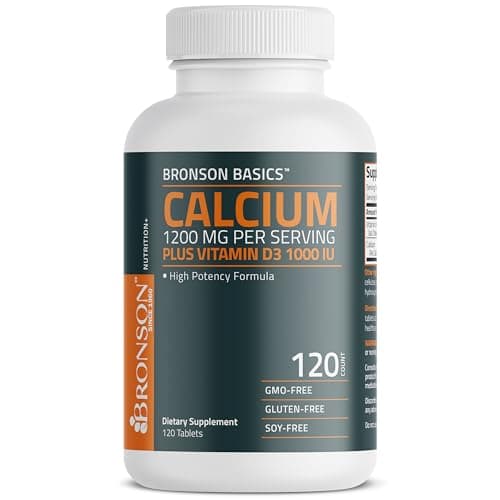
Bronson Calcium 1200mg Per Serving Plus Vitamin D3 1000 IU…
Cost per serving
$0.08
120 servings · ~120-day supply

Magnesium Citrate Capsules 1000mg | High Absorption Supplement…
Cost per serving
$0.15
120 servings · ~120-day supply

Solgar Vitamin D3 (Cholecalciferol) 250 MCG (10,000 IU)
Cost per serving
$0.12
120 servings · ~120-day supply
Related guides
Can you take too much? The supplement upper limits that actually matter
Water-soluble vitamins you flush out; fat-soluble vitamins and minerals accumulate and have real ceilings. The NIH upper limits worth knowing — vitamin A, D, iron, zinc, B6, selenium — and why megadoses backfire.
Best time to take your supplements: a per-nutrient cheat sheet
Fat-soluble vitamins with a meal, magnesium in the evening, iron on an empty stomach with vitamin C, and the pairs you should NOT take together. A practical, evidence-based timing guide.
Which supplements not to take together: an honest timing guide
A practical guide to spacing supplements for absorption and safety: calcium vs iron and zinc, iron with vitamin C, zinc and copper, fat-soluble vitamins, and medications.
The Full GLP-1 Supplement Stack: What to Take & Cost Per Day
A cost-per-dose companion supplement stack for GLP-1 users (Ozempic/Mounjaro): protein, vitamin D, magnesium, B12, omega-3 — and the full daily cost.