What a supplement should cost per dose — and how to tell if you're overpaying
Quick answer
The sticker price on the bottle is the wrong number. Cost per dose — price ÷ servings ÷ active amount — is what you actually pay each day, and the same dose can cost many times more just depending on the brand.
Alex Soto, Founder, VitaminDB
6 min readUpdated 7/2/2026 NIH-sourced
On this page
I built VitaminDB because I spent two years overpaying for magnesium and never noticed — the bottles looked cheap. The number that would have told me was never on the front label. It's cost per dose, and once you start reading it, half the supplement aisle looks different.
The one number that matters
Cost per dose is simple arithmetic the packaging works hard to keep you from doing:
bottle price ÷ servings per bottle ÷ (active amount per serving)
The first two give you cost per serving. The third step matters because a "serving" isn't standardized — one brand's serving is 200 mg of magnesium in one capsule, another's is 400 mg across two. If you don't normalize to the actual active dose, you're comparing a small scoop to a big one.
Do it once and the ranking of bottles on a shelf can completely flip.
Why the sticker price lies
The front of the bottle is a marketing surface. It shows a big round number — "1000 mg", "High Potency", "$14.99" — and hides the three things you need:
- Servings per container. A $25 bottle with 30 servings costs far more per day than a $19 bottle with 120.
- Serving size. "Take 3 capsules daily" quietly triples your real cost and empties the bottle in a third of the time.
- Active amount. "1000 mg fish oil" is not 1000 mg of the EPA + DHA you're buying it for. The dose that counts is usually a fraction of the headline.
Any one of these can make the "cheap" bottle the expensive one. All three stacked together is how a supplement that looks like a bargain ends up costing several times more per real daily dose than a plain competitor.
The same dose, wildly different prices
Here's the part that surprised me most when I started tracking a whole catalog: within a single nutrient, the identical effective dose can cost many times more depending only on the brand and packaging. Not a better form, not a higher dose — the same milligrams, priced across a wide range.
We put real numbers on this in the supplement price-spread study — it looks at how far apart the cheapest and priciest routes to the same dose sit across the catalog. The gap is bigger than most people would guess, and it isn't explained by quality. It's explained by branding, bottle count, and who's paying for the label.
That's the whole opportunity: if the same dose is available at a fraction of the price, the only thing standing between you and the cheaper one is doing the division.
One label detail makes cost per dose comparable at all, and it comes straight from the NIH: the Supplement Facts panel declares the amount of elemental magnesium in the product, not the weight of the whole magnesium-containing compound. The same logic applies across minerals — compare the active, not the compound.
How to check before you buy
A quick routine that takes under a minute:
- Flip the bottle and read the Supplement Facts panel, not the front.
- Find the active amount — elemental magnesium, EPA + DHA, IU of D3 — not the total compound weight.
- Count servings, and note how many capsules a serving is.
- Divide price by servings by dose to get cost per real dose.
- Compare against the range for that nutrient. For magnesium, vitamin D3, omega-3, and vitamin C, our /best pages already rank live bottles by cost per effective dose so you can see where a given price sits — cheap, average, or a rip-off — without doing it by hand.
What "expensive" is actually paying for
Sometimes a higher cost per dose buys something real: a better-absorbed form, a third-party purity test, a gentler-on-the-gut chelate. That can be worth it, and it's a fair trade to make on purpose. The problem is paying the premium price and getting none of those things — just a nicer bottle and a bigger marketing budget baked into your daily habit.
Cost per dose doesn't tell you which supplement is best. It tells you what you're actually paying, so that when you pay more, you're doing it for a reason instead of by accident.
Bottom line
Ignore the front of the bottle. Cost per dose — price ÷ servings ÷ active amount — is the real price of the habit, and across the catalog the same dose can cost many times more from one brand to the next (the spread study shows how much). Do the division once, or let the /best rankings and full research do it for you, and stop overpaying by default. Shopping guidance, not medical advice.
Covered nutrients: Magnesium, Vitamin D3, Omega-3 EPA/DHA, Vitamin C
See the live cost-per-dose data
This guide is editorial — the prices below are real and current.
Frequently asked questions
What is cost per dose?
It's what one day's supply actually costs you — bottle price divided by the number of servings, then adjusted for how much active ingredient each serving delivers. A $25 bottle of 30 servings is about $0.83 a serving; a $12 bottle of 120 servings is about $0.10. The cheaper sticker isn't always the cheaper daily habit. General shopping guidance, not medical advice.
Why is the price on the front of the bottle misleading?
The front shows one number and hides three: how many servings are in the bottle, how big each serving is (sometimes 2–4 capsules), and how much active ingredient is in it. Two bottles at the same price can differ several times over in cost per dose once you divide it all out.
How much should a supplement cost per dose?
It depends on the nutrient — a basic vitamin D3 can be a couple of cents a day, while a well-formulated omega-3 or CoQ10 costs more. The useful benchmark isn't an absolute number, it's the spread within the same nutrient: across a catalog the same effective dose often costs many times more from one brand to the next. Check the current range on the /best pages linked below.
Where these numbers come from
Cost figures on this page are computed from 777 active Magnesium / Vitamin D3 / Omega-3 EPA/DHA / Vitamin C listings we track, last re-priced . Cost per dose is price ÷ (servings × dose), computed per listing — not a price we are quoted. Listings under $1 or with fewer than 3 servings are excluded, because both are usually a parse error rather than a bargain.
- Amazon.com · 771
- SuperSmart · 6
Prices move. Figures written into the text are re-checked against live data on a schedule; the ranking pages are always the current number.
Sources
Health claims on this page are drawn from these sources. Prices and cost-per-dose figures come from our own tracked listings, not from the sources below.
- 1.Magnesium: Fact Sheet for Health Professionals — NIH Office of Dietary Supplements
- 2.Vitamin D: Fact Sheet for Health Professionals — NIH Office of Dietary Supplements
- 3.Omega-3 Fatty Acids: Fact Sheet for Health Professionals — NIH Office of Dietary Supplements
- 4.Vitamin C: Fact Sheet for Health Professionals — NIH Office of Dietary Supplements
Deals on these nutrients

Totaria Magnesium Complex 700mg 12 in 1 Magnesium Supplement…
Cost per serving
$0.18
120 servings · ~120-day supply
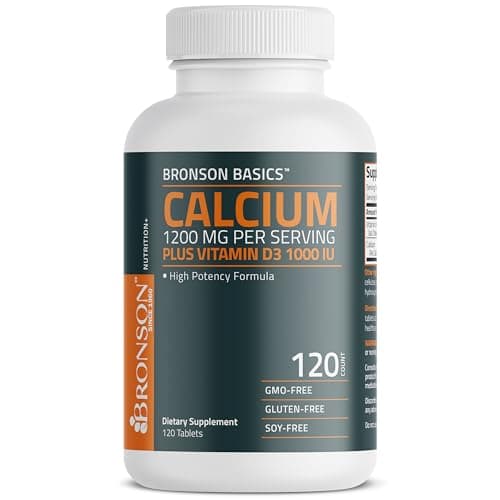
Bronson Calcium 1200mg Per Serving Plus Vitamin D3 1000 IU…
Cost per serving
$0.08
120 servings · ~120-day supply

Magnesium Citrate Capsules 1000mg | High Absorption Supplement…
Cost per serving
$0.15
120 servings · ~120-day supply

Solgar Vitamin D3 (Cholecalciferol) 250 MCG (10,000 IU)
Cost per serving
$0.12
120 servings · ~120-day supply
Related guides
Best time to take your supplements: a per-nutrient cheat sheet
Fat-soluble vitamins with a meal, magnesium in the evening, iron on an empty stomach with vitamin C, and the pairs you should NOT take together. A practical, evidence-based timing guide.
The Full GLP-1 Supplement Stack: What to Take & Cost Per Day
A cost-per-dose companion supplement stack for GLP-1 users (Ozempic/Mounjaro): protein, vitamin D, magnesium, B12, omega-3 — and the full daily cost.
The cheapest supplements to support GLP-1s, by cost per dose
Protein, fibre, electrolytes and a few key vitamins are the supplements most often paired with GLP-1 medications. Review sites list a price and a dose but never divide the two — so here's the same list ranked the only way that tells you what you're really paying: cost per dose.
Vitamin D on Ozempic and other GLP-1s: why it slips, and what a day of it costs
Vitamin D is the deficiency most often reported in people on GLP-1 medications — one 2026 review found about 14% were deficient at a year. It's also one of the cheapest supplements per dose. Here's the why, the sensible numbers, and the cost per 1,000 IU.