Vitamin D on Ozempic and other GLP-1s: why it slips, and what a day of it costs
Quick answer
Vitamin D is the deficiency most often reported in people on GLP-1 medications — one 2026 review found about 14% were deficient at a year. It's also one of the cheapest supplements per dose. Here's the why, the sensible numbers, and the cost per 1,000 IU.
Alex Soto, Founder, VitaminDB
6 min readUpdated 7/3/2026 NIH-sourced
On this page
If you're on a GLP-1 medication — semaglutide (Ozempic, Wegovy), tirzepatide (Mounjaro, Zepbound) — the whole point is that you eat less. That's also the catch for nutrition: eat less food, take in fewer nutrients, and a few of them start to slip. In the data so far, the one that slips most often is vitamin D.
Why vitamin D is the one that slips
A 2026 review of nutritional deficiencies in people taking GLP-1 receptor agonists (Urbina and colleagues, Clinical Obesity) pulled together data on nearly half a million adults. Its headline finding, widely covered since: vitamin D was the most common deficiency, affecting roughly 14% of users after about a year, followed by low iron and B-complex vitamins.
The mechanism is straightforward. GLP-1 drugs suppress appetite and slow the stomach, so people eat less and absorb differently — and the population using them (often with obesity or type 2 diabetes) is already more likely to start out low on vitamin D. It's worth being clear about what the review is and isn't: it's largely observational, so it shows an association, not proof that the medication causes the deficiency. But the pattern is consistent enough that the study's authors called for nutritional assessment to be part of GLP-1 care.
The sensible numbers (and the one trap)
You don't need a special "GLP-1 dose" of vitamin D. The reference points that matter come from the NIH Office of Dietary Supplements:
- RDA: 600 IU (15 mcg) a day for most adults, 800 IU (20 mcg) over age 70.
- [Tolerable Upper Limit: 4,000 IU](https://ods.od.nih.gov/factsheets/VitaminD-HealthProfessional/) (100 mcg) a day for adults.
The trap is assuming more is better. Vitamin D is fat-soluble and builds up; too much drives blood calcium too high, which is genuinely dangerous — more so if kidney function is reduced. That's why the honest answer to "how much should I take" is: get a blood test and let your prescriber set the dose. A number that's right for someone who tested at 15 ng/mL is wrong for someone at 40.
Where cost actually comes in
Here's the good news, and the part nobody else puts a number on: vitamin D is one of the cheapest things in the supplement aisle. Once your clinician has told you a target, the only question left is which product delivers it for the least money — and that's pure arithmetic.
The catch is that vitamin D softgels range from 400 IU to 10,000 IU, so price per bottle tells you almost nothing. A "365-count, 5,000 IU" bottle and a "60-count, 1,000 IU" bottle aren't remotely comparable on the shelf. The fair unit is cost per 1,000 IU — how much a standard chunk of vitamin D actually costs you. Across the catalog the same 1,000 IU can cost several times more from one brand to the next, and the priciest option is rarely the best-absorbed; it's usually just packaged better.
We rank every vitamin D we track by exactly that — real cost per dose — so you can hit whatever target your clinician set for the least money. The cheapest options are usually a fraction of a cent to a couple of cents per 1,000 IU.
If you take it with something else
Two pairings come up a lot for GLP-1 users, and both are on our cost-per-dose data:
- Vitamin D + magnesium — magnesium is a cofactor for activating vitamin D and is itself commonly low on GLP-1s.
- Vitamin D + K2 — often sold and taken together for how the two interact with calcium.
Neither is a rule, and supplements can interact with each other and with medications — so if you're building a stack on top of a GLP-1, run it past your clinician or pharmacist first. What we can tell you is the cost, so a fuller routine doesn't have to mean overpaying.
Try it: the GLP-1 nutrition calculator turns this into a priority-ranked list for your appetite level and diet — protein, vitamin D, B12, magnesium, electrolytes — each by cost per dose.
This is general shopping and quality guidance, not medical advice. Vitamin D needs are individual, high doses carry real risks, and anyone on a GLP-1 medication should decide on supplements with the clinician managing their treatment — ideally after a blood test.
Covered nutrients: Vitamin D3, Magnesium
See the live cost-per-dose data
This guide is editorial — the prices below are real and current.
Frequently asked questions
Do people on GLP-1 medications need to take vitamin D?
Not automatically — but they're at higher risk of running low, because these drugs cut appetite and food intake. A 2026 review reported vitamin D as the most common deficiency in GLP-1 users, at roughly 14% after a year. The right move isn't to guess a dose; it's to ask your prescriber for a blood test and let the result guide whether, and how much, you supplement. Not medical advice.
How much vitamin D should I take on Ozempic or Wegovy?
There's no GLP-1-specific dose. The general adult RDA is 600 IU/day (800 IU over 70), and the tolerable upper limit for adults is 4,000 IU/day, per the NIH Office of Dietary Supplements. Some people who test low need more, but high doses without a blood test carry real risk (too much vitamin D raises blood calcium). Confirm your dose with the clinician managing your GLP-1. Not medical advice.
How much does vitamin D cost per day?
Vitamin D3 is one of the cheapest supplements there is — a basic D3 often works out to a fraction of a cent to a couple of cents per 1,000 IU. Because doses vary so widely (400 IU to 10,000 IU per softgel), the fair way to compare is cost per 1,000 IU, not price per bottle. See the live cheapest-per-dose ranking linked below.
Should I take magnesium with vitamin D?
Magnesium is one of the cofactors the body uses to activate vitamin D, and it's also among the nutrients GLP-1 users can run low on. Some people pair them for that reason — but it's a value and convenience question, not a rule. Compare the cost of each and check with your clinician before stacking supplements.
Where these numbers come from
Cost figures on this page are computed from 516 active Vitamin D3 / Magnesium listings we track, last re-priced . Cost per dose is price ÷ (servings × dose), computed per listing — not a price we are quoted. Listings under $1 or with fewer than 3 servings are excluded, because both are usually a parse error rather than a bargain.
- Amazon.com · 513
- SuperSmart · 3
Prices move. Figures written into the text are re-checked against live data on a schedule; the ranking pages are always the current number.
Sources
Health claims on this page are drawn from these sources. Prices and cost-per-dose figures come from our own tracked listings, not from the sources below.
- 1.Vitamin D: Fact Sheet for Health Professionals — NIH Office of Dietary Supplements
- 2.Magnesium: Fact Sheet for Health Professionals — NIH Office of Dietary Supplements
Deals on these nutrients

Totaria Magnesium Complex 700mg 12 in 1 Magnesium Supplement…
Cost per serving
$0.18
120 servings · ~120-day supply
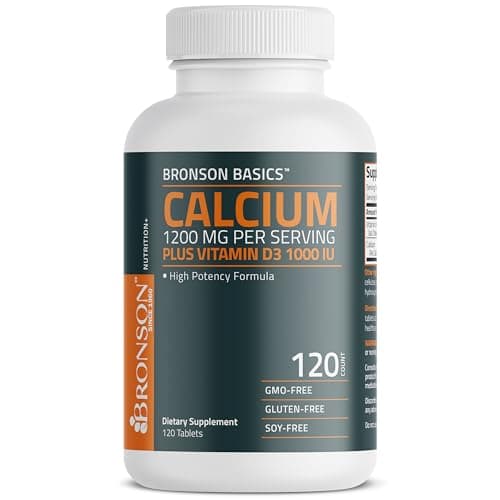
Bronson Calcium 1200mg Per Serving Plus Vitamin D3 1000 IU…
Cost per serving
$0.08
120 servings · ~120-day supply

Magnesium Citrate Capsules 1000mg | High Absorption Supplement…
Cost per serving
$0.15
120 servings · ~120-day supply

Solgar Vitamin D3 (Cholecalciferol) 250 MCG (10,000 IU)
Cost per serving
$0.12
120 servings · ~120-day supply
Related guides
The cheapest supplements to support GLP-1s, by cost per dose
Protein, fibre, electrolytes and a few key vitamins are the supplements most often paired with GLP-1 medications. Review sites list a price and a dose but never divide the two — so here's the same list ranked the only way that tells you what you're really paying: cost per dose.
What a supplement should cost per dose — and how to tell if you're overpaying
The sticker price on the bottle is the wrong number. Cost per dose — price ÷ servings ÷ active amount — is what you actually pay each day, and the same dose can cost many times more just depending on the brand.
The Full GLP-1 Supplement Stack: What to Take & Cost Per Day
A cost-per-dose companion supplement stack for GLP-1 users (Ozempic/Mounjaro): protein, vitamin D, magnesium, B12, omega-3 — and the full daily cost.
Testosterone Supplements: What the Evidence Actually Supports
A hedged, evidence-minded look at testosterone supplements: why most "T-booster" blends underdeliver, and the cheap deficiency-correction approach.