
Nature's Truth Vitamin A 10,000 IU 100 Quick Release Softgels…
Nature's TruthAmazon.com
$0.18/serving
$18.270°
vitamin · 38 active deals
The best-value Vitamin A right now is about $0.04 per dose — across the 24 we can price per dose the median is $0.066/dose, so shopping on cost-per-dose can cut your cost several-fold. Every Vitamin A deal here is ranked by cost per dose — what you actually pay per serving, not the sticker price — because forms and absorption differ, so the cheapest bottle isn’t always the cheapest dose.
Prices checked · live from the Amazon US catalog.
Right now the best value across our full Vitamin A catalog is at $0.04 per serving.
Recommended daily intake
Preformed vitamin A (retinol) is the form the upper limit guards; beta-carotene is converted as needed. General FDA/NIH adult guidance — not medical advice.
Vitamin A is a group of fat-soluble retinoids that the body requires for immune function, cellular communication, growth and development, and reproduction, and it supports the normal cell growth and differentiation involved in forming and maintaining the heart, lungs, eyes, and other organs. It is essential for vision as a component of rhodopsin, the light-sensitive protein in the retina, and for the normal functioning of the cornea and conjunctival membranes. Researchers have studied vitamin A and provitamin A carotenoids in relation to cancer, age-related macular degeneration, and measles, but the NIH notes the evidence is mixed: the relationship between vitamin A levels or supplementation and cancer risk is unclear, and clinical trials found that high-dose beta-carotene (with or without retinyl palmitate) increased lung cancer risk in current and former smokers and people exposed to asbestos. Findings on supplements for eye disease come largely from the AREDS trials, while vitamin A's role in measles relates mainly to deficiency in low-income settings. — per the NIH Office of Dietary Supplements; not medical advice.
According to the NIH, vitamin A in stand-alone supplements and most multivitamins is commonly provided as retinyl acetate, retinyl palmitate, provitamin A beta-carotene, or a combination of these. The sheet states that absorption of preformed vitamin A esters from dietary supplements is about 70% to 90%, whereas absorption of beta-carotene ranges more widely, from roughly 8.7% to 65%. Because the forms differ in bioactivity, intakes are expressed as retinol activity equivalents (RAE), with 2 mcg of supplemental beta-carotene counted as equivalent to 1 mcg of retinol.
Concentrations of preformed vitamin A are highest in liver, fish, eggs, and dairy products, while most dietary provitamin A in the U.S. diet comes from leafy green vegetables, orange and yellow vegetables, tomato products, fruits, and some vegetable oils. Among the richest foods per serving are beef liver (6,582 mcg RAE, 731% DV), baked sweet potato (1,403 mcg RAE), and spinach (573 mcg RAE); vitamin A is also routinely added to some foods such as milk and margarine — per the NIH Office of Dietary Supplements.
Frank vitamin A deficiency is rare in the United States but still common in many developing countries; groups most likely to have inadequate intakes include premature infants, infants, children, and pregnant and lactating women in low- and middle-income countries, people with cystic fibrosis, and individuals with gastrointestinal disorders such as Crohn's disease, ulcerative colitis, or celiac disease. The most common clinical sign is xerophthalmia, whose first sign is night blindness; deficiency can eventually lead to permanent blindness and has also been associated with abnormal lung development, respiratory disease, anemia, and increased severity and mortality from infections like measles and diarrhea — per the NIH Office of Dietary Supplements.
Vitamin A is fat-soluble — take it with a meal containing fat.
Preformed vitamin A (retinol) is toxic in excess and, at high doses, harmful in pregnancy. Do not exceed the label, and in pregnancy get vitamin A guidance from your clinician (beta-carotene is the safer source).
General guidance on timing and absorption, not medical advice. Check with a clinician about your medications and conditions.
Nature's Truth Vitamin A 10,000 IU 100 Quick Release Softgels…


NaturesPlus Vitamin A 10,000 IU - 90 Water-Dispersible Tablets…


Futurebiotics Vitamin A 10,000 IU Premium Non-GMO Formula…


Natural Nutra Vitamin A 10000 IU Softgels, Vitamin A 100 Count


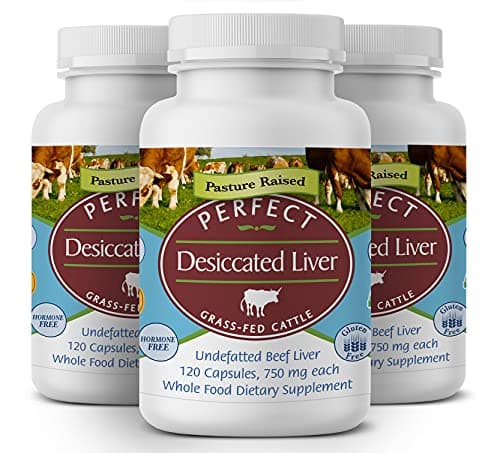
Perfect Supplements – Perfect Desiccated Liver – 120 Capsules…
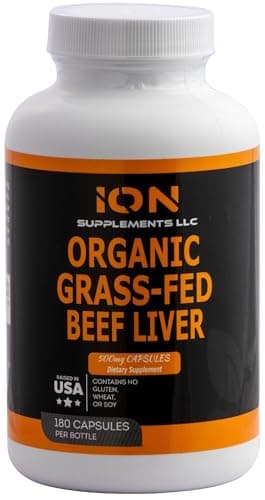
USDA Organic Grass Fed Beef Liver Capsules (180 Caps)…
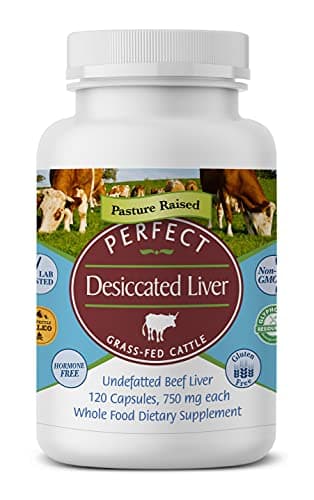
Perfect Supplements – Perfect Desiccated Liver – 120 Capsules…
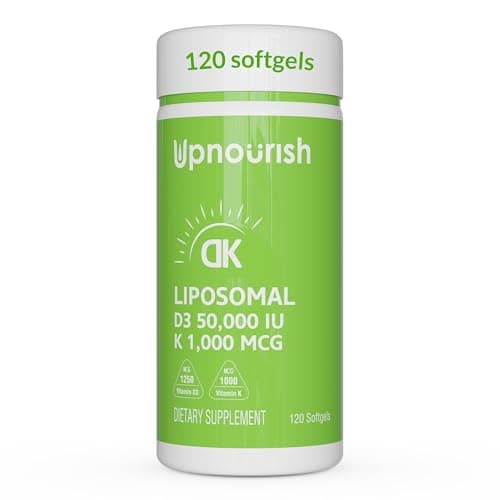
UpNourish Liposomal Vitamin D3 50000 IU (Vitamina D3 de 50000)…

PROTOCOL FOR LIFE BALANCE Vitamin A 25,000 IU, 100 Softgels
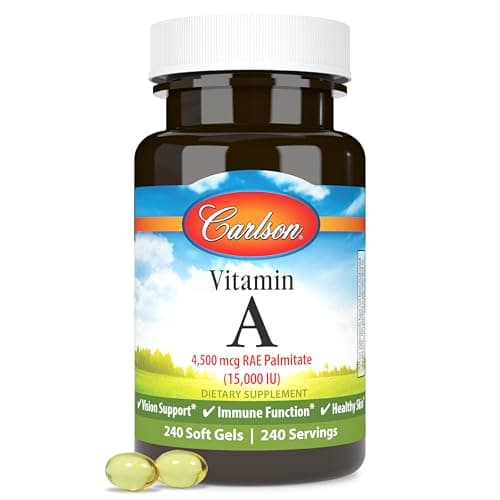
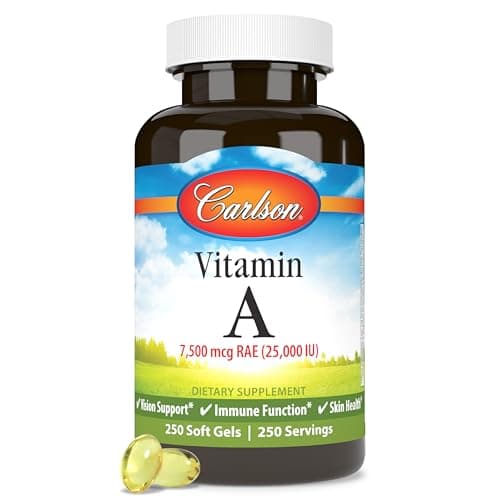

NOW Foods Supplements, Certified Organic, Spirulina 1000 mg…

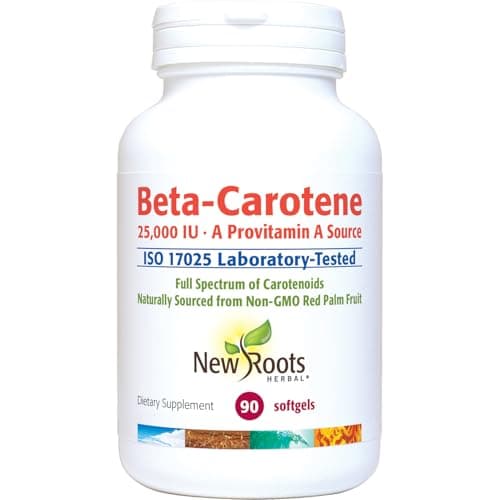
NEW ROOTS HERBAL Beta-Carotene 25,000 IU Supplements | Vitamin…
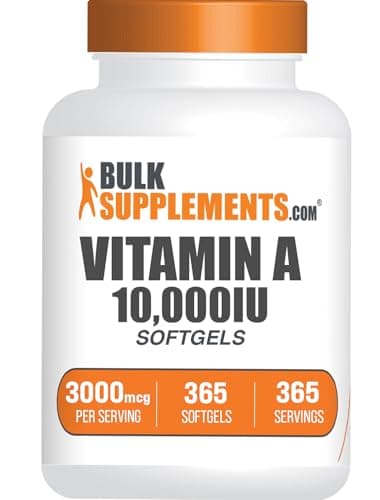
BulkSupplements.com Vitamin A 10000 IU Softgels - as Retinyl…

NOW Foods Supplements, Vitamin A (Fish Liver Oil) 25,000 IU…


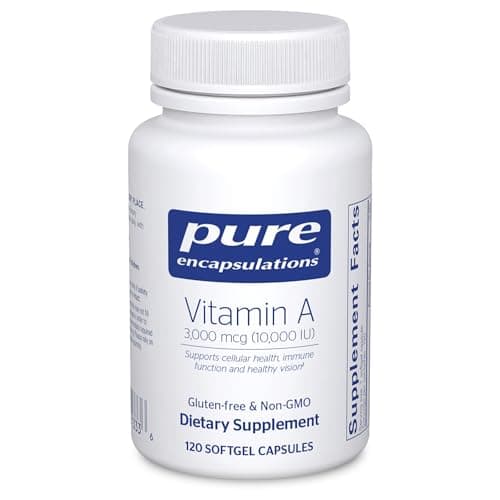
Pure Encapsulations Vitamin A - 3,000 mcg - from Cod Liver Oil…

Swanson Beta-Carotene Vitamin A 25,000 IU Eye and Skin Health…
Every Vitamin A deal above is ranked by real cost per dose with no paid placement — see our and .
1 of 28 tracked Vitamin A brands here are flagged as carrying independent third-party testing — a voluntary check of a product's identity, potency and contaminants by an outside lab. It's a quality signal, not a value or efficacy claim. Confirm any brand's current status on the official registries:
Testing status is self-reported by the brand or drawn from public certification and may change — always verify on the official registry before purchase.
The is 900 mcg RAE for adult men and 700 mcg RAE for adult women. Pregnancy (19-50) is 770 mcg RAE and lactation (19-50) is 1,300 mcg RAE. Children range from 300 mcg RAE (ages 1-3) to 600 mcg RAE (ages 9-13). Infants have an AI of 400-500 mcg RAE. — per the NIH Office of Dietary Supplements; general information, not medical advice.
Yes. The for preformed vitamin A is 3,000 mcg for adults 19+. Acute toxicity (hypervitaminosis A) can cause severe headache, blurred vision, nausea, dizziness, and in severe cases coma and death. Chronic excess can cause dry skin, painful muscles and joints, fatigue, and abnormal liver tests. High doses can cause birth defects. — per the NIH Office of Dietary Supplements; general information, not medical advice.
The most common clinical sign is xerophthalmia. The first sign is night blindness, the inability to see in low light. Xerophthalmia also affects the cornea and can eventually lead to permanent blindness. Chronic deficiency is also associated with abnormal lung development, respiratory diseases, increased risk of anemia, and greater severity of infections. — per the NIH Office of Dietary Supplements; general information, not medical advice.
Groups most likely to have inadequate intakes are premature infants; infants, children, and pregnant and lactating women in low-income and middle-income countries; people with cystic fibrosis; and individuals with gastrointestinal disorders such as Crohn's disease, ulcerative colitis, and celiac disease. — per the NIH Office of Dietary Supplements; general information, not medical advice.
We link primary sources and paraphrase their findings — never copy their text, tables, or images. Cost-per-dose figures are our own first-party catalog data.
Because vitamin A is fat soluble the body stores excess amounts, and acute toxicity (hypervitaminosis A) from very high doses can cause severe headache, blurred vision, nausea, dizziness, and in severe cases coma and death, while chronic high intakes can cause dry skin, painful muscles and joints, fatigue, liver abnormalities, and birth defects, so pregnant or possibly pregnant women are advised not to take more than 3,000 mcg RAE (10,000 IU) daily. The FNB has set Tolerable Upper Intake Levels for preformed vitamin A of 600 mcg (birth-3 years), 900 mcg (4-8 years), 1,700 mcg (9-13 years), 2,800 mcg (14-18 years), and 3,000 mcg (adults 19+, including pregnancy and lactation); no UL has been established for beta-carotene and other provitamin A carotenoids — per the NIH Office of Dietary Supplements.
Yes. Orlistat (Alli, Xenical), a weight-loss treatment, can decrease absorption of vitamin A and beta-carotene, lowering plasma levels. Synthetic retinoids such as acitretin (Soriatane) and bexarotene (Targretin) can increase the risk of hypervitaminosis A when taken with vitamin A supplements. — per the NIH Office of Dietary Supplements; general information, not medical advice.
The cheapest vitamin a we track works out to $0.04 , against a typical $0.07 across the 24 we can price per dose — about $1.08 a month at the cheapest. That is real from live Amazon US prices, not the sticker price. The full ranking is on the Best Vitamin A page.
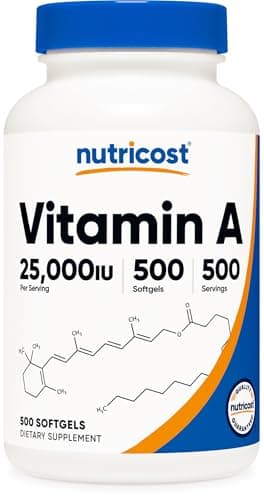
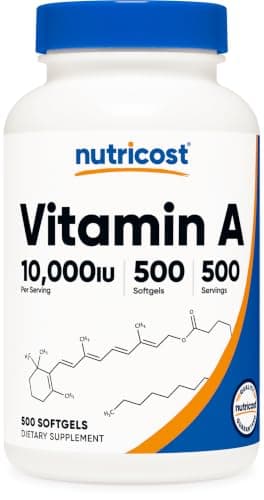
Nutricost Vitamin A 10,000 , 500 at $0.04 — the lowest cost-per-dose vitamin a in our catalog. See the full ranking on the Best Vitamin A page.
We're tracking 38 active Vitamin A deals across Amazon US and partner retailers, ranked by community votes and cost-per-dose — not paid placement.
Across the 24 Vitamin A deals we can price per dose (combination products are left out — their single label dose belongs to whichever ingredient the product is built around) the median cost-per-dose is $0.066; the cheapest quartile comes in under $0.049 . Anything below the median is a solid deal for the same molecule.
Deals are submitted by the community and ranked by net votes (hot minus cold) plus cost-per-dose normalised across container sizes. We take no affiliate kickbacks for ordering; sponsored slots, when present, are clearly badged.
Because vitamin A is fat soluble the body stores excess amounts, and acute toxicity (hypervitaminosis A) from very high doses can cause severe headache, blurred vision, nausea, dizziness, and in severe cases coma and death, while chronic high intakes can cause dry skin, painful muscles and joints, fatigue, liver abnormalities, and birth defects, so pregnant or possibly pregnant women are advised not to take more than 3,000 mcg RAE (10,000 ) daily. The FNB has set Tolerable Upper Intake Levels for preformed vitamin A of 600 mcg (birth-3 years), 900 mcg (4-8 years), 1,700 mcg (9-13 years), 2,800 mcg (14-18 years), and 3,000 mcg (adults 19+, including pregnancy and lactation); no has been established for beta-carotene and other provitamin A carotenoids — per the NIH Office of Dietary Supplements.
Concentrations of preformed vitamin A are highest in liver, fish, eggs, and dairy products, while most dietary provitamin A in the U.S. diet comes from leafy green vegetables, orange and yellow vegetables, tomato products, fruits, and some vegetable oils. Among the richest foods are beef liver (6,582 mcg RAE, 731% DV), baked sweet potato (1,403 mcg RAE), and spinach (573 mcg RAE); vitamin A is also routinely added to some foods such as milk and margarine — per the NIH Office of Dietary Supplements.
Dosage, upper-limit, deficiency, food-source and interaction facts are sourced from the NIH Office of Dietary Supplements Vitamin A fact sheet. General information, not medical advice.