Protein Powder Cost Per Gram: Compare the Right Way
Quick answer
To compare protein powders fairly, divide the tub's price by the total grams of protein it contains (servings x protein per serving), not by the tub price or the number of scoops. Across the 40 whey listings VitaminDB tracks with a clean gram dose, cost runs roughly $0.031 to $0.124 per gram of protein, with the median whey near $0.072 per gram (19 September 2026). A cheaper tub with a big, low-protein scoop can quietly cost more per gram than a pricier one. This is general information, not medical advice.
Alex Soto, Founder, VitaminDB
7 min readUpdated 7/4/2026 NIH-sourced
On this page
Protein powder is one of the easiest supplements to overpay for, because almost every label steers you toward the wrong number. Tub price makes a giant 5 lb container look like a bargain. Per-scoop cost hides the fact that scoops vary in size and in how much of that scoop is actually protein. The number that lets you compare two tubs most honestly is cost per gram of actual protein — and once you calculate it, the rankings often flip. This guide shows you how to do that math, with an illustrative example alongside the real price ranges from the listings VitaminDB tracks.
Why "per tub" and "per scoop" both mislead you
A tub price tells you what leaves your wallet, not what you get. A larger container with more servings can be cheaper per serving than a smaller one that looks cheaper at the shelf, so the shelf sticker alone won't tell you which is the better value.
Per-scoop cost is closer, but it has a hidden flaw: scoop size and protein percentage are not standardized. One brand's scoop might be mostly protein; another's might be heavier while delivering the same protein — the rest is cocoa, thickeners, sweeteners, or added carbs. If you compare by scoop, the bulkier tub can look "bigger and better" while actually giving you less protein per dollar. This is a trap that plant and "blend" formulas can create — not through any dishonesty, but because their protein density per scoop is often lower.
The fix is to ignore scoops entirely and go one level deeper: total grams of protein in the whole tub.
The one calculation that matters
Here is the formula:
Cost per gram of protein = tub price ÷ (servings per tub × grams of protein per serving)
That denominator — servings multiplied by protein-per-serving — is the total grams of protein you're buying. Divide the price by it and every product lands on the same scale, regardless of scoop size, flavor system, or tub weight.
You'll find both numbers on the Supplement Facts panel: "servings per container" and "protein" (in grams) per serving. That's all you need.
A worked example (illustrative figures)
Let's walk two hypothetical tubs through it. These numbers are made up to show the math, not products VitaminDB tracks.
Tub A costs $45 and has 30 servings at 30 g protein each. Total protein = 30 × 30 = 900 g. Cost per gram = $45 ÷ 900 = $0.050 per gram of protein.
Tub B costs $39 — cheaper on the shelf — but its bigger scoop delivers 22 g protein across 30 servings. Total protein = 30 × 22 = 660 g. Cost per gram = $39 ÷ 660 = $0.059 per gram of protein.
Tub B is cheaper to buy and more expensive per gram of protein. If you're buying protein — not powder by weight — Tub A is the better value, and only the per-gram math reveals it. This is the whole point.
What the real price spread looks like
VitaminDB ranks products on exactly this metric. Here's the picture from current tracked data.
Across the 40 active whey-protein listings we track, 39 state a dose in grams. Priced on the protein itself, they run from $0.031 to $0.124 per gram, with a median near $0.072 per gram — about $1.78 for a typical serving (figures 19 September 2026).
That's a spread of about 4x between the cheapest and most expensive tracked whey per gram. Put differently: the priciest whey in our data costs roughly four times what the cheapest does to deliver the same gram of protein. There's no clear nutritional reason a gram of whey protein should cost four times more — the difference is largely brand, flavor, packaging, and marketing.
Here's the same data as a quick reference:
- Cheapest tracked whey — Value (per gram of protein): ~$0.031
- Median whey — Value (per gram of protein): ~$0.072
- Most expensive tracked whey — Value (per gram of protein): ~$0.124
You can see the live, sortable ranking on our best whey protein by cost per gram page, which recalculates as prices change. We link to the current lowest-cost option there rather than naming a brand here, because prices move week to week.
Why the broader "protein" category is messier
VitaminDB also tracks a wider protein category that includes plant and collagen blends — 76 listings in total, priced from about $0.027 to $0.159 per gram of protein (median $0.071). That group is harder to compare cleanly, and it's worth understanding why before you shop across types.
Whey is relatively consistent: scoops tend to be protein-dense, and most land near that ~30 g-per-serving mark, which is why the per-gram math is so clean. Plant blends (pea, rice, soy, hemp, and mixes) frequently pack lower protein per scoop, because plant protein isolates are bulkier and are often combined with other ingredients for texture and amino-acid balance. That's not a knock on plant protein; it can be a good choice for people avoiding dairy, and public-health guidance generally treats total daily protein intake as what matters most for most goals, rather than the source. It simply means you should run the per-gram calculation, because scoop-to-scoop comparisons across whey and plant can mislead you.
Collagen is a separate case worth flagging honestly: it counts as protein by grams, but it's an incomplete protein (low in some essential amino acids) and is generally used for different reasons than muscle-focused whey or soy. Comparing collagen's cost per gram to whey's is apples to oranges even when the math is identical — match the type to your goal first, then compare cost within that type.
How to actually shop this
A repeatable routine that takes about two minutes per product:
- Find two numbers on the label: servings per container and grams of protein per serving.
- Multiply them for total grams of protein in the tub.
- Divide the current price by that total.
- Compare within type — whey to whey, plant to plant — not across types.
- Re-check the price, since the same tub swings in cost with sales and stock. Our rankings update automatically, but a manual check catches deals.
If you take more than one supplement, it's also worth looking at your whole routine's cost together rather than optimizing each in isolation — our stack cost tool adds up cost per dose across everything you take so you can see where the money actually goes.
A few honest caveats
Cost per gram of protein is a useful value metric, but it isn't the only thing that matters. Protein quality differs (whey and soy are complete proteins; collagen is not). Digestibility, added sugars, artificial sweeteners, third-party testing for contaminants, taste, and how well a powder mixes are all real factors that a price-per-gram number can't capture. The cheapest gram isn't automatically the right buy if you won't drink it or it upsets your stomach.
There's also the question of how much protein you need, which is individual — it depends on body weight, activity, age, and goals. General nutrition guidance from bodies like the NIH Office of Dietary Supplements offers ranges, but the specific target for you is a conversation with a clinician or registered dietitian, not something a supplement price page can prescribe. Powder is a supplement to a food-first diet, not a replacement for it.
What cost per gram of protein does do is strip away the two most common ways protein powders are priced to look cheaper than they are. Run the numbers, compare within type, and you'll be less likely to be fooled by a big tub or a big scoop.
This is general information, not medical advice — talk to a clinician or registered dietitian before making changes to your diet or supplement routine.
Covered nutrients: Protein Powder, Whey Protein
See the live cost-per-dose data
This guide is editorial — the prices below are real and current.
Frequently asked questions
How do I calculate cost per gram of protein for protein powder?
Divide the tub's price by the total grams of protein it contains, which is servings per container multiplied by grams of protein per serving. For example (illustrative numbers only), a $45 tub with 30 servings at 30 g each holds 900 g of protein, or about $0.050 per gram. Both numbers you need are printed on the Supplement Facts panel. This is general information, not medical advice.
Is whey or plant protein cheaper per gram of protein?
Whey tends to be more consistent and can be cheaper per gram because its scoops are usually more protein-dense, while plant blends frequently deliver less protein per scoop. That said, prices overlap and vary constantly, so the most reliable answer is to run the per-gram math on the specific tubs you're comparing. Plant protein remains a reasonable choice for people avoiding dairy — value and suitability are separate questions.
Why does a cheaper tub sometimes cost more per gram of protein?
Because tub price and scoop size hide how much actual protein you're getting. A cheaper tub with a big, lower-protein scoop can deliver fewer total grams of protein than a pricier tub with a dense scoop. Once you divide price by total grams of protein, the cheaper-looking tub can turn out to be the more expensive one per gram.
Where these numbers come from
Cost figures on this page are computed from 84 active Protein Powder / Whey Protein listings we track, last re-priced . Cost per dose is price ÷ (servings × dose), computed per listing — not a price we are quoted. Listings under $1 or with fewer than 3 servings are excluded, because both are usually a parse error rather than a bargain.
- Amazon.com · 84
Prices move. Figures written into the text are re-checked against live data on a schedule; the ranking pages are always the current number.
Sources
Health claims on this page are drawn from these sources. Prices and cost-per-dose figures come from our own tracked listings, not from the sources below.
- 1.Dietary Supplements for Exercise and Athletic Performance: Fact Sheet for Health Professionals — NIH Office of Dietary Supplements
Deals on these nutrients
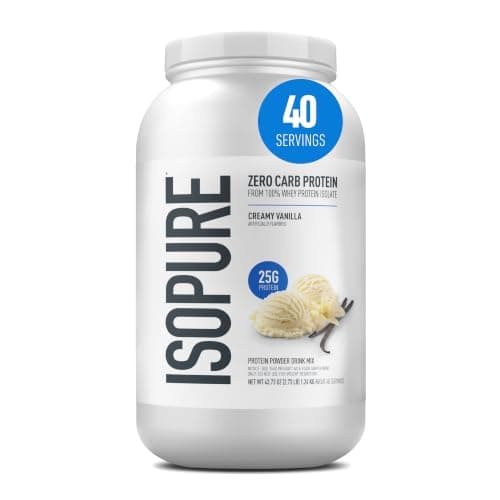
Isopure Zero Carb 100% Pure Whey Isolate Protein Powder
Cost per serving
$2.04
44 servings · ~44-day supply
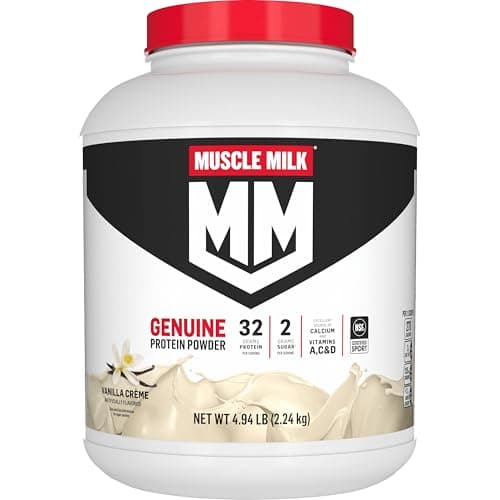
Muscle Milk Genuine Protein Powder
Cost per serving
$1.85
32 servings · ~32-day supply
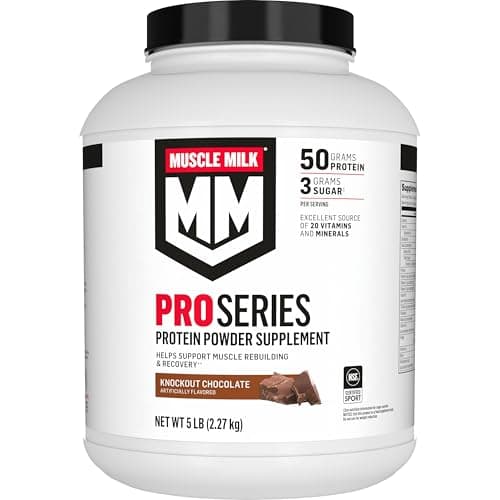
Muscle Milk Pro Series Protein Powder
Cost per serving
$2.50
28 servings · ~28-day supply
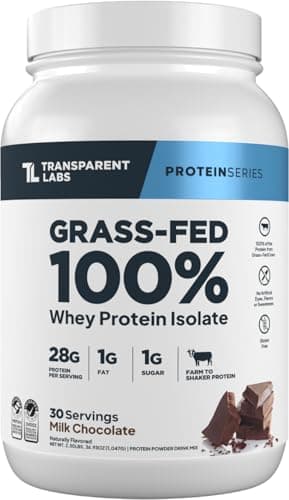
Transparent Labs Grass-Fed Whey Protein Isolate - Naturally…
Cost per serving
$2.17
30 servings · ~30-day supply
Related guides
How much protein per day? Grams by body weight — and the cheapest way to hit it
The RDA of 0.8 g/kg is the floor to avoid deficiency, not the target for muscle. For building and keeping muscle, evidence points to about 1.6 g/kg. Your numbers by body weight, plus the cheapest way to close the gap with powder.
Whey isolate vs concentrate: which is worth it per gram of protein
Concentrate is usually the best value per gram of protein; isolate is the low-lactose, leaner scoop. Both build muscle equally — decide by cost per gram.
The cheapest supplements to support GLP-1s, by cost per dose
Protein, fibre, electrolytes and a few key vitamins are the supplements most often paired with GLP-1 medications. Review sites list a price and a dose but never divide the two — so here's the same list ranked the only way that tells you what you're really paying: cost per dose.
Third-party supplement testing explained: USP, NSF, Informed Sport and the rest
Supplements are not FDA-approved before sale, so third-party seals are the main independent check on what's actually in the bottle. Here's what USP, NSF, NSF Certified for Sport, Informed Sport and Informed Choice each test — and why 'GMP certified' is not the same thing.