
💪
BCAA
amino · 28 active deals
How much does BCAA cost?
The best-value BCAA right now is about $0.03 per dose — across the 27 we can price per dose the median is $0.525/dose, so shopping on cost-per-dose can cut your cost several-fold. Every BCAA deal here is ranked by cost per dose — what you actually pay per serving, not the sticker price — because forms and absorption differ, so the cheapest bottle isn’t always the cheapest dose.
Prices checked · live from the Amazon US catalog.
Right now the best value across our full BCAA catalog is at $0.03 per gram.
Median $0.525/servingCheapest quartile under $0.092across 27 tracked BCAA deals
Compare:
What BCAA does
Three essential amino acids — leucine, isoleucine, and valine — are the branched-chain amino acids (BCAAs), a name that reflects their chemical structure. Per the NIH Office of Dietary Supplements, they comprise about 14%–18% of the amino acids in human skeletal muscle proteins, and unlike other essential amino acids they can be metabolized by mitochondria in skeletal muscle to provide energy during exercise; the BCAAs, especially leucine, might also stimulate protein synthesis in exercised muscle. ODS reports that the limited research on their ergogenic effects has found little evidence to date that BCAA supplements improve performance in endurance-related aerobic events, though several short studies lasting about 3 to 6 weeks suggest that roughly 10–14 g/day might enhance gains in muscle mass and strength during training. ODS also notes BCAAs might delay feelings of fatigue or help maintain mental focus by competing with tryptophan for entry into the brain, but says this effect has not been well studied, and concludes that the evidence overall is inconsistent as to whether BCAAs stimulate muscle protein synthesis beyond what a sufficient amount of any high-quality protein already does. — per NIH Office of Dietary Supplements; not medical advice.
Forms & absorption
BCAA supplements are typically sold as powders or capsules blending the three amino acids, most often in a 2:1:1 leucine-to-isoleucine-to-valine ratio, and are labelled by total BCAA grams per serving — which is the figure our per-gram cost ranking uses. The NIH Office of Dietary Supplements notes that consuming animal foods with complete proteins, or complementary plant proteins, automatically increases BCAA intake, and that this is also true of protein powders made from complete proteins, "especially whey, which has more leucine than either casein or soy." A practical consequence for cost: a whey protein powder already supplies BCAAs, so a separate BCAA product only adds value if its cost per gram of BCAA beats the BCAA you are already paying for in your protein.
What the evidence shows for BCAA
The limited research on the potential ergogenic effects of the BCAAs "has found little evidence to date that supplements of these amino acids improve performance in endurance-related aerobic events," per NIH ODS. Results of several short-term studies lasting about 3 to 6 weeks suggest that about 10–14 g/day of supplemental BCAAs might enhance gains in muscle mass and strength during training. Overall, however, ODS states that studies to date "provide inconsistent evidence of the ability of BCAAs to stimulate muscle protein synthesis beyond the capacity of sufficient dietary amounts of any high-quality protein to perform this function," and that studies have not consistently shown that BCAA supplements enhance exercise performance, build muscle mass, or aid recovery. — per NIH Office of Dietary Supplements; not medical advice.
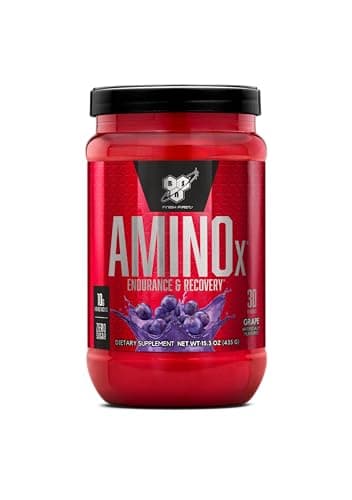
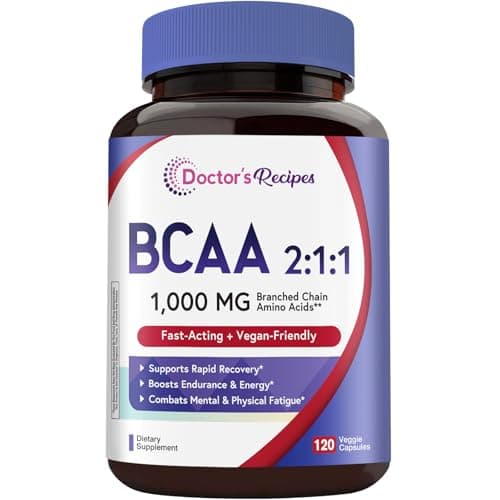


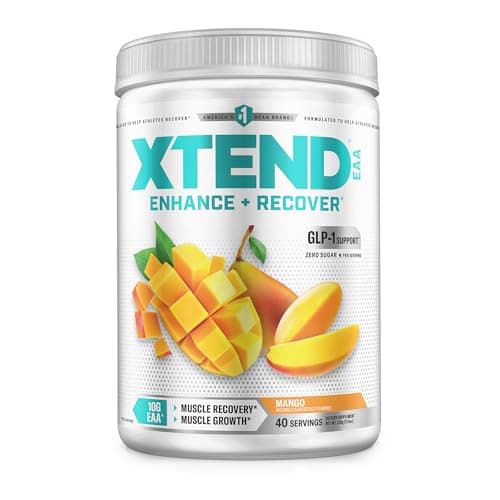
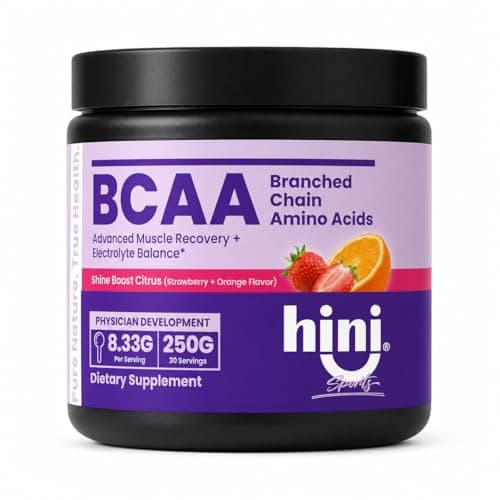
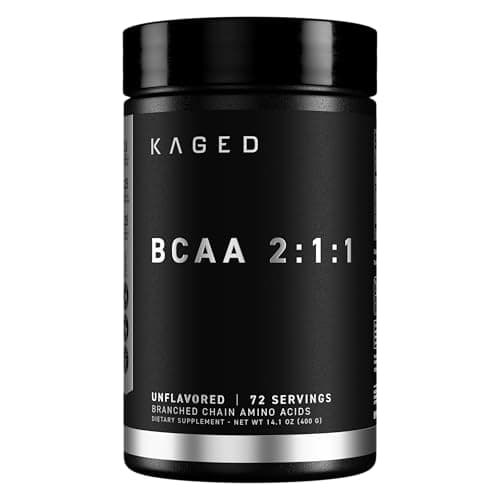
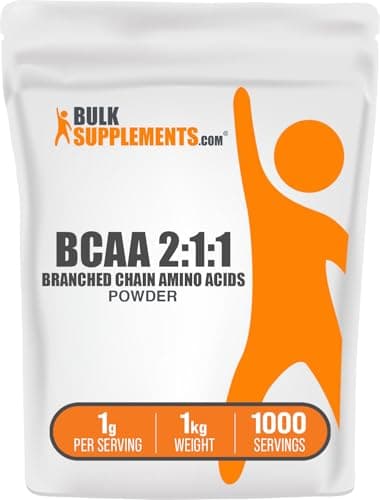
BulkSupplements.com BCAA 2:1:1 Powder - Branched Chain Amino…
BulkSupplements.comAmazon.com
$0.03/serving
$34.970°
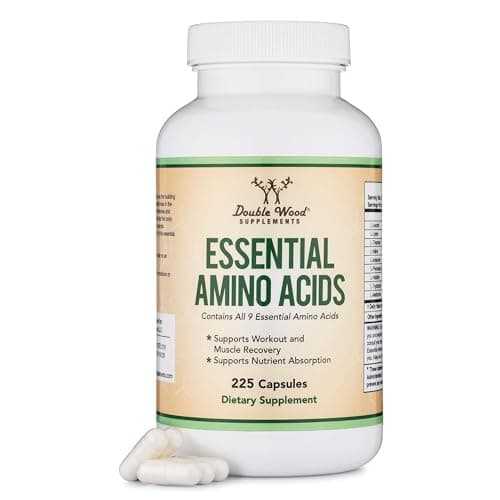
Essential Amino Acids - 1 Gram Per Serving Powder Blend of All…
Double Wood SupplementsAmazon.com
$0.09/serving
$19.950°
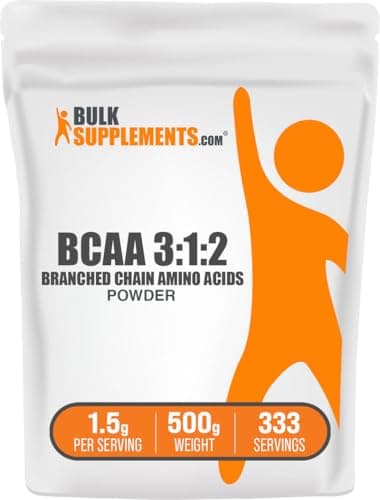
BulkSupplements.com BCAA 3:1:2 Powder - BCAA Supplements
BulkSupplements.comAmazon.com
$0.07/serving
$24.970°
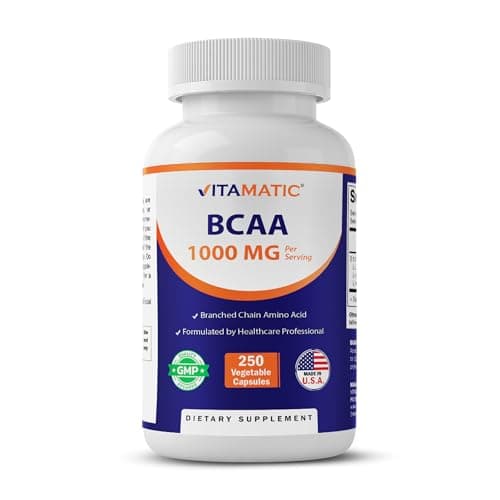
Vitamatic BCAA 1000 mg Per Serving (2:1:1) | 250 Veg Capsules…
VitamaticAmazon.com
$0.06/serving
$14.990°
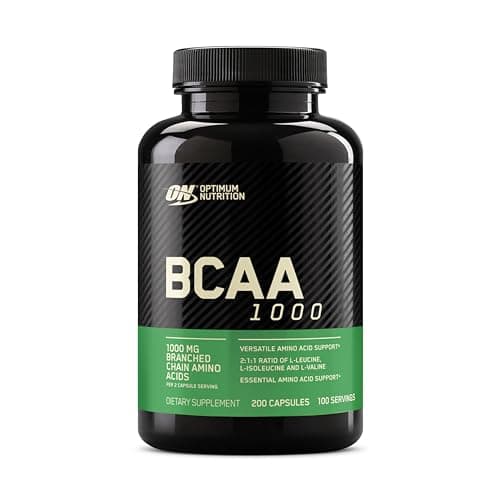
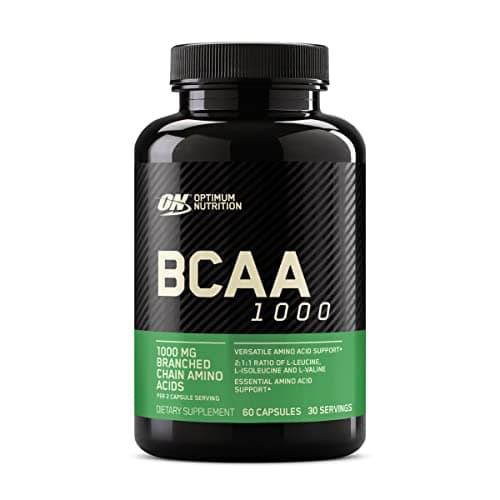
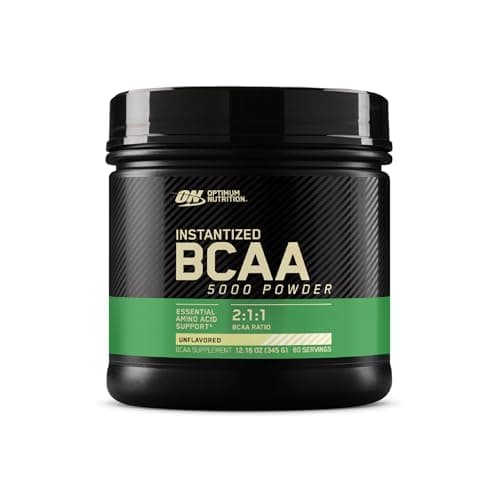
Optimum Nutrition Instantized BCAA Branched Chain Essential…
Optimum NutritionAmazon.com
$0.11/serving
$21.990°

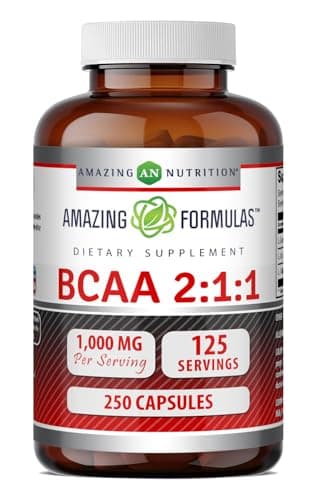
Amazing Formulas BCAA 2:1:1 1000 Mg Per Serving | Capsules…
Amazing FormulasAmazon.com
$0.06/serving
$13.990°
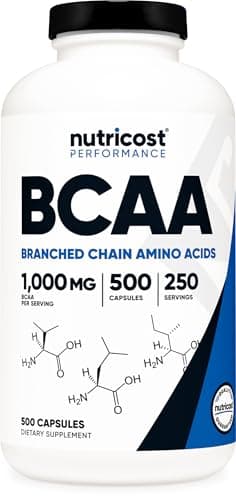
Nutricost BCAA 1000mg, 500 Capsules (250 Serv), 2:1:1 Branched…
NutricostAmazon.com
$0.04/serving
$21.950°
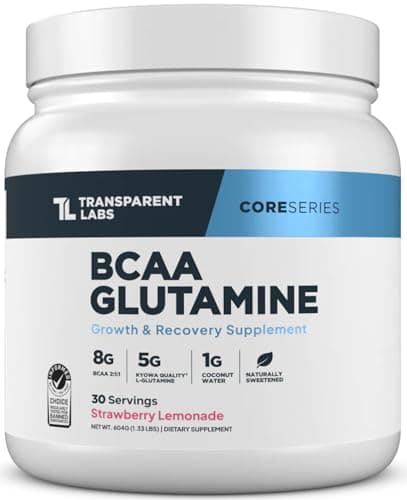
Transparent Labs BCAA Glutamine - 8000 mg of BCAA Powder Per…
Transparent LabsAmazon.com
$1.33/serving
$39.990°
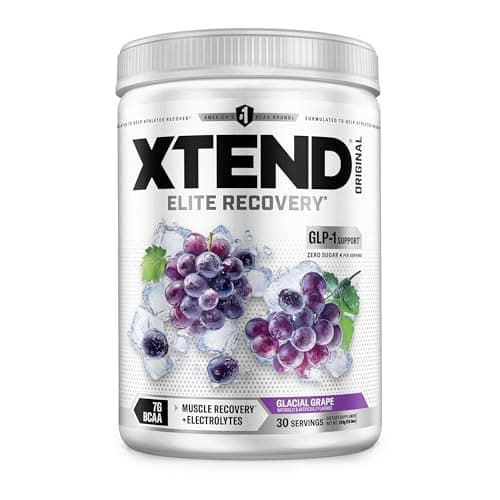

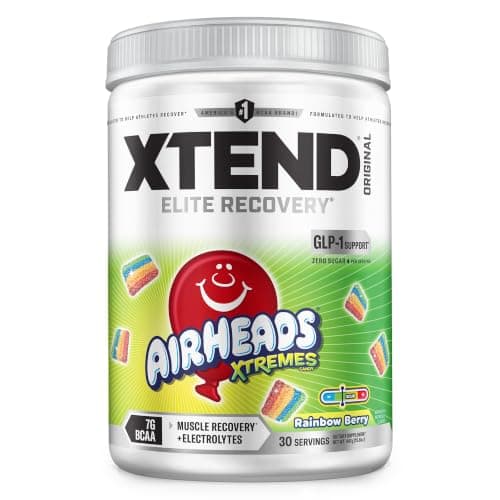

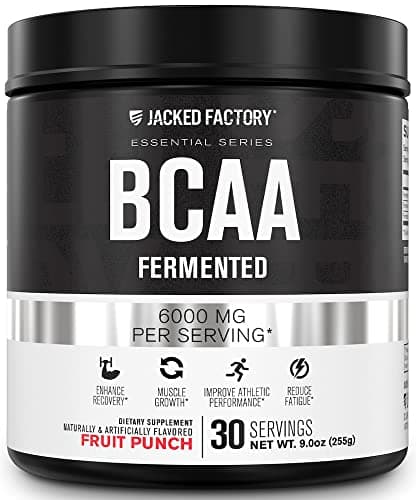
Jacked Factory BCAA Powder (Fermented) - 6g Branched Chain…
Jacked FactoryAmazon.com
$0.60/serving
$17.990°
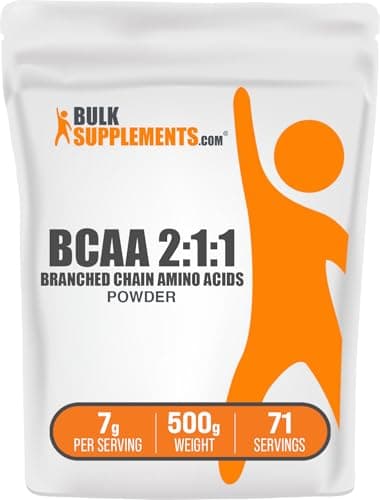
BulkSupplements.com BCAA 2:1:1 Powder - Branched Chain Amino…
BulkSupplements.comAmazon.com
$0.05/serving
$23.970°

Every BCAA deal above is ranked by real cost per dose with no paid placement — see our and .
Independent testing
2 of 14 tracked BCAA brands here are flagged as carrying independent third-party testing — a voluntary check of a product's identity, potency and contaminants by an outside lab. It's a quality signal, not a value or efficacy claim. Confirm any brand's current status on the official registries:
Testing status is self-reported by the brand or drawn from public certification and may change — always verify on the official registry before purchase.
BCAA deals — FAQ
- How much does BCAA cost?
The cheapest bcaa we track works out to $0.03 per gram. That is real from live Amazon US prices, not the sticker price. The full ranking is on the Best BCAA page.
- What is the best-value BCAA per dose?
BulkSupplements.com BCAA 2:1:1 Powder - Branched Chain Amino Acids at $0.03 per gram — the lowest cost-per-dose bcaa in our catalog. See the full ranking on the Best BCAA page.
- How many BCAA deals are live right now?
We're tracking 28 active BCAA deals across Amazon US and partner retailers, ranked by community votes and cost-per-dose — not paid placement.
- How does VitaminDB rank BCAA deals?
Deals are submitted by the community and ranked by net votes (hot minus cold) plus cost-per-dose normalised across container sizes. We take no affiliate kickbacks for ordering; sponsored slots, when present, are clearly badged.
- Does BCAA actually work?
The limited research on the potential ergogenic effects of the BCAAs "has found little evidence to date that supplements of these amino acids improve performance in endurance-related aerobic events," per NIH ODS. Results of several short-term studies lasting about 3 to 6 weeks suggest that about 10–14 g/day of supplemental BCAAs might enhance gains in muscle mass and strength during training. Overall, however, ODS states that studies to date "provide inconsistent evidence of the ability of BCAAs to stimulate muscle protein synthesis beyond the capacity of sufficient dietary amounts of any high-quality protein to perform this function," and that studies have not consistently shown that BCAA supplements enhance exercise performance, build muscle mass, or aid recovery. — per NIH Office of Dietary Supplements; not medical advice.
BCAA guides
Related amino acids
References & sources
- Dietary Supplements for Exercise and Athletic Performance: Fact Sheet for Health Professionals — NIH Office of Dietary Supplements
- USP Verified product participants — U.S. Pharmacopeia
- NSF certified products — NSF
We link primary sources and paraphrase their findings — never copy their text, tables, or images. Cost-per-dose figures are our own first-party catalog data.