NEW
🥤 Electrolytes
Cost per serving
$0.18
mineral · 35 active deals
The best-value Potassium right now is about $0.04 per dose — across 34 tracked products the median is $0.192/dose, so shopping on cost-per-dose can cut your cost several-fold. Every Potassium deal here is ranked by cost per dose— what you actually pay per serving, not the sticker price — because forms and absorption differ, so the cheapest bottle isn’t always the cheapest dose.
Right now the best value across our full Potassium catalog is at $0.04 per serving.
Recommended daily intake
No upper limit from food, but supplemental potassium is capped by law (~99 mg/pill) and risky in kidney disease. General FDA/NIH adult guidance — not medical advice.
Potassium is an essential nutrient and the most abundant cation inside cells; it is required for normal cell function through its role in maintaining intracellular fluid volume and the transmembrane electrochemical gradient, and that gradient is required for proper nerve transmission, muscle contraction, and kidney function. Because of these wide-ranging roles, the fact sheet notes that insufficient intake can raise blood pressure, kidney stone risk, bone turnover, urinary calcium excretion, and salt sensitivity. It has been studied in relation to hypertension and stroke, kidney stones, bone health, and blood glucose control and type 2 diabetes; the NIH notes that most clinical trials suggest potassium supplementation lowers blood pressure (especially in people with hypertension) and that higher potassium intakes have been associated with lower stroke risk, but findings across reviews are inconsistent and the evidence is mixed, so more research is needed before firm conclusions can be drawn. Some research also suggests potassium citrate may reduce hypercalciuria and kidney stone risk and that dietary potassium may benefit bone, though the proposed mechanisms often involve citrate or co-occurring nutrients rather than potassium itself, so its independent contribution cannot be determined — per the NIH Office of Dietary Supplements; not medical advice.
In dietary supplements, potassium is often present as potassium chloride, but many other forms are also used, including potassium citrate, phosphate, aspartate, bicarbonate, and gluconate; the Supplement Facts label lists the amount of elemental potassium, not the weight of the whole compound, and most products are limited to about 99 mg per serving. The fact sheet states that only a few studies have examined how well these forms are absorbed: a 2016 trial found humans absorb about 94% of potassium gluconate, similar to potassium from potatoes, while liquid potassium chloride is absorbed within a few hours and enteric-coated potassium chloride tablets are not absorbed as rapidly as liquid forms. It also notes that, for bone health, alkaline potassium salts such as potassium bicarbonate or citrate (but not potassium chloride) may help counter dietary acid load.
A supplement's front-label figure is usually the compound weight, not elemental potassium. By weight, potassium chloride is about 52% elemental while gluconate is only about 17% — so a “1,000 mg gluconate” capsule delivers roughly 170 mg of elemental potassium. Always compare the “Potassium” line in the Supplement Facts panel, not the number on the front of the bottle.
Every Potassium deal above is ranked by real cost per dose with no paid placement — see our and .
1 of 9 tracked Potassium brands here are flagged as carrying independent third-party testing — a voluntary check of a product's identity, potency and contaminants by an outside lab. It's a quality signal, not a value or efficacy claim. Confirm any brand's current status on the official registries:
Testing status is self-reported by the brand or drawn from public certification and may change — always verify on the official registry before purchase.
There is no ; the committee found data insufficient for an EAR, so Adequate Intakes (AIs) were set. AIs: males 19+ 3,400 mg; females 19+ 2,600 mg; pregnancy 2,600-2,900 mg; lactation 2,500-2,800 mg; children 2,000-3,000 mg by age. — per the NIH Office of Dietary Supplements; general information, not medical advice.
No (UL) was set. In healthy people with normal kidney function, high dietary potassium intakes do not pose a health risk because the kidneys eliminate excess amounts in the urine, and there is no evidence that high intakes cause hyperkalemia in adults with normal kidney function. Case reports indicate that very large doses of potassium supplements can cause heart abnormalities and death, but the committee found these reports insufficient to set a UL. In people with impaired potassium excretion (e.g., chronic kidney disease or certain medications), even intakes below the AI can cause hyperkalemia. — per the NIH Office of Dietary Supplements; general information, not medical advice.
Severe deficiency causes hypokalemia (serum below about 3.6 mmol/L). Mild hypokalemia: constipation, fatigue, muscle weakness, and malaise. Moderate to severe (below about 2.5 mmol/L): polyuria, encephalopathy in kidney disease, glucose intolerance, muscular paralysis, poor respiration, and cardiac arrhythmias. — per the NIH Office of Dietary Supplements; general information, not medical advice.
We link primary sources and paraphrase their findings — never copy their text, tables, or images. Cost-per-dose figures are our own first-party catalog data.
| potassium form | ~% elemental | elemental mg per 1,000 mg |
|---|---|---|
| potassium chloride | ~52% | ~520 mg |
| potassium bicarbonate | ~39% | ~390 mg |
| potassium citrate | ~38% | ~380 mg |
| potassium gluconate | ~17% | ~170 mg |
Elemental fractions are from standard molecular weights (rounded); real products vary by hydration and formulation — verify on the Supplement Facts panel.
Potassium is found in a wide variety of plant and animal foods and in beverages: many fruits and vegetables are excellent sources, as are some legumes (e.g., soybeans) and potatoes, while meats, poultry, fish, milk, yogurt, and nuts also contain it. Among starchy foods, whole-wheat flour and brown rice are much higher in potassium than their refined counterparts. Some of the richest selected foods listed include dried apricots (½ cup, 755 mg), cooked lentils (1 cup, 731 mg), mashed acorn squash (1 cup, 644 mg), dried prunes (½ cup, 635 mg), and a baked potato (1 medium, 610 mg) — per the NIH Office of Dietary Supplements.
Insufficient potassium intakes can increase blood pressure, kidney stone risk, bone turnover, urinary calcium excretion, and salt sensitivity, and severe deficiency can cause hypokalemia (serum potassium below about 3.6 mmol/L); mild hypokalemia is characterized by constipation, fatigue, muscle weakness, and malaise, while moderate to severe cases can cause muscular paralysis, cardiac arrhythmias, and can be life threatening. Groups more likely to have poor potassium status include people with inflammatory bowel diseases (such as Crohn's disease and ulcerative colitis), people who use certain medications including diuretics and laxatives, and people with pica (e.g., eating clay) — per the NIH Office of Dietary Supplements.
In healthy people with normal kidney function, high dietary potassium intakes do not pose a health risk because the kidneys eliminate excess in the urine, and the NASEM committee did not set a Tolerable Upper Intake Level (UL) for potassium because the evidence was deemed insufficient. However, in people with impaired potassium excretion (e.g., chronic kidney disease or use of ACE inhibitors or potassium-sparing diuretics), even intakes below the AI can cause hyperkalemia, whose severe cases can cause muscle weakness, paralysis, heart palpitations, paresthesias, and potentially life-threatening cardiac arrhythmias — per the NIH Office of Dietary Supplements.
Cost per serving
$0.18
Cost per serving
$0.19
180 servings · ~180-day supply
Cost per serving
$0.33
60 servings · ~60-day supply
Cost per serving
$0.12
60 servings · ~60-day supply
Cost per serving
$0.06
240 servings · ~240-day supply
Cost per serving
$0.11
60 servings · ~60-day supply
Cost per serving
$0.50
90 servings · ~90-day supply
Cost per serving
$0.11
200 servings · ~200-day supply
Cost per serving
$0.19
100 servings · ~100-day supply
Cost per serving
$0.06
240 servings · ~240-day supply
Cost per serving
$0.13
120 servings · ~120-day supply
Cost per serving
$0.32
76 servings · ~76-day supply
Cost per serving
$0.48
100 servings · ~100-day supply
Cost per serving
$0.33
90 servings · ~90-day supply
Cost per serving
$0.75
40 servings · ~40-day supply
Cost per serving
$0.29
52 servings · ~52-day supply
Cost per serving
$0.35
69 servings · ~69-day supply
Cost per serving
$0.49
50 servings · ~50-day supply
Cost per serving
$0.33
90 servings · ~90-day supply
Cost per serving
$0.48
100 servings · ~100-day supply
Cost per serving
$0.23
60 servings · ~60-day supply
Cost per serving
$0.33
Pricey60 servings · ~60-day supply
Cost per serving
$0.05
395 servings · ~395-day supply
Cost per serving
$0.22
Avg·−45%90 servings · ~90-day supply
Cost per serving
$0.23
Avg·−43%60 servings · ~60-day supply
Cost per serving
$0.37
Pricey60 servings · ~60-day supply
Cost per serving
$0.07
Cheap·−76%Cost per serving
$0.09
Avg·−72%100 servings · ~100-day supply
Cost per serving
$0.04
Cheap·−87%250 servings · ~250-day supply
Cost per serving
$0.04
Cheap·−87%250 servings · ~250-day supply
Cost per serving
$0.07
Cheap·−77%400 servings · ~400-day supply
Cost per serving
$0.04
Cheap·−87%500 servings · ~500-day supply
Cost per serving
$0.06
Cheap·−82%100 servings · ~100-day supply
Cost per serving
$0.22
90 servings · ~90-day supply
Cost per serving
Amazon.com · 🥤 Electrolytes
CPS
Price
$17.95
Amazon.com · 🦴 Calcium
CPS
Price
$34.99
Amazon.com · 🥤 Electrolytes
CPS
Price
$19.95
Amazon.com · 🦴 Calcium
CPS
Price
$7.02
Amazon.com · 🥤 Electrolytes
CPS
Price
$14.99
Amazon.com · 🦴 Calcium
CPS
Price
$6.82
Amazon.com · 🥤 Electrolytes
CPS
Price
$44.99
Amazon.com · 🥤 Electrolytes
CPS
Price
$22.99
Amazon.com · 🥤 Electrolytes
CPS
Price
$18.95
Amazon.com · 🥤 Electrolytes
CPS
Price
$13.99
Amazon.com · 🥤 Electrolytes
CPS
Price
$16.10
Amazon.com · 🥤 Electrolytes
CPS
Price
$23.95
Amazon.com · 🥤 Electrolytes
CPS
Price
$47.99
Amazon.com · 🅱️ B-Complex
CPS
Price
$29.99
Amazon.com · 🦴 Calcium
CPS
Price
$29.99
Amazon.com · 💪 Beta-Alanine
CPS
Price
$14.99
Amazon.com · 🥤 Electrolytes
CPS
Price
$23.99
Amazon.com · 🥤 Electrolytes
CPS
Price
$24.64
Amazon.com · 🥤 Electrolytes
CPS
Price
$29.95
Amazon.com · 🥤 Electrolytes
CPS
Price
$47.99
SuperSmart USA LLC · SuperSmart · 🧂 Iodine
CPS
Price
$14.00
SuperSmart USA LLC · SuperSmart · 🍌 Potassium
CPS
Price
$20.00
Amazon.com · 🧂 Iodine
CPS
Price
$19.95
Amazon.com · 🍌 Potassium
CPS
Price
$19.99
Amazon.com · 🍌 Potassium
CPS
Price
$13.99
Amazon.com · 🍌 Potassium
CPS
Price
$21.95
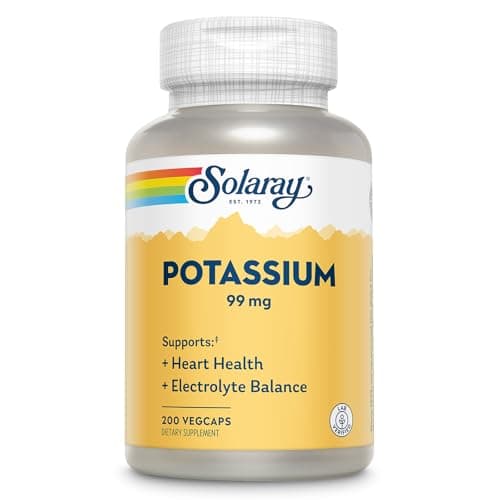
Solaray · Amazon.com · 🍌 Potassium
CPS
Price
$14.39
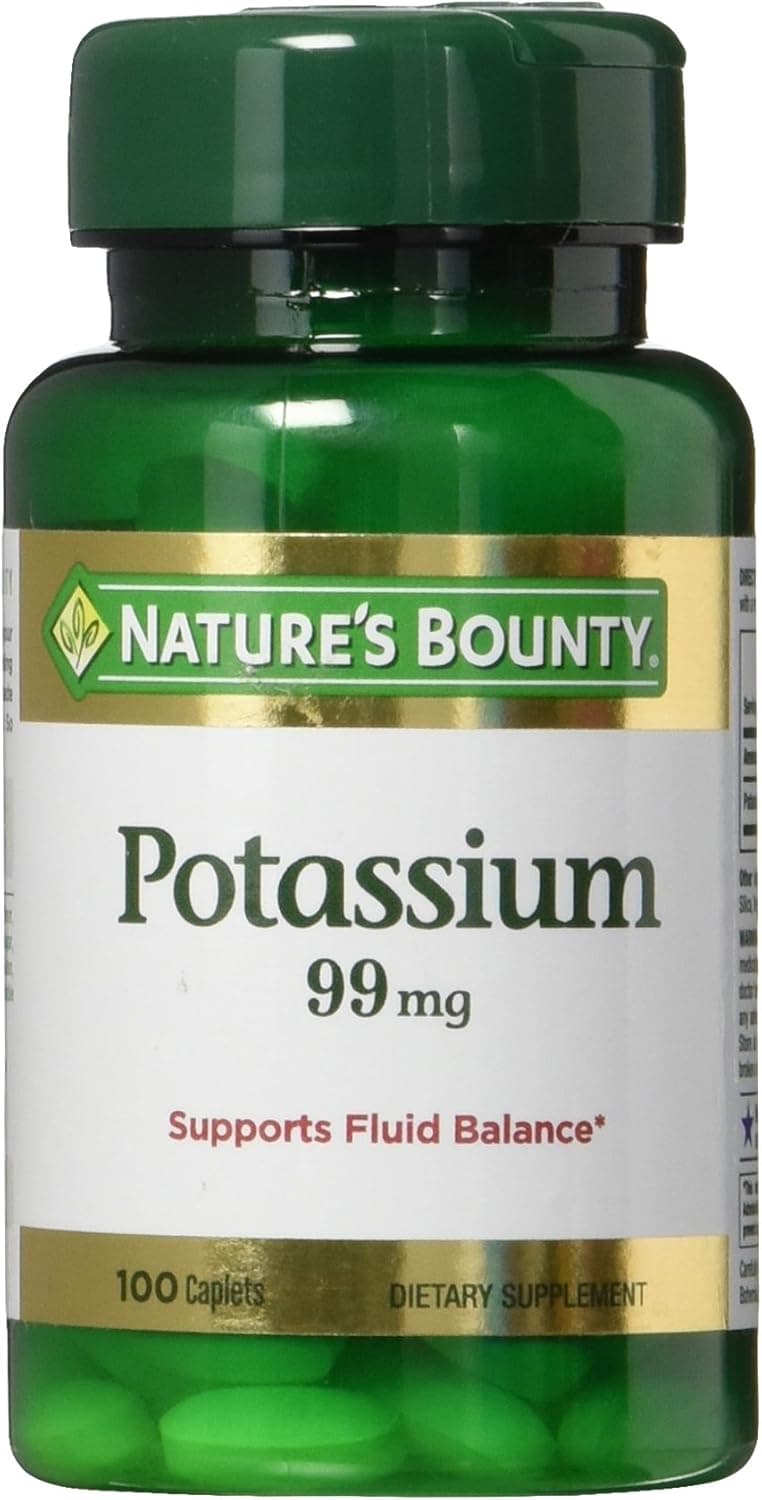
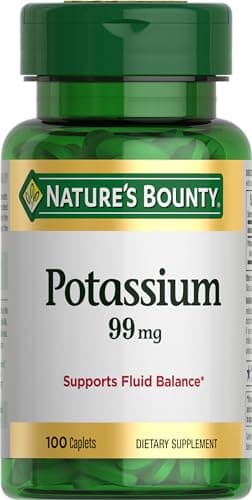
Nature's Bounty · Amazon.com · 🍌 Potassium
CPS
Price
$8.84
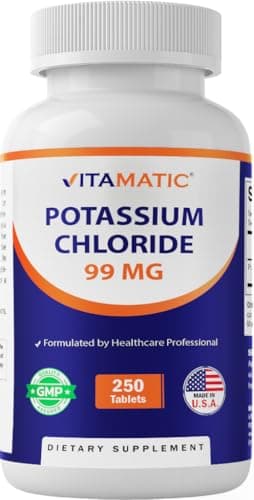
Vitamatic · Amazon.com · 🍌 Potassium
CPS
Price
$9.99
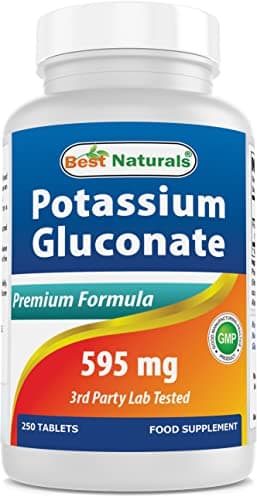
Best Naturals · Amazon.com · 🍌 Potassium
CPS
Price
$9.99
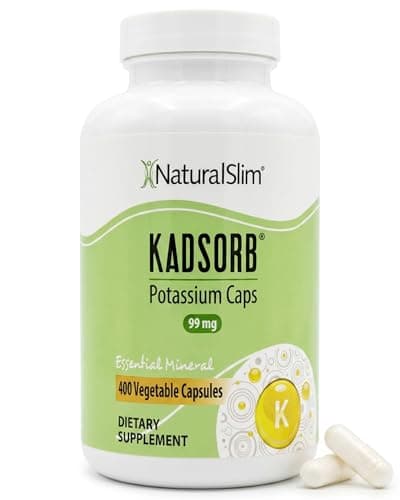
NaturalSlim · Amazon.com · 🍌 Potassium
CPS
Price
$27.95
Nutricost · Amazon.com · 🍌 Potassium
CPS
Price
$19.95
Nature's Bounty · Amazon.com · 🍌 Potassium
CPS
Price
$5.55
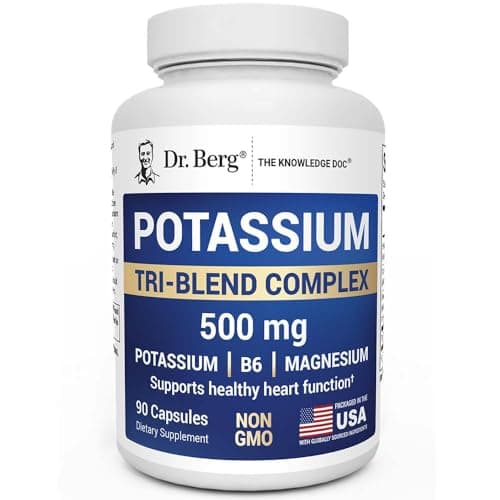
Dr. Berg · Amazon.com · 🌙 Magnesium
CPS
Price
$19.99
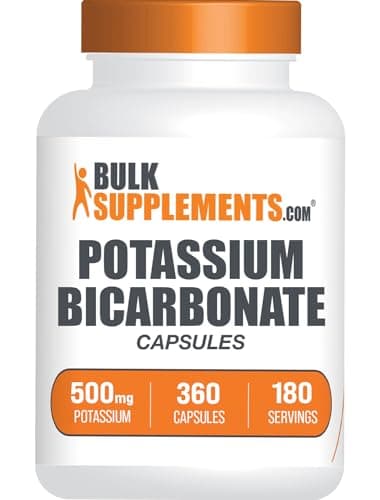
BulkSupplements.com · Amazon.com · 🍌 Potassium
CPS
Price
$19.97
Groups more likely to have poor potassium status: people with inflammatory bowel diseases (Crohn's disease, ulcerative colitis); people who use certain medications, including diuretics and laxatives; and people with pica (eating non-nutritive substances such as clay). — per the NIH Office of Dietary Supplements; general information, not medical advice.
Yes. ACE inhibitors and ARBs reduce urinary potassium excretion and can cause hyperkalemia. Potassium-sparing diuretics also reduce excretion and can cause hyperkalemia. Loop and thiazide diuretics increase excretion and can cause hypokalemia. Experts recommend monitoring potassium status. — per the NIH Office of Dietary Supplements; general information, not medical advice.
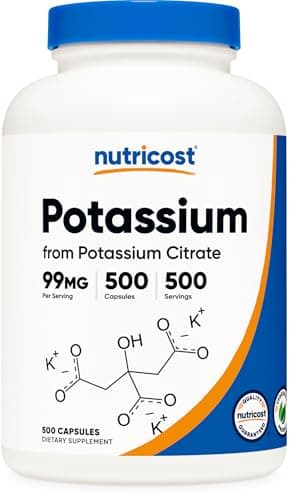
Nutricost Potassium Citrate 99mg, 500 Capsules at $0.04 per serving — the lowest cost-per-dose potassium in our catalog. See the full ranking on the Best Potassium page.
We're tracking 35 active Potassium deals across Amazon US and partner retailers, ranked by community votes and cost-per-dose — not paid placement.
Across 34 tracked Potassium deals the median cost-per-dose is $0.192; the cheapest quartile comes in under $0.076 per serving. Anything below the median is a solid deal for the same molecule.
Deals are submitted by the community and ranked by net votes (hot minus cold) plus cost-per-dose normalised across container sizes. We take no affiliate kickbacks for ordering; sponsored slots, when present, are clearly badged.
In healthy people with normal kidney function, high dietary potassium intakes do not pose a health risk because the kidneys eliminate excess in the urine, and the NASEM committee did not set a Tolerable Upper Intake Level (UL) for potassium because the evidence was deemed insufficient. However, in people with impaired potassium excretion (e.g., chronic kidney disease or use of ACE inhibitors or potassium-sparing diuretics), even intakes below the AI can cause hyperkalemia, whose severe cases can cause muscle weakness, paralysis, heart palpitations, paresthesias, and potentially life-threatening cardiac arrhythmias — per the NIH Office of Dietary Supplements.
Potassium is found in a wide variety of plant and animal foods and in beverages: many fruits and vegetables are excellent sources, as are some legumes (e.g., soybeans) and potatoes, while meats, poultry, fish, milk, yogurt, and nuts also contain it. Among starchy foods, whole-wheat flour and brown rice are much higher in potassium than their refined counterparts. Some of the richest selected foods listed include dried apricots (½ cup, 755 mg), cooked lentils (1 cup, 731 mg), mashed acorn squash (1 cup, 644 mg), dried prunes (½ cup, 635 mg), and a baked potato (1 medium, 610 mg) — per the NIH Office of Dietary Supplements.
Labels often show the potassium COMPOUND weight, not elemental potassium. By weight, potassium chloride is about 52% elemental while gluconate is only about 17% — so a "1,000 mg gluconate" product delivers roughly 170 mg of elemental potassium. Compare the "Potassium" line in the Supplement Facts panel, not the front-of-bottle number.
Dosage, upper-limit, deficiency, food-source and interaction facts are sourced from the NIH Office of Dietary Supplements Potassium fact sheet. General information, not medical advice.
100 servings · ~100-day supply
200 servings · ~200-day supply
$0.11
Avg·−67%180 servings · ~180-day supply