
Sodium Bicarbonate Tablets USP 650 mg (10 Grains) for Relief…
CP CITRAGEN PHARMACEUTICALS, INC.Amazon.com
$0.04/serving
$4.990°
other · 18 active deals
The best-value Sodium Bicarbonate right now is about $0.02 per dose — across the 18 we can price per dose the median is $0.095/dose, so shopping on cost-per-dose can cut your cost several-fold. Every Sodium Bicarbonate deal here is ranked by cost per dose — what you actually pay per serving, not the sticker price — because forms and absorption differ, so the cheapest bottle isn’t always the cheapest dose.
Prices checked · live from the Amazon US catalog.
Right now the best value across our full Sodium Bicarbonate catalog is at $0.02 per serving.
Sodium bicarbonate is a chemical compound made of sodium (Na+) and bicarbonate (HCO3−) that works by buffering excess hydrogen ions to raise pH. In an oral, over-the-counter context, it is approved as an antacid to relieve heartburn, acid indigestion, and upset stomach. It is also used medically (often by IV in clinical settings) for conditions such as metabolic acidosis from severe renal disease, uncontrolled diabetes, and severe lactic acidosis, as well as for certain drug toxicities and urinary alkalinization. — per StatPearls (NCBI Bookshelf); not medical advice.
For oral use it comes as tablets (650 mg) and powder (325 mg), where 1 mEq equals 84 mg; for dyspepsia, adults under 60 may take 650 to 2600 mg orally every 4 hours (max 15.6 g/day) and those 60 and older 650 to 1300 mg every 4 hours (max 7.8 g/day). It is also available in intravenous formulations (7.5% and 8.4%) for clinical use.
Reported adverse effects include metabolic alkalosis, headache, muscle pain, nausea, nervousness, and fluid retention with edema (especially in renal insufficiency); IV use can cause tissue damage/necrosis from extravasation and acute pulmonary edema with rapid administration. Rapid or high-dose administration may cause intracranial hemorrhage, particularly in children younger than 2 years. It is contraindicated in metabolic or respiratory alkalosis and in hypocalcemia, and should be used with caution in heart failure and other sodium-retention conditions. — per StatPearls (NCBI Bookshelf).
Oral sodium bicarbonate can reduce gastrointestinal absorption of fluoroquinolones, tetracyclines, NSAIDs, and extended-release formulations, and can increase serum levels of amphetamines via renal reabsorption; intravenously it is incompatible with norepinephrine and dobutamine. In pregnancy there is a potential fluid-retention risk and comprehensive human data are lacking, and no human data are available for breastfeeding. — per StatPearls (NCBI Bookshelf).
Source: NIH Office of Dietary Supplements — Sodium Bicarbonate fact sheet
Sodium Bicarbonate Tablets USP 650 mg (10 Grains) for Relief…

Sodium Bicarbonate Tablets USP 325 mg (5 Grains) for Relief…


Rugby Sodium Bicarb 10 g Tab – Sodium Bicarbonate 650 mg

Puregen Labs Sodium Bicarbonate Tablets 650mg (10 Grains)…


Puregen Labs Sodium Bicarbonate Tablets 650mg (10 Grains)…

Sodium Bicarbonate Capsules Extra Strength 1300mg Organic Use…


Classic Sodium Bicarbonate 650mg Natural Organic Use Sodium…
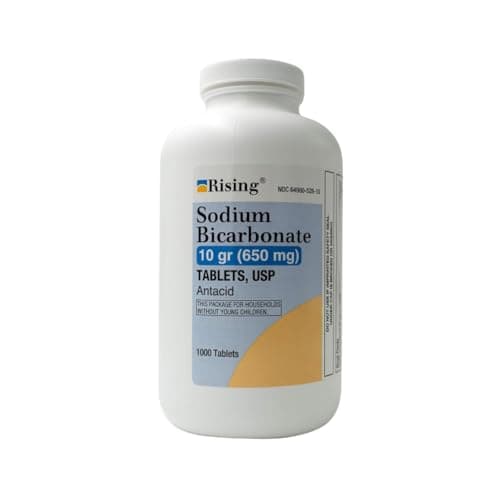
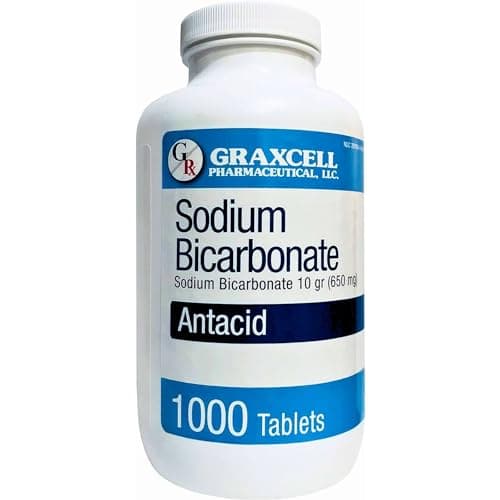

Pure Sodium Bicarbonate 650 mg Capsules - Sodium Bicarb…

Sodium Bicarbonate 650 mg Tablets - Strongest Alkaline Tablets…
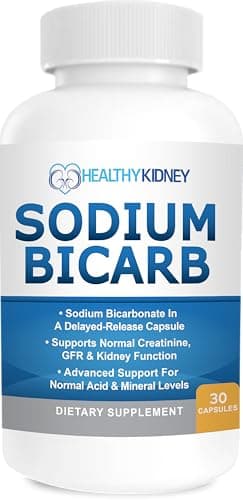
Sodium Bicarbonate 650 Mg Tablets - Delayed Release for Normal…
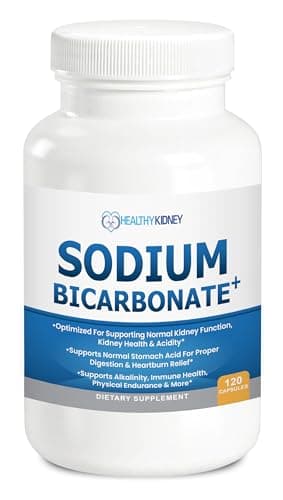
Organic Sodium Bicarbonate Alkaline 650 mg Capsules - Enhanced…
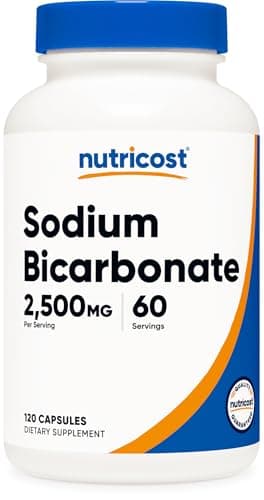
Nutricost Sodium Bicarbonate (2,500mg) 120 Capsules - GMO-Free
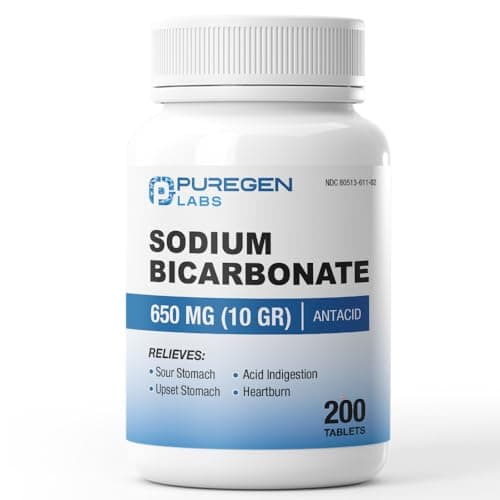
Puregen Labs Sodium Bicarbonate Tablets 650mg (10 Grains)…
Every Sodium Bicarbonate deal above is ranked by real cost per dose with no paid placement — see our and .
Independent third-party testing is a voluntary check of a product's identity, potency and contaminants by an outside lab. It's a quality signal, not a value or efficacy claim. Confirm any brand's current status on the official registries:
Testing status is self-reported by the brand or drawn from public certification and may change — always verify on the official registry before purchase.
According to the page, sodium bicarbonate is used to manage acute or chronic metabolic acidosis (related to causes such as severe renal disease, uncontrolled diabetes, severe lactic acidosis, shock, or severe dehydration), and is also used in cardiac arrest, certain drug toxicities (such as barbiturates and toxic alcohols), urinary alkalinization, and for dyspepsia. Its main therapeutic effect is described as increasing plasma bicarbonate to buffer excess hydrogen ions and raise serum pH. — per StatPearls (NCBI Bookshelf); general information, not medical advice.
Sodium bicarbonate is not an essential nutrient with an , so amounts depend entirely on the medical indication. The page lists examples such as oral antacid dosing of 650 to 2600 mg every 4 hours (maximum 15.6 g/day for adults under 60) and 1625 to 2925 mg/day orally divided for chronic renal failure, while acute indications such as metabolic acidosis use intravenous dosing (e.g., 2 to 5 mEq/kg) given under clinical supervision. — per StatPearls (NCBI Bookshelf); general information, not medical advice.
The page lists possible adverse effects including metabolic alkalosis, headache, muscle pain and twitching, nausea or vomiting, slowed breathing, nervousness or restlessness, unpleasant taste, and increased frequency of urination. It also notes more serious risks such as tissue necrosis from extravasation, acute pulmonary edema from rapid administration, and an acute shift in ionized calcium that can cause tetany; rapid injection in neonates and children younger than 2 may cause hypernatremia and possible intracranial hemorrhage. — per StatPearls (NCBI Bookshelf); general information, not medical advice.
We link primary sources and paraphrase their findings — never copy their text, tables, or images. Cost-per-dose figures are our own first-party catalog data.
Per the page, sodium bicarbonate can affect medications including fluoroquinolones (such as levofloxacin) and tetracyclines (such as doxycycline and minocycline), and can increase serum levels of medications such as dextroamphetamine and methamphetamine by increasing renal reabsorption. It also notes that norepinephrine and dobutamine are incompatible with sodium bicarbonate solution, and that sodium bicarbonate and calcium admixtures may result in precipitation. — per StatPearls (NCBI Bookshelf); general information, not medical advice.
The page states it is contraindicated in people with signs of underlying metabolic or respiratory alkalosis or with hypocalcemia, and notes it can exacerbate hypernatremia. It also advises administering it judiciously in people with congestive heart failure, significant renal disease, or sodium retention, with monitoring of serum electrolytes such as calcium. — per StatPearls (NCBI Bookshelf); general information, not medical advice.
The cheapest sodium bicarbonate we track works out to $0.02 , against a typical $0.09 across the 18 we can price per dose — about $0.48 a month at the cheapest. That is real from live Amazon US prices, not the sticker price. The full ranking is on the Best Sodium Bicarbonate page.
Rising Pharma - Sodium Bicarbonate 650mg - Antacid Used for Acid Indigestion at $0.02 — the lowest cost-per-dose sodium bicarbonate in our catalog. See the full ranking on the Best Sodium Bicarbonate page.
We're tracking 18 active Sodium Bicarbonate deals across Amazon US and partner retailers, ranked by community votes and cost-per-dose — not paid placement.
Across the 18 Sodium Bicarbonate deals we can price per dose (combination products are left out — their single label dose belongs to whichever ingredient the product is built around) the median cost-per-dose is $0.095; the cheapest quartile comes in under $0.031 . Anything below the median is a solid deal for the same molecule.
Deals are submitted by the community and ranked by net votes (hot minus cold) plus cost-per-dose normalised across container sizes. We take no affiliate kickbacks for ordering; sponsored slots, when present, are clearly badged.
Reported adverse effects include metabolic alkalosis, headache, muscle pain, nausea, nervousness, and fluid retention with edema (especially in renal insufficiency); IV use can cause tissue damage/necrosis from extravasation and acute pulmonary edema with rapid administration. Rapid or high-dose administration may cause intracranial hemorrhage, particularly in children younger than 2 years. It is contraindicated in metabolic or respiratory alkalosis and in hypocalcemia, and should be used with caution in heart failure and other sodium-retention conditions. — per StatPearls (NCBI Bookshelf).
Dosage, upper-limit, deficiency, food-source and interaction facts are sourced from the NIH Office of Dietary Supplements Sodium Bicarbonate fact sheet. General information, not medical advice.