Ashwagandha: dose, KSM-66 vs Sensoril, timing, and who should skip it
Quick answer
With ashwagandha, the standardized extract and the dose matter more than the brand. Buy a standardized root extract — KSM-66 (root-only, typically 300–600 mg, most stress/strength research) or Sensoril (root-and-leaf, ~125–250 mg) — in the studied range, and skip it if you're pregnant, on thyroid medication, or in the other caution groups.
Alex Soto, Founder, VitaminDB
6 min readUpdated 7/31/2026 NIH-sourced
KSM-66
root-only
Sensoril
root + leaf
Plant part
Typical dose
Most-studied for
Withanolide standardization
Verdict: Neither is universally better — they're two standardized extracts studied at different doses. Match the extract to the dose used in the research you care about, then compare cost per effective dose. KSM-66 backs most of the stress, sleep, and strength research; Sensoril is standardized to more withanolides and used at lower doses.
On this page
Ashwagandha is the most popular adaptogen on the shelf, and the research is more specific than the marketing — which is good news, because it tells you exactly what to look for.
The dose and the extract are what matter
Almost every meaningful ashwagandha study uses a standardized root extract at a defined dose — not raw powder. So two numbers decide whether a product matches the evidence:
- Is it a standardized extract (with a stated withanolide percentage or a named branded extract)?
- Is the dose in the studied range — commonly 300–600 mg/day?
A "1,000 mg ashwagandha root powder" capsule with no standardization is not the same as 600 mg of a standardized extract, even though the bigger number looks more impressive.
KSM-66 vs Sensoril
The two branded extracts you'll see most:
- KSM-66 — a root-only extract, typically dosed around 300–600 mg/day. It's the extract behind much of the stress, sleep, and strength/resistance-training research.
- Sensoril — a root-and-leaf extract standardized to a higher withanolide content, used at lower doses (~125–250 mg), often positioned more for stress/relaxation.
Neither is categorically superior. Pick the extract whose studied dose and use-case match what you want, then check the milligrams are in range.
Timing
There's no hard rule. Many people take it in the evening for the calming/sleep angle; others split it morning and night. Take it consistently with food — the effects build over weeks, not from a single dose.
How to buy without overpaying
Because the effective dose is well-defined, ashwagandha is a clean cost-per-dose comparison: find a standardized extract (KSM-66 or Sensoril) at 300–600 mg, then compare what a real daily dose costs — not the bottle. Current picks are on the ashwagandha hub; we rank by cost per effective dose (methodology).
Who should skip it
This is the part the ads omit. Two things come straight from NCCIH: there is not enough information to draw conclusions about ashwagandha's long-term safety, and although it is rare, a number of cases have linked liver injury to ashwagandha supplements. Be cautious or avoid if you are pregnant, have a thyroid condition or take thyroid medication (ashwagandha can raise thyroid hormone levels), have an autoimmune condition, take sedatives, or have liver concerns (rare reports of liver injury exist). When in doubt, ask a clinician.
Bottom line
Buy a standardized extract (KSM-66 root-only or Sensoril root-and-leaf), dose it in the 300–600 mg research range, take it consistently — and skip it entirely if you're pregnant, on thyroid meds, or in the other caution groups above.
Covered nutrients: Ashwagandha KSM-66
See the live cost-per-dose data
This guide is editorial — the prices below are real and current.
Frequently asked questions
KSM-66 or Sensoril — which is better?
They're two standardized extracts studied at different doses. KSM-66 is a root-only extract typically used around 300–600 mg/day and is the one most associated with stress and strength studies. Sensoril is a root-and-leaf extract standardized to more withanolides, used at lower doses (~125–250 mg). Neither is universally "better" — match the form to the dose used in the research you care about.
How much ashwagandha per day?
Trials commonly use 300–600 mg/day of a standardized extract. More isn't clearly better. That's a general research reference, not medical advice.
Who should avoid it?
People who are pregnant, have thyroid conditions or take thyroid meds (it can raise thyroid hormones), have autoimmune conditions, or take sedatives — and anyone with liver concerns (rare liver-injury reports exist). Clear it with a clinician if any apply.
Where these numbers come from
Cost figures on this page are computed from 57 active Ashwagandha KSM-66 listings we track, last re-priced . Cost per dose is price ÷ (servings × dose), computed per listing — not a price we are quoted. Listings under $1 or with fewer than 3 servings are excluded, because both are usually a parse error rather than a bargain.
- Amazon.com · 57
Prices move. Figures written into the text are re-checked against live data on a schedule; the ranking pages are always the current number.
Sources
Health claims on this page are drawn from these sources. Prices and cost-per-dose figures come from our own tracked listings, not from the sources below.
- 1.Ashwagandha — NIH National Center for Complementary and Integrative Health
Deals on these nutrients
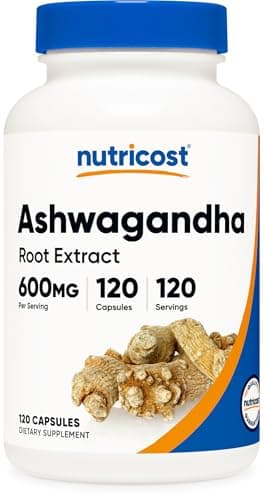
Nutricost Ashwagandha Herbal Supplement 600mg
Cost per serving
$0.12
120 servings · ~120-day supply

NutraBio Ashwagandha KSM-66 | Ashwagandha Herbal Supplement…
Cost per serving
$0.40
60 servings · ~60-day supply

Nutricost KSM-66 Ashwagandha Root Extract 600mg
Cost per serving
$0.25
60 servings · ~60-day supply

ZEBORA Ashwagandha Supplements 1000mg for Women & Men
Cost per serving
$0.13
120 servings · ~120-day supply
Related guides
Rhodiola vs ashwagandha: which adaptogen for your kind of stress
Both are stress adaptogens, but they pull in opposite directions — ashwagandha calms a wired, anxious stress; rhodiola lifts a tired, burned-out one. How to pick, the doses, and cost per dose.
Testosterone Supplements: What the Evidence Actually Supports
A hedged, evidence-minded look at testosterone supplements: why most "T-booster" blends underdeliver, and the cheap deficiency-correction approach.
Ubiquinol vs ubiquinone: which CoQ10 is worth it
Ubiquinol absorbs somewhat better, but it costs about 2.5x more per 100 mg than ubiquinone — a median $0.335 vs $0.133 across 55 listings we price. What that gap is worth, the dose, and the statin question.
P-5-P vs regular vitamin B6: is the active form worth it?
P-5-P costs about 2x more per 50 mg than plain pyridoxine — a median $0.146 vs $0.071 across 56 listings we price. Most healthy people convert plain B6 fine, so here is what the premium buys, and the safety ceiling that matters more than either form.