Biotin for Hair and Nails: Does It Actually Work, and the Honest Cost
Quick answer
Biotin can help hair and nails only if you have a genuine biotin deficiency, which is uncommon. For most people who are not deficient, there is little good evidence that extra biotin improves hair growth or nail strength. One safety point matters more than the marketing: high-dose biotin can interfere with certain lab tests (including some thyroid and heart/troponin tests) and cause false results, so tell your doctor if you take it. This is general information, not medical advice.
Alex Soto, Founder, VitaminDB
6 min readUpdated 7/6/2026 NIH-sourced
On this page
Biotin (vitamin B7) is one of the most heavily marketed "hair, skin and nails" supplements on the shelf. The promise is simple and appealing: take a pill, grow thicker hair and stronger nails. The honest version is more boring, and worth reading before you spend anything.
This guide sticks to what the evidence actually supports, flags a real safety issue that rarely gets mentioned on the label, and shows how widely the price varies for the exact same molecule.
Does biotin actually work for hair and nails?
Here is the honest split.
- If you are genuinely deficient in biotin, low levels can contribute to hair thinning and brittle nails, and correcting that deficiency may help. This is the real, biologically grounded case for biotin.
- If you are not deficient — which describes most people eating a normal diet — there is little good evidence that taking extra biotin improves hair or nails. Health authorities such as the NIH Office of Dietary Supplements generally note that biotin deficiency is uncommon, because biotin is found across a normal diet and is also made by gut bacteria.
So the useful question isn't "does biotin work?" — it's "am I actually deficient?" For most people the answer is no, which means the supplement is topping up a tank that is already full.
Nobody here can tell you whether you're deficient from a website. A clinician can. That distinction is the whole ballgame, and it's the part the packaging tends to skip.
What biotin will not do: for someone whose biotin status is already normal, there is little good evidence it makes hair grow faster or nails grow longer. Be skeptical of any product that promises hair or nail growth as a certainty.
The safety point most labels bury: lab-test interference
This is the part to actually remember. High-dose biotin can interfere with certain laboratory blood tests, causing falsely high or falsely low results. Affected tests can include some thyroid hormone tests and some troponin tests used to help diagnose a heart attack.
That is not a minor footnote. A distorted thyroid or troponin result can point a doctor in the wrong direction at exactly the wrong moment. Regulators and clinical labs have flagged this specifically because so many people take high-dose biotin without mentioning it.
The practical rule is simple:
- Tell your doctor and the lab if you take biotin, especially before any blood work.
- Ask whether you should pause it before testing — timing matters, and only your clinician can advise on your situation.
- Don't assume "it's just a vitamin" means it's invisible to your labs. Here, it isn't.
The doses involved aren't exotic, either. Biotin labels commonly show 5,000 to 10,000 mcg — far above the roughly 30 mcg adequate-intake reference amount used for adults. In other words, a typical "hair and nails" biotin pill can carry a few hundred times the reference intake, and it's exactly these high doses that are most associated with the lab-test problem.
The cost: same molecule, widely different price
If you and a clinician decide biotin is worth trying, the next honest observation is about money. Biotin is a single, well-defined molecule, yet what people pay for a dose of it varies enormously.
VitaminDB tracks 90 active biotin (B7) listings, and the cost per serving runs from about $0.027 to $1.08 — with a median around $0.130, and the middle 80% of the shelf between $0.040 and $0.338, an 8.5x spread. (Figures as of 19 September 2026, combination products excluded.)
Read that again: the most expensive dose costs about four hundred times the cheapest, for the same vitamin. A median dose sits near thirteen cents. There is no version of the chemistry that justifies paying several dollars a serving for it. You are usually paying for branding, bundling, or "beauty" positioning — not for a better B7.
Because the molecule is identical, cost per dose is the cleanest way to compare. You can see the current ranked, price-sorted listings on our best biotin (vitamin B7) by cost per dose page and simply start near the affordable end.
A few honest buying notes:
- Higher dose is not "stronger" in any meaningful benefit sense for a non-deficient person — it mostly raises the lab-interference risk. Bigger mcg numbers on the label are not a feature to chase.
- Multivitamins and "hair/skin/nail" blends often already contain biotin, sometimes at these same high doses. Check before doubling up.
- Let cost per dose, not the marketing, be the tiebreaker once you've decided a plain biotin product is what you want.
So should you take it?
A reasonable, honest way to think about it:
- Suspect a deficiency, or have a diagnosed one? That's a real medical conversation, and correcting a true deficiency may genuinely help your hair and nails.
- Just want thicker hair and stronger nails with no known deficiency? The evidence that extra biotin delivers that is limited, and your money is likely better spent elsewhere. If you still want to try it, buy near the cheapest cost-per-dose listings rather than a premium beauty label — the molecule is the same.
- In either case, flag it to your doctor and any lab because of the test-interference issue.
Biotin isn't a scam, and it isn't magic. For a small group of genuinely deficient people it can matter. For everyone else it's an optional, often overpriced pill wrapped in confident marketing — with one real safety asterisk worth taking seriously.
This is general information, not medical advice. Talk to a qualified clinician about your own situation, especially before starting biotin or having blood tests done.
Covered nutrients: Biotin (Vitamin B7)
See the live cost-per-dose data
This guide is editorial — the prices below are real and current.
Frequently asked questions
Does biotin really make your hair grow?
Only reliably if you are actually deficient in biotin, which is uncommon. Correcting a genuine deficiency may help hair that was thinning because of it. For people who are not deficient, there is little good evidence that extra biotin makes hair grow faster or thicker, so treat any guaranteed growth promise with skepticism. This is general information, not medical advice.
Is high-dose biotin safe to take?
Biotin is generally well tolerated, but there is one important catch: high doses (commonly labeled 5,000 to 10,000 mcg, far above the roughly 30 mcg adequate-intake reference) can interfere with certain lab tests, including some thyroid and troponin heart tests, causing false results. Always tell your doctor and the lab if you take biotin, and ask whether to pause it before blood work. This is general information, not medical advice.
How much should biotin cost?
Far less than most beauty branding implies. VitaminDB tracks 90 active biotin listings with a cost per serving from about $0.027 to $1.08 — an 8.5x spread across the middle 80% of the shelf for the identical molecule — and a median around $0.130. Since it's the same vitamin, comparing by cost per dose lets you buy near the cheap end without giving anything up; see the ranked list at /best/vitamin-b7.
Where these numbers come from
Cost figures on this page are computed from 146 active Biotin (Vitamin B7) listings we track, last re-priced . Cost per dose is price ÷ (servings × dose), computed per listing — not a price we are quoted. Listings under $1 or with fewer than 3 servings are excluded, because both are usually a parse error rather than a bargain.
- Amazon.com · 145
- SuperSmart · 1
Prices move. Figures written into the text are re-checked against live data on a schedule; the ranking pages are always the current number.
Sources
Health claims on this page are drawn from these sources. Prices and cost-per-dose figures come from our own tracked listings, not from the sources below.
- 1.Biotin: Fact Sheet for Health Professionals — NIH Office of Dietary Supplements
Deals on these nutrients
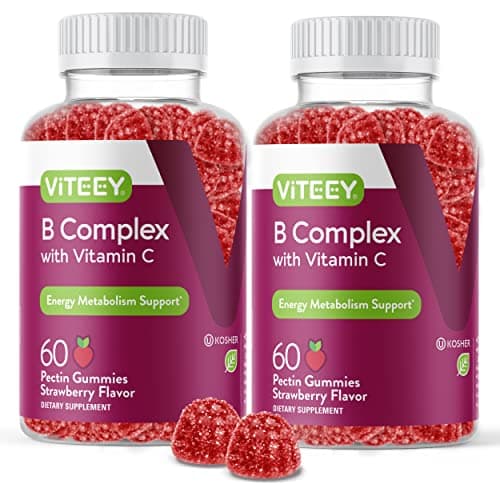
Viteey Vitamin B Complex Gummies with Vitamin C - 120 Count…
Cost per serving
$0.22
120 servings · ~120-day supply
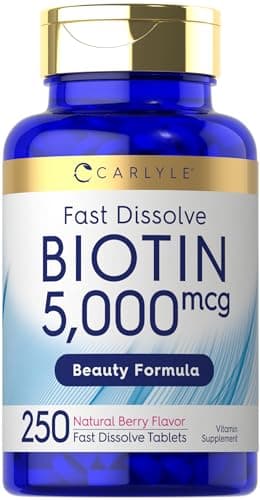
Carlyle Biotin 5000mcg | 250 Fast Dissolve Tablets…
Cost per serving
$0.04
250 servings · ~250-day supply
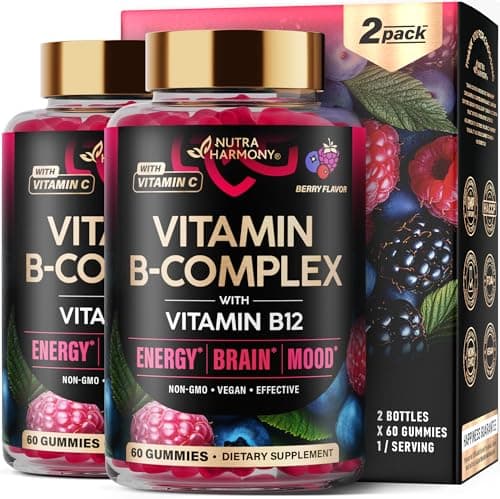
Vitamin B-Complex Gummies for Women & Men - Vitamin B12, B1…
Cost per serving
$0.56
60 servings · ~60-day supply
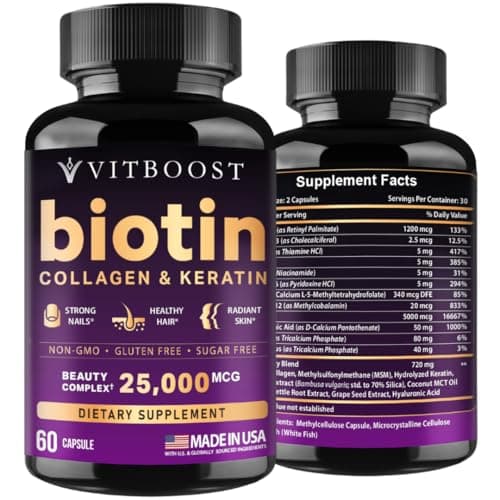
VITBOOST Biotin with Hyaluronic Acid
Cost per serving
$0.33
60 servings · ~60-day supply
Related guides
Ubiquinol vs ubiquinone: which CoQ10 is worth it
Ubiquinol absorbs somewhat better, but it costs about 2.5x more per 100 mg than ubiquinone — a median $0.335 vs $0.133 across 55 listings we price. What that gap is worth, the dose, and the statin question.
P-5-P vs regular vitamin B6: is the active form worth it?
P-5-P costs about 2x more per 50 mg than plain pyridoxine — a median $0.146 vs $0.071 across 56 listings we price. Most healthy people convert plain B6 fine, so here is what the premium buys, and the safety ceiling that matters more than either form.
Beetroot vs citrulline: which for pumps, and which for endurance
Both raise nitric oxide, but by different routes and for different goals — beetroot has the endurance edge, citrulline is the gym-pump staple. Doses, the honest split, and cost per dose.
Beta-alanine: dose, the tingling, and what it actually does
Beta-alanine buffers muscle acid to extend high-intensity efforts in the 1–4 minute range. It works by loading over weeks, not as a pre-workout kick. Real dose, why it tingles, and cost per serving.