When to Take Creatine: Does Timing Actually Matter?
Quick answer
For creatine, timing barely matters — consistency does. Creatine appears to work by gradually saturating your muscle stores over days to weeks, so your total daily intake (commonly ~3–5 g every day, including rest days — a common practice, not a prescription for you specifically) generally matters more than whether you take it in the morning, pre-workout, or post-workout. Any pre- vs post-workout difference appears small and is debated. Pick a time you'll reliably remember and take it daily.
Alex Soto, Founder, VitaminDB
6 min readUpdated 7/6/2026 NIH-sourced
On this page
Creatine is one of the most-studied supplements on the shelf, and one of the most over-thought. People agonize over the "optimal" window — before training, after training, with carbs, on an empty stomach — when the way creatine appears to work makes most of that worry beside the point.
Here's the short version: creatine builds up in your muscles gradually. What generally matters is that you take enough, every day, for long enough. The clock time is a rounding error.
How creatine appears to work (and why that answers the timing question)
Creatine doesn't act like caffeine, where you feel an effect shortly after a dose. Instead, it appears to slowly raise the amount of creatine stored inside your muscle cells. Reaching a "full" or saturated level is generally described as taking days to weeks of consistent daily intake — and once you're saturated, a steady daily dose simply keeps the tank topped up.
Because creatine appears to work by saturating muscle stores over days-to-weeks, your total daily intake and day-to-day consistency generally matter more than the exact clock time you take it. That's the single most important idea in this whole guide.
Think of it like filling a reservoir with a garden hose. Whether you run the hose at 8 a.m. or 8 p.m. doesn't change how full the reservoir gets over a week — what changes it is how much water you add each day and whether you skip days. Missing doses drains the tank slowly; taking it consistently keeps it full.
This is also why creatine is different from a "workout supplement" you only take on gym days. Common guidance is to take it every day, including rest days, on the logic that you're maintaining a stored level, not fueling a single session. If you want the broader logic of which supplements are time-sensitive and which aren't, our general guide to the best time to take supplements walks through the same reasoning across different products.
So — pre-workout or post-workout?
This is the debate people care about most, so let's be honest about it: the evidence is limited and mixed, and any real difference between taking creatine before versus after training appears small.
Some research has explored whether taking creatine close to a workout offers a slight edge, with one proposed idea being that blood flow and nutrient uptake are elevated around training. Other findings suggest it makes little practical difference once total daily intake and long-term consistency are accounted for. On balance, the body of evidence generally points to the day-to-day habit mattering more than the timing.
A reasonable, low-stress takeaway:
- If you train: taking creatine sometime around your workout (before or after) appears fine, and some people prefer post-workout out of habit. Don't lose sleep over which side of the session it lands on.
- On rest days: just take it whenever you'll remember — with a meal, with your morning routine, whenever. There's no workout to time it around.
- The real optimization isn't the window. It's not missing days.
In other words, the "best" time to take creatine is the time you will actually stick to, consistently.
Do you need a loading phase?
A loading phase is an optional way that is described as saturating your muscles faster. The commonly described approach is roughly ~20 g per day, split into several smaller doses, for about 5–7 days, followed by a normal daily maintenance dose. This is a commonly described protocol, not a prescription for you specifically.
Loading is described as reaching a saturated level in days rather than the few weeks a standard daily dose is generally said to take. But it's genuinely optional:
- Load if you want to feel effects sooner (for example, before a specific training block) and your stomach tolerates the higher split doses.
- Skip loading if you'd rather keep it simple. Taking a standard daily dose from day one is described as reaching the same saturated endpoint — it just takes a bit longer to arrive.
Neither path is thought to change where you end up. Loading is about speed, not ceiling.
What "enough" looks like day to day
The NIH describes two accepted protocols: 20 g/day for 5–7 days in four 5 g portions, then 3–5 g/day, or about 3–6 g/day for 3 to 4 weeks without loading. Timing is not a variable in either one — total daily intake over weeks is.
For maintenance, the amount commonly labeled and studied is roughly ~3–5 g per day, every day — a common practice, not a prescription for you specifically. That's the number worth prioritizing. Everything else — timing, with food or without, shake or capsule — is secondary preference.
A few practical notes, honestly framed:
- Consistency beats perfection. One missed day is unlikely to undo your progress, but a habit of skipping will keep your stores from filling.
- With or without carbs appears to be a minor lever at best. Some people take creatine with a meal for convenience or digestion; it isn't required.
- Form: creatine monohydrate is widely regarded as the most-studied form and is typically the cheapest per gram. Other forms rarely appear to justify their price.
That last point is where the cost math gets interesting.
The cost angle: consistency is also the cheap option
Because creatine's value is generally described as coming from taking a modest dose every single day for the long haul, the price you pay per dose compounds over months and years — which makes it one of the supplements where cost-per-dose actually matters.
VitaminDB tracks 49 creatine listings, with the cheapest working out to around $0.08 per serving — about $0.02 per gram of creatine — meaning a full daily maintenance dose can cost roughly a few cents if you shop on cost-per-gram rather than on packaging. You can see the current ranked list on our best creatine by cost per dose page, and if you want to understand how we compare products gram-for-gram (which is the only fair way to compare creatine), our creatine cost-per-gram breakdown for monohydrate explains the method.
The takeaway ties the whole guide together: since consistency is generally what's said to make creatine work, buying an affordable, plain monohydrate you'll happily take every day is usually the practical move — both physiologically and financially.
Bottom line
- Creatine appears to work by saturating muscle stores over days-to-weeks, so daily total and consistency generally matter more than the exact time.
- Pre- vs post-workout differences appear small and are debated — pick whatever you'll do reliably.
- On rest days, take it whenever you'll remember; a common maintenance amount is ~3–5 g/day, every day (a common practice, not a prescription).
- A loading phase (~20 g/day split for 5–7 days) is described as saturating faster but is optional — you're thought to reach the same endpoint either way.
- Because you take it daily for months, cost per dose adds up — cheap monohydrate is usually the practical pick.
---
This is general information, not medical advice. Individual needs vary, and supplements can interact with medications or health conditions — talk to a qualified clinician before starting creatine or any new supplement, especially if you have kidney concerns or take prescription medications.
Covered nutrients: Creatine
See the live cost-per-dose data
This guide is editorial — the prices below are real and current.
Frequently asked questions
Is it better to take creatine before or after a workout?
The evidence is limited and mixed, and any difference between pre- and post-workout appears small. Some research has explored a slight edge to taking it around training, but consistency and total daily intake generally matter more than which side of the workout it lands on. Take it whenever you'll reliably remember — including on rest days.
Do I need to take creatine on rest days?
Common guidance is to take creatine every day, including rest days. The reasoning is that creatine appears to work by keeping your muscle stores saturated over time, not by fueling a single session. On non-training days, a commonly used amount is ~3–5 g at any convenient time, such as with a meal — a common practice, not a prescription for you specifically.
Do I have to do a loading phase?
No — loading is optional. A loading phase (commonly described as ~20 g per day split into smaller doses for about 5–7 days) is described as saturating your muscles faster, but taking a standard daily dose from the start is generally said to reach the same saturated level, just over a few weeks instead of days. Loading is about speed, not the end result. This is a commonly described protocol, not medical advice.
Where these numbers come from
Cost figures on this page are computed from 78 active Creatine listings we track, last re-priced . Cost per dose is price ÷ (servings × dose), computed per listing — not a price we are quoted. Listings under $1 or with fewer than 3 servings are excluded, because both are usually a parse error rather than a bargain.
- Amazon.com · 78
Prices move. Figures written into the text are re-checked against live data on a schedule; the ranking pages are always the current number.
Sources
Health claims on this page are drawn from these sources. Prices and cost-per-dose figures come from our own tracked listings, not from the sources below.
- 1.Dietary Supplements for Exercise and Athletic Performance: Fact Sheet for Health Professionals — NIH Office of Dietary Supplements
Deals on these nutrients
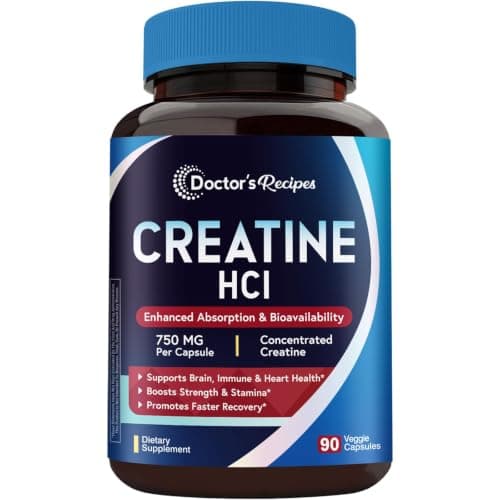
Doctor's Recipes Creatine HCl Capsules
Cost per serving
$0.13
90 servings · ~90-day supply
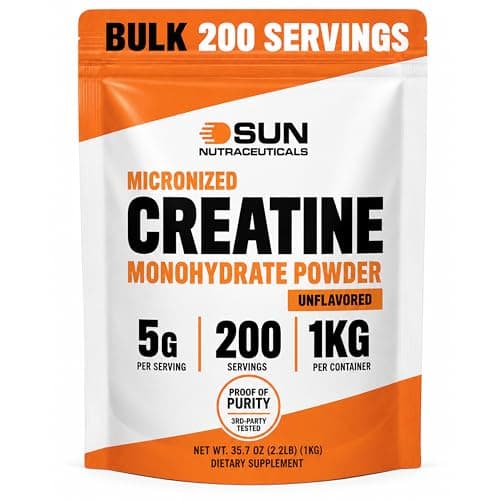
Micronized Creatine Monohydrate Powder 1kg (2.2lbs
Cost per serving
$0.12
200 servings · ~200-day supply
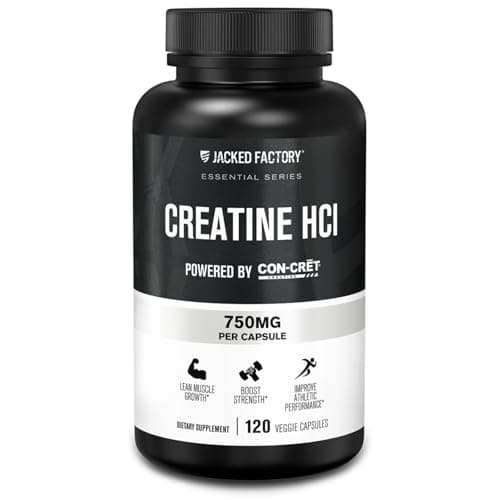
Jacked Factory Creatine HCl Capsules - CON CRET Creatine Pills…
Cost per serving
$0.17
120 servings · ~120-day supply
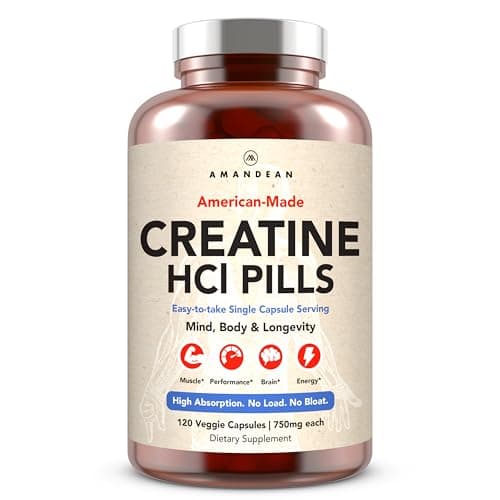
AMANDEAN Creatine HCl Capsules & Pills
Cost per serving
$0.25
120 servings · ~120-day supply
Related guides
Does creatine cause hair loss? What the evidence actually says
The creatine–hair-loss worry traces to a single 2009 study that measured a hormone (DHT), not hair. Here's what that study found, what it didn't, and how to think about the risk honestly.
Creatine for Women: Does It Work, How Much to Take, and What It Costs
An honest, data-backed guide to creatine for women — the studied form, the ~3-5 g dose, the "will it make me bulky" question, and real cost per dose.
Creatine Side Effects: What the Evidence Actually Shows
An honest, hedged look at creatine monohydrate side effects — water weight, GI upset, and the kidney myth — using only what the research generally supports.
Creatine Cost Per Gram: Monohydrate vs "Advanced" Forms
Creatine monohydrate is the value and evidence winner. Compare cost per gram across 47 tracked listings and why "advanced" forms cost more.