Creatine Cost Per Gram: Monohydrate vs "Advanced" Forms
Quick answer
Creatine monohydrate is almost always the cheapest form per gram and is the form used in the large majority of creatine research. Across the 49 creatine listings VitaminDB tracks (19 September 2026), cost per serving runs from about $0.08 to $2.31 with a median near $0.30, and the middle 80% of the shelf sits between $0.13 and $0.78 — a 6.2x spread. Priced per gram of creatine, the cheapest works out near $0.02 a gram against a $0.55 top end. "Advanced" forms like HCl, buffered (Kre-Alkalyn), ethyl ester, magnesium chelate, and gummies generally cost more per gram and have not been shown to outperform plain monohydrate in head-to-head research.
Alex Soto, Founder, VitaminDB
7 min readUpdated 7/4/2026 NIH-sourced
On this page
Creatine is one of the most-studied supplements in the sports-nutrition category, and it's also one where the marketing has drifted furthest from the evidence. Walk down any supplement aisle and you'll see "HCl," "buffered," "ethyl ester," "magnesium chelate," and gummy versions — most sold at a premium over plain monohydrate. This guide looks at the one number that cuts through the label claims: cost per gram of actual creatine.
The short version: monohydrate leads on both price and evidence
Creatine monohydrate is the form used in the large majority of creatine research, and it's also the cheapest form per gram in almost every case. The "advanced" forms are typically priced higher per gram, and head-to-head research generally has not shown them to outperform plain monohydrate. That combination — most-studied and least expensive — is unusual in the supplement world, and it's why monohydrate is the default reference form for most evidence-minded sources.
If you only remember one thing: you are usually paying more for an "advanced" form to get the same well-studied compound in a less-studied wrapper.
What "cost per gram" actually looks like
VitaminDB tracks 49 active creatine listings (figures checked 19 September 2026). Cost per serving ranges from about $0.08 to $2.31, with a median around $0.30 per serving, and the middle 80% of the shelf between $0.13 and $0.78 — a 6.2x spread. We quote that middle-80% band rather than cheapest-against-dearest because a single odd listing at either end moves a max÷min figure and moves nothing real. A typical labeled serving is 5 g (5,000 mg), which is in line with the commonly studied range of about 3–5 g per day (this is the amount commonly labeled and studied, not a prescription).
Across the 28 listings that state a dose in grams, the cost per gram of creatine itself comes out as:
- Cheapest end — about $0.020 per gram (~$0.10 for a 5 g dose)
- Median listing — about $0.085 per gram (~$0.42 for a 5 g dose)
- Most expensive end — about $0.554 per gram (~$2.77 for a 5 g dose)
Across 49 tracked creatine listings, cost per serving spans about $0.08 to $2.31, and the middle 80% spans $0.13 to $0.78 — a 6.2x spread for what is, in the studied dose, largely the same 3–5 grams of creatine per day.
That spread is the whole story. The creatine molecule your muscles use is the same regardless of which end of the price range you buy from. Paying near the top of that range doesn't buy you a different, better-studied dose — it usually buys you a novelty form, a flavor system, or a delivery format like gummies. You can see the current cost-per-dose ranking on the best creatine by cost per dose page, which sorts live listings so you don't have to name a brand that may have changed price by the time you read this.
The NIH fact sheet on supplements for exercise says the same thing in its own words: creatine monohydrate, which is 88% creatine by weight, is the most widely used and studied form, and it cites the ISSN position that creatine monohydrate is the most effective nutritional supplement currently available for enhancing capacity for high-intensity exercise and lean body mass. That is the form at the bottom of the price range.
The "advanced" forms, one by one
Here's how the premium forms tend to be marketed versus what the evidence base actually supports. Efficacy claims below are kept general on purpose — research on these newer forms is more limited than the deep literature on monohydrate.
Creatine HCl (hydrochloride). Marketed on better solubility and "no bloating / smaller dose." Some people do report it mixes more easily. But better solubility in a glass of water is not the same as a demonstrated performance advantage, and head-to-head evidence has not established that HCl outperforms monohydrate. It typically costs more per gram.
Buffered creatine (Kre-Alkalyn). Marketed on the idea that a higher-pH ("buffered") form survives the stomach better and avoids conversion to creatinine. Available research generally has not shown a meaningful advantage over monohydrate, and in some comparisons buffered forms performed similarly at best. Usually more expensive per gram.
Creatine ethyl ester. Marketed on supposedly superior absorption. The available evidence is not supportive of it being better than monohydrate — if anything, some research has raised questions about its stability. Not a value pick.
Magnesium creatine chelate. Marketed as a "chelated" form for better uptake. Evidence is limited, and it has generally not been shown to beat monohydrate on outcomes that matter to most people. Priced at a premium.
Gummies and flavored ready-to-mix formats. These are about convenience and taste, which is a legitimate reason to buy — but you're paying for the format, not for more or better-studied creatine. Gummies in particular tend to land toward the higher end of cost per gram, and they can deliver less creatine per serving than a 5 g scoop of powder.
None of this means the advanced forms are harmful or "fake." It means the burden of proof for paying more sits with the seller, and for most of these forms that proof — a clear, repeated head-to-head win over monohydrate — hasn't materialized.
Where creatine may help — stated carefully
Creatine is among the better-studied sports supplements, and it's most often discussed in the context of strength, power, and high-intensity training performance. Reviews and meta-analyses generally suggest it may support those outcomes when paired with training, which is why bodies that summarize the research tend to treat monohydrate as the reference form.
That's a general statement, not a promise. Individual response varies, some people appear to be "non-responders," and creatine is not a substitute for training, sleep, or overall diet. For any specific health question — kidney concerns, medications, pregnancy, or a diagnosed condition — the right move is to ask a clinician rather than a label.
Do you need to "load"? Probably not
Both routes are described in the NIH fact sheet: a typical protocol is a 5–7 day loading phase of 20 g/day in four 5 g portions, then 3–5 g/day maintenance, and an alternative is single doses of about 3–6 g/day for 3 to 4 weeks with no loading phase, which reaches the same place more slowly.
A lot of the ritual around creatine — the high-dose "loading phase" for the first week — is optional. Research generally suggests loading (larger daily amounts split across the day for several days) can saturate muscle stores faster, while a smaller, consistent daily amount is thought to reach a similar level over a longer window. Skipping the load also stretches your supply and lowers your effective cost per day. If you dislike the idea of a loading week, you can simply take a consistent daily serving instead.
Because the payoff tends to come from consistent daily intake over time, the price you pay per gram compounds. At the cheapest end of the tracked range, a common ~3–5 g daily serving costs on the order of $0.06 a day; at the top of the tracked range you could be paying roughly twelve times that for the same studied compound.
How to shop for creatine by value
A short, practical checklist:
- Compare cost per gram, not price per tub. A bigger, cheaper-looking container can still be more expensive per gram than a smaller one. Divide the price by total grams of creatine, or use a page that already does the math.
- Default to monohydrate unless you have a specific, personal reason (like genuinely better tolerance) to try another form — and even then, know you're paying a premium for a less-studied option.
- Don't overpay for solubility. "Micronized" monohydrate mixes more easily and is still monohydrate; it doesn't require an exotic salt.
- Treat gummies and flavored formats as convenience purchases, and check how many grams you actually get per serving.
- Let live pricing decide the brand. Prices move constantly, so the "cheapest" today may not be cheapest next month. The best creatine by cost per dose ranking updates against tracked listings so you can pick on current value rather than a stale recommendation.
Bottom line
For most people, plain creatine monohydrate is the value pick and the evidence-backed reference form at the same time. The 6x price spread across the middle 80% of tracked listings is driven far more by form, format, and branding than by anything your muscles can tell apart. Buy the cheapest reputable monohydrate that meets your quality bar, compare on cost per gram, and skip the "advanced" upsell unless you have a concrete personal reason to pay for it.
This is general information, not medical advice — talk to a clinician before starting any supplement.
Covered nutrients: Creatine
See the live cost-per-dose data
This guide is editorial — the prices below are real and current.
Frequently asked questions
Is creatine monohydrate as good as HCl or buffered creatine?
In head-to-head research, the newer forms like HCl and buffered (Kre-Alkalyn) creatine generally have not been shown to outperform plain monohydrate, which is the form used in the large majority of creatine studies. Monohydrate is also typically the cheapest per gram. The premium forms may offer differences in solubility or tolerance for some people, but not a demonstrated performance edge.
How much does creatine cost per gram?
Across the 49 creatine listings VitaminDB tracks, cost per serving ranges from about $0.08 to $2.31, with a median near $0.30. Priced per gram of creatine, that runs from about $0.020 to $0.554, median $0.085. The cheapest listings are almost always monohydrate; you can see current rankings on the best creatine by cost per dose page.
Do I need to do a creatine loading phase?
Loading is optional. Taking a larger split dose for the first several days is generally thought to saturate muscle stores faster, but a smaller, consistent daily serving is thought to reach a similar point over a longer window. Skipping the load also stretches your supply and can lower your cost per day. For personal health questions, check with a clinician.
Where these numbers come from
Cost figures on this page are computed from 78 active Creatine listings we track, last re-priced . Cost per dose is price ÷ (servings × dose), computed per listing — not a price we are quoted. Listings under $1 or with fewer than 3 servings are excluded, because both are usually a parse error rather than a bargain.
- Amazon.com · 78
Prices move. Figures written into the text are re-checked against live data on a schedule; the ranking pages are always the current number.
Sources
Health claims on this page are drawn from these sources. Prices and cost-per-dose figures come from our own tracked listings, not from the sources below.
- 1.Dietary Supplements for Exercise and Athletic Performance: Fact Sheet for Health Professionals — NIH Office of Dietary Supplements
Deals on these nutrients
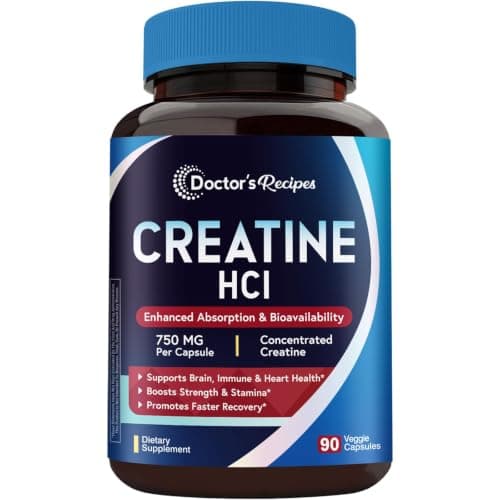
Doctor's Recipes Creatine HCl Capsules
Cost per serving
$0.13
90 servings · ~90-day supply
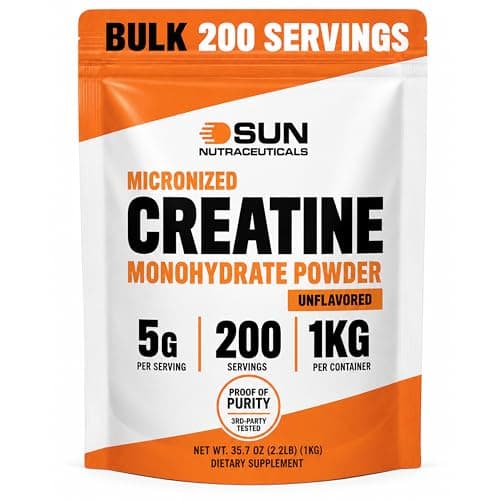
Micronized Creatine Monohydrate Powder 1kg (2.2lbs
Cost per serving
$0.12
200 servings · ~200-day supply
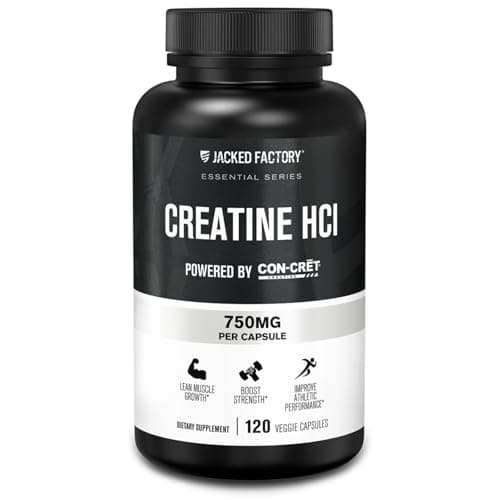
Jacked Factory Creatine HCl Capsules - CON CRET Creatine Pills…
Cost per serving
$0.17
120 servings · ~120-day supply
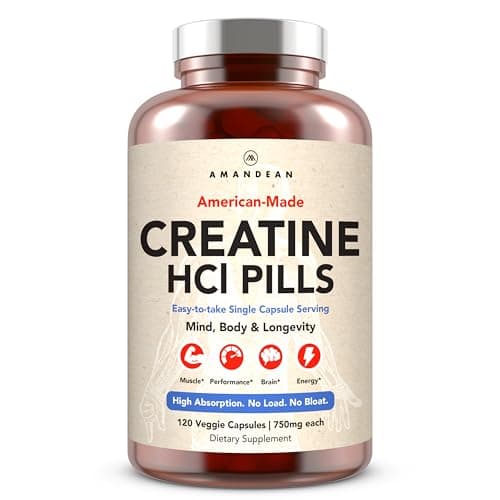
AMANDEAN Creatine HCl Capsules & Pills
Cost per serving
$0.25
120 servings · ~120-day supply
Related guides
The cheapest supplements to support GLP-1s, by cost per dose
Protein, fibre, electrolytes and a few key vitamins are the supplements most often paired with GLP-1 medications. Review sites list a price and a dose but never divide the two — so here's the same list ranked the only way that tells you what you're really paying: cost per dose.
Third-party supplement testing explained: USP, NSF, Informed Sport and the rest
Supplements are not FDA-approved before sale, so third-party seals are the main independent check on what's actually in the bottle. Here's what USP, NSF, NSF Certified for Sport, Informed Sport and Informed Choice each test — and why 'GMP certified' is not the same thing.
Does creatine cause hair loss? What the evidence actually says
The creatine–hair-loss worry traces to a single 2009 study that measured a hormone (DHT), not hair. Here's what that study found, what it didn't, and how to think about the risk honestly.
Creatine for Women: Does It Work, How Much to Take, and What It Costs
An honest, data-backed guide to creatine for women — the studied form, the ~3-5 g dose, the "will it make me bulky" question, and real cost per dose.