Creatine for Women: Does It Work, How Much to Take, and What It Costs
Quick answer
Creatine appears to work the same way for women as for men, and it is not dosed by sex. The commonly studied form is creatine monohydrate at a maintenance dose of roughly 3-5 g/day (commonly studied, not a prescription), and it is one of the better-studied supplements for strength and power. You do not need a "women's" product to get this: those are typically the same monohydrate at a higher price. On VitaminDB, plain monohydrate runs about $0.08-$1.67 per serving (median ~$0.33), so the cheap and expensive options are largely the same molecule. This is general information, not medical advice.
Alex Soto, Founder, VitaminDB
6 min readUpdated 7/6/2026 NIH-sourced
On this page
Creatine is one of the most searched supplements among women right now, and most of the questions are practical: does it actually do anything, how much should I take, will it make me look bulky, and do I need the pink "women's" version? Here is a plain, honest walk-through using only the pricing data VitaminDB tracks and generic guidance from bodies like the NIH Office of Dietary Supplements (ODS). None of this is a personal prescription.
Does creatine work for women?
Creatine is one of the better-studied supplements for strength and power output, and the research generally does not treat women as a separate case for the core benefit. The body makes and stores creatine regardless of sex, and supplementation is understood to work by topping up those stores — the mechanism is the same in everyone.
Where the evidence gets thinner is beyond the gym. There is some interest in creatine for cognition, and — around menopause — for bone and muscle. That research is earlier and less settled, so it is fair to say creatine is commonly used for strength and power, while other uses are promising but not established. Treat any claim that creatine "fixes" menopausal muscle loss or "boosts brain function" as ahead of the evidence.
One quotable summary: creatine is not dosed by sex — the commonly studied maintenance dose of roughly 3-5 g/day is the same for women as it is for men.
How much do studies commonly use?
The commonly studied maintenance dose is about 3-5 g per day of creatine monohydrate. That is the number that shows up across the research base as a commonly studied maintenance dose — not a prescription — and it does not change based on being a woman.
A few honest notes on protocol:
- Loading is optional. Some people take a higher dose for the first several days to fill stores faster; others simply take 3-5 g daily and reach the same place over a few weeks. Both approaches are commonly described.
- Timing barely matters. Creatine is understood to work by keeping your stores topped up over time, so consistency day to day appears to matter more than whether you take it before or after a workout.
- Monohydrate is the form to buy. Creatine monohydrate is the form that has actually been studied. Fancier forms (HCl, buffered, "micronized women's" blends) are marketed as gentler or better-absorbed, but the evidence base sits with plain monohydrate.
The NIH fact sheet states the protocol regardless of sex or body size: a 5–7 day loading phase of 20 g/day, then 3–5 g/day maintenance — or 3–6 g/day from the start with no loading. There is no separate women's dose in it.
Will creatine make me bulky or bloated?
This is the single most common worry, so let's be factual and appropriately hedged. Creatine does not build muscle by itself — it may help you train a little harder, and any change in muscle comes from the training, not the powder. The idea that a woman will "get bulky" from creatine is not supported by how the supplement is understood to work.
The water question is more nuanced. Creatine is generally understood to draw a small amount of water into muscle cells, so some people notice a slight change in scale weight, especially early on. This is described as intracellular water, not the puffy, subcutaneous "bloat" people usually mean, and it is not the same as gaining fat. Some individuals notice it and some do not, and it tends to be modest. If a number on the scale bothers you, that is worth knowing going in — but it is not a sign the supplement is doing something wrong.
"Women's creatine" vs. plain monohydrate
Here is the honest cost angle. Products marketed specifically as "women's creatine" are typically the same creatine monohydrate as any other tub — sometimes with added flavoring or a lower scoop size — sold at a premium for the packaging and positioning. You are usually paying more for the label, not for a different or better molecule.
The price data makes this concrete. Across the 49 active creatine listings VitaminDB tracks (19 September 2026), cost per serving ranges from about $0.08 to $2.31, with a median around $0.30 and the middle 80% between $0.13 and $0.78 — a 6.2x spread. That entire range is, for the most part, the same monohydrate. A "women's" tub near the top of that range is not delivering a different active ingredient than a plain tub near the bottom; it is delivering the same 3-5 g of monohydrate at a markup.
If you want to see how the tubs stack up by real cost per serving, our best creatine by cost per dose ranking sorts current listings so you can compare the actual per-serving price instead of the sticker on the front. For the deeper breakdown of how price per gram works — since creatine is one of the supplements we rank by cost per gram of active ingredient — see our creatine cost-per-gram guide.
How to choose without overpaying
A simple, honest checklist:
- Buy creatine monohydrate. Skip the "specialized" forms unless you have a specific reason; the studied form is generally the cheapest and the best-supported.
- Ignore the "women's" label as a reason to pay more. If a women's-branded tub happens to be cheap per serving, fine — but the branding itself is not worth a premium.
- Compare by cost per serving, not by tub price. A bigger, plainer tub is often dramatically cheaper per 5 g dose. With a 6x spread across the middle 80% of the data, this is where the real money is.
- Look for third-party testing (e.g., NSF, Informed Sport) if verified quality matters to you — that is a legitimate reason some products cost more, unlike gendered marketing.
Safety and the honest caveats
Creatine is generally considered one of the better-tolerated supplements, and monohydrate is broadly regarded as safe for healthy adults at typical doses — a view consistent with general guidance from bodies like the NIH ODS and NCCIH. That is not the same as "safe for everyone." If you are pregnant or breastfeeding, have kidney concerns, or take medications, the general-safety picture does not automatically apply to you, and the longer-term and special-population evidence is less settled than the strength research.
This is general information, not medical advice — talk to a clinician before starting creatine or any supplement, especially if you are pregnant, nursing, have a health condition, or take other medications.
Covered nutrients: Creatine
See the live cost-per-dose data
This guide is editorial — the prices below are real and current.
Frequently asked questions
Is creatine dosed differently for women than for men?
No. Creatine is not dosed by sex. The commonly studied maintenance dose is roughly 3-5 g per day of creatine monohydrate (commonly studied, not a prescription), and that is the same number used for women and men. Your body stores and uses creatine the same way regardless of sex.
Do I need a special "women's creatine" product?
Generally no. Products marketed as "women's creatine" are typically the same creatine monohydrate as any other tub, often sold at a premium for the packaging. Plain monohydrate delivers the same active ingredient at the same commonly studied ~3-5 g dose. On VitaminDB, cost per 5 g serving spans about $0.08 to $2.31 across 49 listings (median ~$0.30) for what is largely the same molecule, so comparing cost per dose usually saves money.
Will creatine make me bulky or bloated?
Creatine does not build muscle on its own, so it will not make you "bulky" by itself — any muscle change comes from training. It is generally understood to draw a small amount of water into muscle cells, which some people notice as a slight bump in scale weight early on; this is described as intracellular water, not fat and not the puffy subcutaneous bloat people usually picture. Effects are modest and vary by person. This is general information, not medical advice.
Where these numbers come from
Cost figures on this page are computed from 78 active Creatine listings we track, last re-priced . Cost per dose is price ÷ (servings × dose), computed per listing — not a price we are quoted. Listings under $1 or with fewer than 3 servings are excluded, because both are usually a parse error rather than a bargain.
- Amazon.com · 78
Prices move. Figures written into the text are re-checked against live data on a schedule; the ranking pages are always the current number.
Sources
Health claims on this page are drawn from these sources. Prices and cost-per-dose figures come from our own tracked listings, not from the sources below.
- 1.Dietary Supplements for Exercise and Athletic Performance: Fact Sheet for Health Professionals — NIH Office of Dietary Supplements
Deals on these nutrients
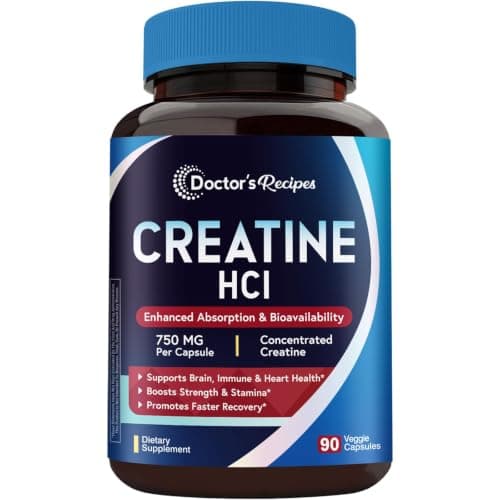
Doctor's Recipes Creatine HCl Capsules
Cost per serving
$0.13
90 servings · ~90-day supply
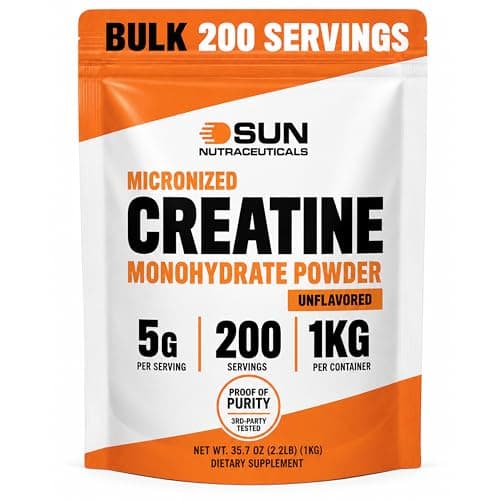
Micronized Creatine Monohydrate Powder 1kg (2.2lbs
Cost per serving
$0.12
200 servings · ~200-day supply
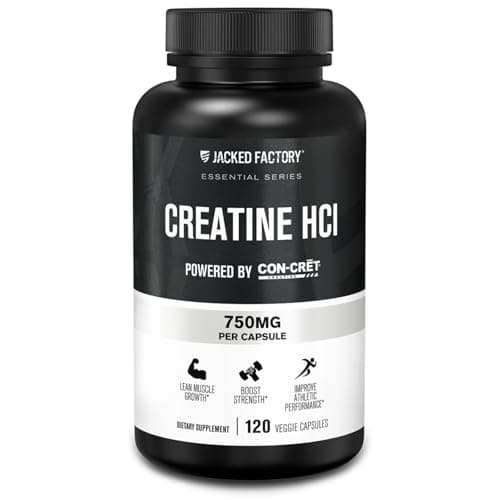
Jacked Factory Creatine HCl Capsules - CON CRET Creatine Pills…
Cost per serving
$0.17
120 servings · ~120-day supply
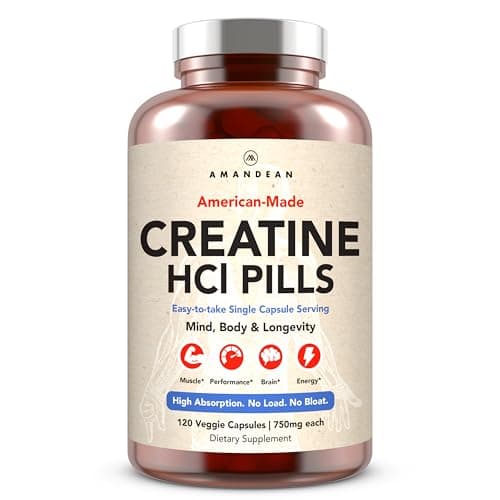
AMANDEAN Creatine HCl Capsules & Pills
Cost per serving
$0.25
120 servings · ~120-day supply
Related guides
Does creatine cause hair loss? What the evidence actually says
The creatine–hair-loss worry traces to a single 2009 study that measured a hormone (DHT), not hair. Here's what that study found, what it didn't, and how to think about the risk honestly.
Creatine Side Effects: What the Evidence Actually Shows
An honest, hedged look at creatine monohydrate side effects — water weight, GI upset, and the kidney myth — using only what the research generally supports.
When to Take Creatine: Does Timing Actually Matter?
An honest, data-informed guide to creatine timing — why consistency and total daily dose matter far more than the exact hour you take it.
Creatine Cost Per Gram: Monohydrate vs "Advanced" Forms
Creatine monohydrate is the value and evidence winner. Compare cost per gram across 47 tracked listings and why "advanced" forms cost more.