Black seed oil (Nigella sativa): thymoquinone, dose, and cost
Quick answer
Black seed oil is commonly used at about 1-2 g/day, and the label detail that matters is thymoquinone content or standardization, not just the cold-pressed oil milligrams.
Alex Soto, Founder, VitaminDB
6 min readUpdated 7/31/2026 NIH-sourced
On this page
Black seed oil is commonly used at about 1-2 g of oil per day, or as a standardized extract. The single most useful thing to understand before buying is that the active compound is thymoquinone, so the number that matters on the label is thymoquinone content or standardization, not just how many milligrams of "cold-pressed oil" are in each softgel.
What black seed oil is
Black seed oil is pressed from the seeds of Nigella sativa, sometimes called black cumin or kalonji. It has a long history in traditional use across the Middle East and South Asia. The seed contains several compounds, but the one researchers focus on is thymoquinone, which is credited with most of the oil's studied activity.
That distinction drives everything else. Two bottles can both say "black seed oil" and contain very different amounts of thymoquinone depending on the seed source and how the oil was processed.
Before the dose: the comprehensive review we cite is candid that the human evidence is still forming — further clinical trials are needed to determine the protective functions of black cumin and its compounds — and it flags pharmacokinetic herb–drug interactions and safety issues as open questions. Treat it as a promising traditional remedy, not an established one.
The dose
A typical starting point is 1-2 g of oil per day, often as one or two softgels, taken with food. Standardized extracts are dosed by their thymoquinone or standardization spec instead, so follow the specific product's label.
Practical notes:
- Start at the low end and see how you tolerate it before increasing.
- Take it with food if the oil bothers your stomach on its own.
- Consistency over weeks matters more than a single large dose. This is general information, not medical advice.
What the evidence actually shows
Black seed oil is studied for a range of things, most commonly metabolic markers and inflammation. The honest summary is that the human evidence is preliminary. Some small trials report modest changes in markers, but the studies are limited in size and quality, and results are not consistent enough to call any use established.
So the reasonable framing is: black seed oil is a traditional remedy with early, promising-but-thin human data, not a proven treatment for any specific condition. If a product implies it treats a disease, that goes beyond the evidence. Not medical advice.
The label detail that separates good from useless
Here is where most buyers overpay for the wrong thing. Because thymoquinone is the active, the meaningful spec is:
- Thymoquinone content per serving, or
- A standardization claim (for example, standardized to a stated percentage of thymoquinone).
A label that only advertises "2,000 mg cold-pressed black seed oil" is telling you volume, not potency. A large oil dose with negligible thymoquinone can be weaker than a smaller, properly standardized dose. When two products are priced similarly, the one that discloses thymoquinone is the one you can actually evaluate.
Other quality signals worth checking:
- Cold-pressed and dark packaging, since the oil is sensitive to heat and light.
- A recent-ish batch or best-by date, because pressed oils oxidize over time.
- Third-party testing where available.
Who should be cautious
- People on blood-sugar or blood-pressure medication, since black seed may add to those effects.
- Pregnant or nursing people, who should avoid it unless a clinician approves.
- Anyone scheduled for surgery, given possible effects on bleeding and blood sugar. Not medical advice.
How to buy black seed oil by cost per dose
Do not compare bottles by the oil milligrams on the front. Compare by what the active is costing you:
- Note the thymoquinone (or standardization) per serving, not just total oil.
- Divide the total price by the number of doses in the bottle for a real cost per dose.
- Favor standardized products, because they are the only ones you can compare fairly.
Compare current prices per dose on /nutrients/black-seed, see the best current value picks on /best/black-seed, and read exactly how we calculate cost per dose on /methodology.
Buy the standardized option with the lowest cost per dose of thymoquinone, and treat the benefits as promising but unproven.
Covered nutrients: Black Seed
See the live cost-per-dose data
This guide is editorial — the prices below are real and current.
Frequently asked questions
How much black seed oil should I take?
A common range is about 1-2 g of oil per day, or a standardized extract taken as directed. Start at the low end and follow the product label. This is general information, not medical advice.
What does black seed oil do?
It has been studied for markers like metabolic and inflammatory measures, but the human evidence is still preliminary and the effects reported are generally modest. Treat it as unproven rather than established for any specific condition. Not medical advice.
What should I look for on a black seed oil label?
Look for the thymoquinone content or a standardization claim, since thymoquinone is the active compound. A product that only lists cold-pressed oil milligrams tells you volume, not potency.
How do I compare black seed oil cost per dose?
Compare the amount of oil or, better, the thymoquinone per serving against the price, then divide by the number of doses in the bottle. Standardized products are easier to compare fairly.
Where these numbers come from
Cost figures on this page are computed from 32 active Black Seed listings we track, last re-priced . Cost per dose is price ÷ (servings × dose), computed per listing — not a price we are quoted. Listings under $1 or with fewer than 3 servings are excluded, because both are usually a parse error rather than a bargain.
- Amazon.com · 32
Prices move. Figures written into the text are re-checked against live data on a schedule; the ranking pages are always the current number.
Sources
Health claims on this page are drawn from these sources. Prices and cost-per-dose figures come from our own tracked listings, not from the sources below.
- 1.Black Cumin (Nigella sativa L.): A Comprehensive Review on Phytochemistry, Health Benefits, Molecular Pharmacology, and Safety — PubMed Central, NIH National Library of Medicine
Deals on these nutrients
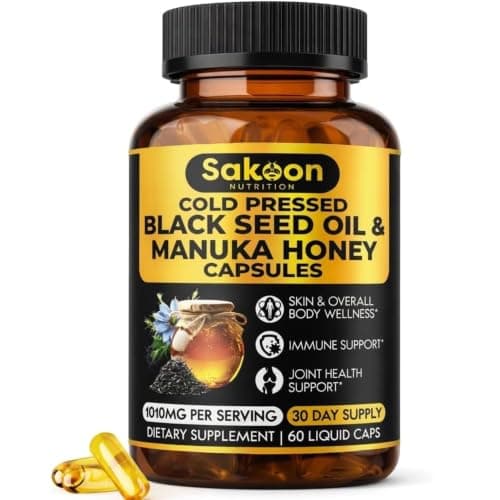
Black Seed Oil Capsules - With New Zealand Manuka Honey
Cost per serving
$0.42
60 servings · ~60-day supply
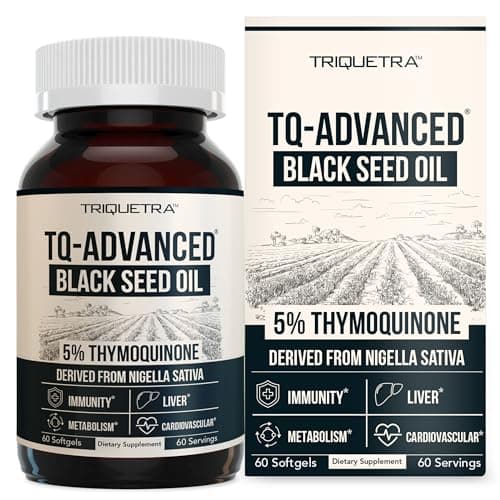
Black Seed Oil Softgels | 5% Thymoquinone - TQ-Advanced®…
Cost per serving
$0.48
60 servings · ~60-day supply
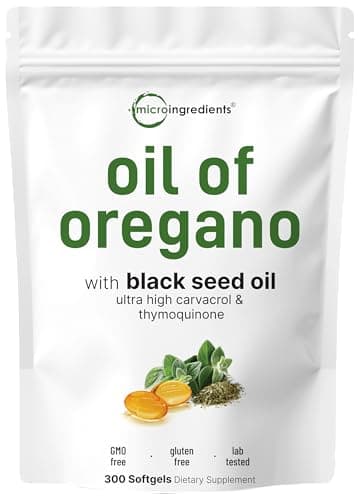
Micro Ingredients Oil of Oregano with Black Seed Oil
Cost per serving
$0.12
300 servings · ~300-day supply

BulkSupplements.com Black Cumin Seed Oil Softgels - Black…
Cost per serving
$0.22
120 servings · ~120-day supply
Related guides
Ubiquinol vs ubiquinone: which CoQ10 is worth it
Ubiquinol absorbs somewhat better, but it costs about 2.5x more per 100 mg than ubiquinone — a median $0.335 vs $0.133 across 55 listings we price. What that gap is worth, the dose, and the statin question.
P-5-P vs regular vitamin B6: is the active form worth it?
P-5-P costs about 2x more per 50 mg than plain pyridoxine — a median $0.146 vs $0.071 across 56 listings we price. Most healthy people convert plain B6 fine, so here is what the premium buys, and the safety ceiling that matters more than either form.
Beetroot vs citrulline: which for pumps, and which for endurance
Both raise nitric oxide, but by different routes and for different goals — beetroot has the endurance edge, citrulline is the gym-pump staple. Doses, the honest split, and cost per dose.
Beta-alanine: dose, the tingling, and what it actually does
Beta-alanine buffers muscle acid to extend high-intensity efforts in the 1–4 minute range. It works by loading over weeks, not as a pre-workout kick. Real dose, why it tingles, and cost per serving.