Boron: dose for bone and hormones, safety, and cost
Quick answer
A common boron supplement dose is about 3-6 mg per day, well under the adult tolerable upper intake level of 20 mg, and because boron is cheap and dosed in milligrams it is easy to compare by cost per serving.
Alex Soto, Founder, VitaminDB
6 min readUpdated 8/1/2026 NIH-sourced
On this page
A common boron supplement dose is about 3-6 mg per day, which sits well under the adult tolerable upper intake level of 20 mg per day. Because boron is cheap and its dose is small and clearly stated in milligrams, it is one of the easier supplements to compare on cost per serving.
What boron is
Boron is a trace mineral. You get small amounts from foods like fruit, nuts, and legumes, and it plays a role in the body's handling of bone and of several other minerals.
Specifically, boron is involved in:
- Bone health.
- The metabolism of hormones.
- The handling of related nutrients such as calcium, magnesium, and vitamin D.
Those connections are why boron shows up in bone-support and hormone-support formulas, often alongside those very minerals.
What the evidence actually supports
It is worth being straight about how strong the case is, because boron is often marketed well ahead of the research.
- Some research suggests boron may modestly influence testosterone and estrogen and may support bone.
- But the human evidence is limited, so these are reasons boron is studied, not proof that a supplement will change your hormones or bones in a way you would notice.
The honest framing is that boron is a plausible, low-cost, low-risk trace mineral with modest and not fully settled benefits, rather than a hormone booster you can count on. Not medical advice.
Two things the NIH fact sheet settles before any dose question. First, boron deficiency signs and symptoms have not been firmly established in humans — so nobody is correcting a known shortfall. Second, on the most-studied claim, boron, particularly as calcium fructoborate, might hold promise for reducing osteoarthritis symptoms, but confirmation is needed from additional controlled trials.
The dose: 3-6 mg, and why more is not better
The common supplement range is 3-6 mg per day. A few points make this easy to get right:
- There is no official RDA for boron, so the range comes from typical supplement practice and research doses, not a formal requirement.
- The adult tolerable upper intake level is 20 mg per day. That is the ceiling for regular intake from all sources.
- A 3-6 mg dose therefore leaves a wide margin below the limit.
The takeaway is that more is not better. There is no benefit to chasing large doses, and the sensible approach is to stay comfortably under the 20 mg upper limit. Not medical advice.
Is boron safe?
At the usual 3-6 mg per day, boron is generally considered safe for adults. The reason to respect the 20 mg upper limit is simple: it is the level set for regular intake, and there is no reason to push toward it when the useful dose is a small fraction of that.
- Keep total intake well under 20 mg/day, accounting for boron in any combination formulas you take.
- If you take a multi-ingredient bone or hormone product, check whether it already includes boron so you do not double up.
- As with any supplement, if you are pregnant, breastfeeding, or managing a medical condition, confirm it fits your situation with a clinician. Not medical advice.
What to look for on the label
- A clear milligram amount of boron per serving, since the dose is small and precision matters.
- The form is usually stated (for example a boron complex or a chelated form); the milligram amount of boron itself is what to compare.
- Awareness of any boron already present in a stacked bone or mineral formula, so your total stays in range.
How to buy boron by cost per dose
Boron is one of the cheapest supplements out there, and because the dose is small and stated in milligrams, comparing value is simple.
- Note the milligrams of boron per serving, aiming at the 3-6 mg range.
- Divide the total price by the number of servings in the bottle to get cost per dose.
- Since boron is inexpensive, focus on getting a clean product at your target dose rather than paying up for a large megadose you should not take anyway.
Compare current prices per dose on /nutrients/boron, see the best current value picks on /best/boron, and read exactly how we calculate cost per dose on /methodology.
Buy the product that delivers 3-6 mg at the lowest cost per dose, keep your total intake well under the 20 mg upper limit, and treat any hormone claims as modest rather than guaranteed.
Covered nutrients: Boron
See the live cost-per-dose data
This guide is editorial — the prices below are real and current.
Frequently asked questions
How much boron should I take per day?
A common supplement dose is about 3-6 mg per day. There is no official RDA for boron, but the adult tolerable upper intake level is 20 mg per day, so 3-6 mg leaves a wide safety margin. More is not better here. Not medical advice.
Does boron raise testosterone?
Some research suggests boron may modestly influence hormones such as testosterone and estrogen, but the human evidence is limited, so this should be treated as possible rather than established. It is not a reliable way to raise testosterone. Not medical advice.
Is boron safe?
At typical supplement doses of about 3-6 mg per day, boron is generally considered safe for adults. The adult tolerable upper intake level is 20 mg per day, so there is no reason to megadose, and staying well under the limit is the sensible approach. Not medical advice.
How do I compare boron cost per dose?
Boron is inexpensive and the dose is small and usually stated in milligrams, which makes it easy. Note the milligrams per serving, then divide the bottle price by the number of servings to get a real cost per dose.
Where these numbers come from
Cost figures on this page are computed from 34 active Boron listings we track, last re-priced . Cost per dose is price ÷ (servings × dose), computed per listing — not a price we are quoted. Listings under $1 or with fewer than 3 servings are excluded, because both are usually a parse error rather than a bargain.
- Amazon.com · 34
Prices move. Figures written into the text are re-checked against live data on a schedule; the ranking pages are always the current number.
Sources
Health claims on this page are drawn from these sources. Prices and cost-per-dose figures come from our own tracked listings, not from the sources below.
- 1.Boron: Fact Sheet for Health Professionals — NIH Office of Dietary Supplements
Deals on these nutrients
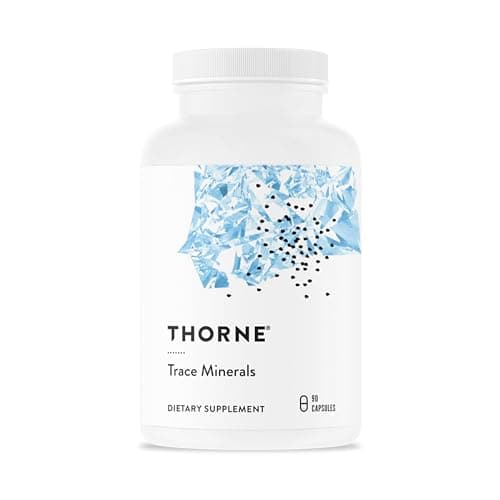
THORNE - Trace Minerals - Optimally Absorbed
Cost per serving
$0.27
90 servings · ~90-day supply
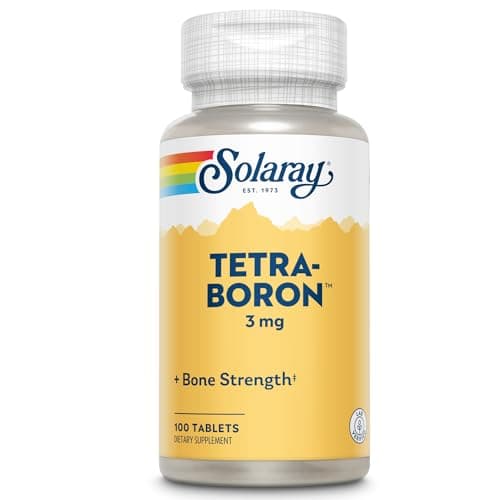
Solaray Tetra Boron 3mg Tablets | 100 Count
Cost per serving
$0.09
100 servings · ~100-day supply
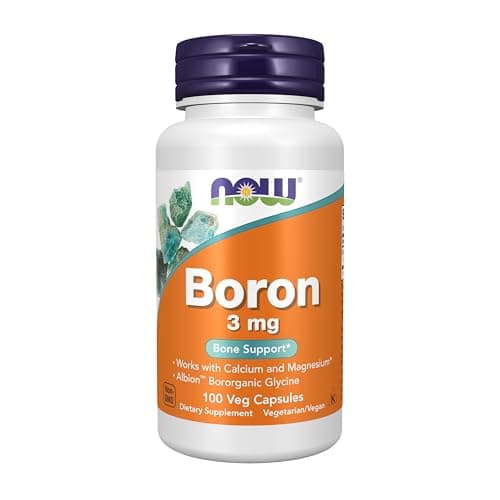
NOW Foods Supplements, Boron 3 mg (Bororganic Glycine)…
Cost per serving
$0.05
100 servings · ~100-day supply
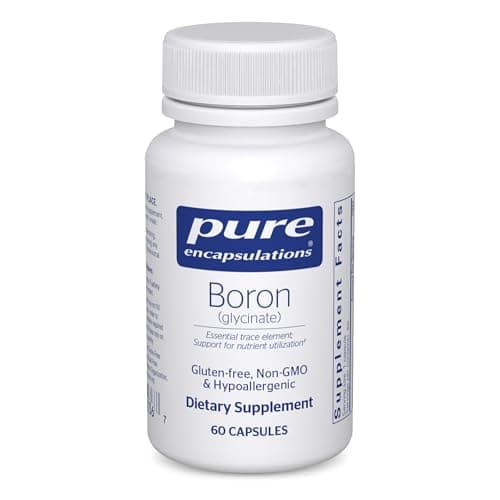
Pure Encapsulations Boron (Glycinate) | Supplement for Hormone…
Cost per serving
$0.23
60 servings · ~60-day supply
Related guides
Ubiquinol vs ubiquinone: which CoQ10 is worth it
Ubiquinol absorbs somewhat better, but it costs about 2.5x more per 100 mg than ubiquinone — a median $0.335 vs $0.133 across 55 listings we price. What that gap is worth, the dose, and the statin question.
P-5-P vs regular vitamin B6: is the active form worth it?
P-5-P costs about 2x more per 50 mg than plain pyridoxine — a median $0.146 vs $0.071 across 56 listings we price. Most healthy people convert plain B6 fine, so here is what the premium buys, and the safety ceiling that matters more than either form.
Beetroot vs citrulline: which for pumps, and which for endurance
Both raise nitric oxide, but by different routes and for different goals — beetroot has the endurance edge, citrulline is the gym-pump staple. Doses, the honest split, and cost per dose.
Beta-alanine: dose, the tingling, and what it actually does
Beta-alanine buffers muscle acid to extend high-intensity efforts in the 1–4 minute range. It works by loading over weeks, not as a pre-workout kick. Real dose, why it tingles, and cost per serving.