Collagen for Skin and Joints: Evidence and Real Cost Per Gram
Quick answer
Some randomized trials suggest collagen peptides may modestly improve skin elasticity, hydration, and joint comfort, but effect sizes are small and many studies are industry-funded. Because ingested collagen is digested into amino acids like any protein — not delivered intact to your skin — a protein-adequate diet already supplies the same building blocks. If you try it, compare strictly by cost per gram: VitaminDB tracks 88 active collagen listings from $0.04 to $4.83 per serving (median $0.57).
Alex Soto, Founder, VitaminDB
7 min readUpdated 7/4/2026 NIH-sourced
On this page
Collagen powders and capsules are marketed for firmer skin, fewer wrinkles, and less joint ache. The honest version is more measured: there is some evidence of modest benefit for a subset of people, the science is mixed and often funded by the companies selling the product, and what you swallow is broken down into amino acids long before it reaches your skin or cartilage. That doesn't make collagen worthless — it makes it a protein supplement worth judging on price. Here's what the evidence actually supports, and how to compare products by the number that most reliably separates a good deal from a bad one: cost per gram.
What collagen is, and what your body does with it
Collagen is the most abundant structural protein in the body — the scaffolding in skin, tendons, cartilage, and bone. Supplements typically contain hydrolyzed collagen peptides: collagen broken into short chains so it dissolves easily and absorbs. Doses on labels commonly range from about 2.5 to 10 g of peptides per serving.
The key thing to understand is what happens after you swallow it. Digestion breaks collagen down into amino acids and small peptides, just like it does with chicken, fish, eggs, or whey. There is no known delivery mechanism that routes those fragments specifically to the wrinkles on your face or the cartilage in your knee. Your body decides where amino acids go. This is why nutrition scientists point out that a protein-adequate diet already supplies the same raw materials collagen powder provides — glycine, proline, and hydroxyproline are present in ordinary protein foods and in the collagen your own cells build.
Some researchers hypothesize that specific collagen-derived peptides might act as signaling molecules that nudge cells toward more collagen production, and a few small studies are consistent with that idea. But it remains a hypothesis, not settled fact, and it's a long way from the marketing claim that a scoop of powder "rebuilds" skin or cartilage. There is no good evidence it does that in any literal sense.
What the evidence shows for skin
This is collagen's most-studied area, and the signal is still modest. A number of randomized controlled trials report small improvements in skin elasticity and hydration after several weeks to a few months of daily collagen peptides. Analyses that pool these trials generally lean positive on those two outcomes.
The caveats matter as much as the finding:
- Effect sizes are small. Measured improvements tend to be modest and may not translate into a difference you'd notice in the mirror.
- Industry funding is common. A large share of the trials are funded or run by companies that sell collagen, which is associated with more favorable results across nutrition research generally.
- Study quality varies. Sample sizes are often small, follow-up is short, and formulations differ, which makes it hard to say one product performs better than another.
So a fair summary: collagen peptides may offer a modest cosmetic benefit for skin hydration and elasticity in some people, and the risk appears low. It is not an established anti-aging treatment, and it should not be expected to reverse sun damage or replace sunscreen and sleep.
The pooled figure comes from a 2023 systematic review and meta-analysis, which found that hydrolysed collagen supplementation can improve skin hydration and elasticity, with long-term use yielding more favourable effects than short-term use — while stating that large-scale randomised controlled trials are still required.
What the evidence shows for joints
The joint story is thinner and more mixed. Some trials in people with activity-related joint discomfort or osteoarthritis report improvements in comfort or function with collagen (both hydrolyzed peptides and a specialized form called undenatured type II collagen, which is used at much smaller doses). Other trials show little or no benefit, and the overall body of evidence is limited and inconsistent.
Public-health bodies like the NIH Office of Dietary Supplements and NCCIH generally describe the evidence for collagen and joint or bone health as preliminary rather than conclusive. If you have persistent joint pain, that's a reason to see a clinician — not a reason to self-treat with a supplement and hope.
Marine vs bovine: does the source matter?
The two most common sources are bovine (cow hide/bone) and marine (fish skin/scales). You'll also see porcine and chicken collagen.
- Bovine — Notes: Often among the cheaper options per gram; rich in type I and III collagen, associated with skin and general connective tissue
- Marine — Notes: Often marketed for skin; smaller peptide size in some products; typically pricier; suitable for pescatarians
- Undenatured type II — Notes: A different, non-hydrolyzed form used at very small doses specifically for joint research
For skin and general use, there is no strong, consistent evidence that marine collagen outperforms bovine enough to justify a large price premium. Both are digested into amino acids. Choose based on dietary preference (marine for pescatarians, bovine for others), any allergy concerns (fish), and — above all — cost per gram.
The real cost per gram
This is where a shopper actually has leverage, because collagen pricing is wildly inconsistent for what is essentially the same commodity protein.
Across the 88 active collagen listings VitaminDB tracks (19 September 2026), cost ranges from $0.04 to $4.83 per serving, with a median of $0.57 and the middle 80% between $0.14 and $1.74 — a 12x spread. Same category, same basic ingredient. On the listings that state a dose in grams, the protein itself runs about $0.045 to $0.179 per gram, median $0.092.
That spread is the number to act on. Because ingested collagen is digested like any protein, paying a premium tends to buy branding, flavoring, and sometimes added vitamin C or hyaluronic acid — not a categorically different result. A product near the low end of the range delivers the same amino acids as one near the top.
A few practical rules:
- Compare cost per gram, not price per tub. A big tub can hide a high per-serving cost, and a small pouch can be a bargain. Divide total price by grams of collagen, not by number of servings.
- Ignore the source premium unless you have a specific reason. Marine may cost more; that's a preference, not a demonstrated upgrade.
- Watch the "extras." Bundled vitamin C or biotin is cheap to add and rarely justifies a big markup.
- Buy on cost per gram, then stick with a product long enough (typically a couple of months) to judge if you notice anything.
You can see the current ranked list, sorted by real cost per gram, on our best collagen by cost per dose page. Because prices move constantly, we point you to the live ranking rather than naming a "winner" here.
Who might reasonably try it — and who probably shouldn't bother
Collagen is generally well tolerated, and reported side effects are typically mild (some people report fullness or minor digestive upset). Given the low risk, it can be a reasonable low-stakes experiment if:
- You're curious about skin hydration or elasticity and want to try a modest, evidence-informed option.
- You have activity-related joint discomfort and want to try it alongside — not instead of — proper evaluation.
- You struggle to hit your daily protein target and find a flavored collagen easy to add.
It may not be worth the money if you already eat plenty of protein, expect dramatic anti-aging or cartilage-rebuilding results, or are paying a big premium for a "premium" source. In those cases the honest expectation is: small or no noticeable effect.
Bottom line
Collagen sits in the "possibly a modest benefit, definitely not a miracle" category. Some evidence supports small improvements in skin hydration and elasticity; joint evidence is more limited and mixed; and everything you swallow is digested into amino acids your diet may already supply. If you decide it's worth trying, treat it as the commodity protein it is and shop on cost per gram — where a 4x price spread between the cheapest and dearest tracked gram means the difference between a smart buy and an overpriced one is largely in your control. Start with the cost-per-gram ranking and let price, not packaging, guide the decision.
This is general information, not medical advice — talk to a clinician before starting any supplement, especially if you're pregnant, nursing, managing a health condition, or taking medication.
Covered nutrients: Collagen Peptides
See the live cost-per-dose data
This guide is editorial — the prices below are real and current.
Frequently asked questions
Does collagen actually work for skin and wrinkles?
Some randomized trials suggest collagen peptides may modestly improve skin hydration and elasticity over several weeks, and pooled analyses lean slightly positive on those outcomes. However, effect sizes are small, many studies are industry-funded, and results vary. It may offer a subtle cosmetic benefit for some people, but it is not an established wrinkle treatment and should not be expected to replace sun protection. This is general information, not medical advice.
Is marine collagen better than bovine collagen?
There's no strong, consistent evidence that marine collagen outperforms bovine for skin or general use — both are digested into amino acids before absorption. Marine is often more expensive and is mainly a fit for pescatarians or people avoiding beef. For most shoppers, dietary preference and cost per gram matter more than the source itself.
How much collagen should I take per day?
Product labels commonly provide roughly 2.5 to 10 g of hydrolyzed collagen peptides per serving, and much of the skin research has used doses in that general range. That's a description of what's commonly labeled and studied, not a personal prescription. Your ideal amount depends on your overall diet and goals, so it's worth discussing with a clinician or dietitian.
Where these numbers come from
Cost figures on this page are computed from 119 active Collagen Peptides listings we track, last re-priced . Cost per dose is price ÷ (servings × dose), computed per listing — not a price we are quoted. Listings under $1 or with fewer than 3 servings are excluded, because both are usually a parse error rather than a bargain.
- Amazon.com · 115
- SuperSmart · 4
Prices move. Figures written into the text are re-checked against live data on a schedule; the ranking pages are always the current number.
Sources
Health claims on this page are drawn from these sources. Prices and cost-per-dose figures come from our own tracked listings, not from the sources below.
- 1.Effects of Oral Collagen for Skin Anti-Aging: A Systematic Review and Meta-Analysis — PubMed Central, NIH National Library of Medicine
Deals on these nutrients
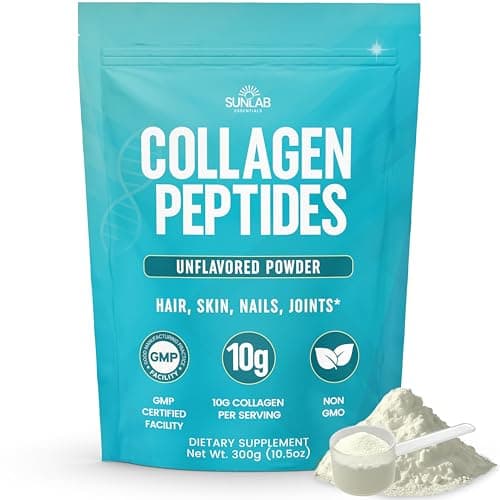
Collagen Peptides Powder Hydrolyzed Bovine (Unflavored) Type I…
Cost per serving
$0.43
30 servings · ~30-day supply
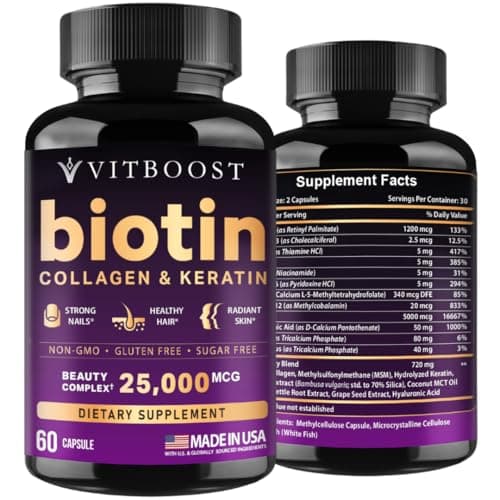
VITBOOST Biotin with Hyaluronic Acid
Cost per serving
$0.33
60 servings · ~60-day supply
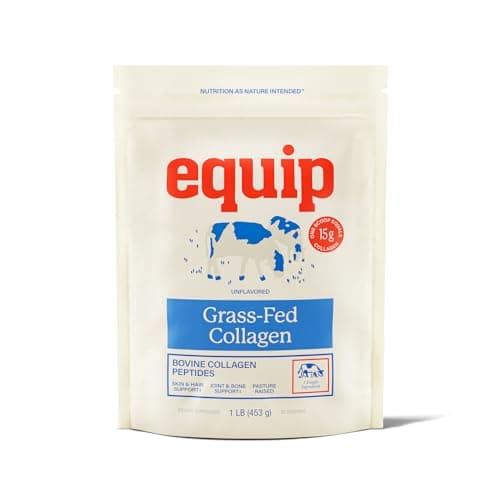
Equip Foods Grass Fed Collagen Powder | Hydrolyzed Bovine…
Cost per serving
$1.50
30 servings · ~30-day supply

Orgain Hydrolyzed Collagen Peptides Powder For Women & Men
Cost per serving
$0.96
22 servings · ~22-day supply
Related guides
Ubiquinol vs ubiquinone: which CoQ10 is worth it
Ubiquinol absorbs somewhat better, but it costs about 2.5x more per 100 mg than ubiquinone — a median $0.335 vs $0.133 across 55 listings we price. What that gap is worth, the dose, and the statin question.
P-5-P vs regular vitamin B6: is the active form worth it?
P-5-P costs about 2x more per 50 mg than plain pyridoxine — a median $0.146 vs $0.071 across 56 listings we price. Most healthy people convert plain B6 fine, so here is what the premium buys, and the safety ceiling that matters more than either form.
Beetroot vs citrulline: which for pumps, and which for endurance
Both raise nitric oxide, but by different routes and for different goals — beetroot has the endurance edge, citrulline is the gym-pump staple. Doses, the honest split, and cost per dose.
Beta-alanine: dose, the tingling, and what it actually does
Beta-alanine buffers muscle acid to extend high-intensity efforts in the 1–4 minute range. It works by loading over weeks, not as a pre-workout kick. Real dose, why it tingles, and cost per serving.