D-mannose for UTI: the 2 g dose, the evidence, and cost
Quick answer
D-mannose is studied for preventing recurrent UTIs at about 2 g per day — not for treating an active infection, which needs medical care — so compare products by cost per 2 g dose.
Alex Soto, Founder, VitaminDB
6 min readUpdated 8/1/2026 NIH-sourced
On this page
D-mannose is studied for preventing recurrent UTIs at about 2 g per day — and that framing matters, because it is not a treatment for an active infection. If you have UTI symptoms right now, that needs medical care and often antibiotics; a supplement is not the answer. For someone prone to repeat infections looking at prevention, the honest read is that the evidence is promising but limited, and the way to buy is by cost per 2 g dose.
We sell nothing. We rank D-mannose by cost per dose.
What D-mannose is
D-mannose is a simple sugar — closely related to glucose — that the body absorbs but largely doesn't use for fuel, so much of it passes into the urine. That's central to the idea behind it. The proposed mechanism is anti-adhesion: D-mannose is thought to bind to the finger-like projections that E. coli (the bacteria behind most UTIs) use to grip the bladder wall, so the bacteria are more likely to be flushed out in urine instead of sticking and multiplying.
It's sold as powder (mixed into water) and as capsules, which is the main reason grams per serving vary between products.
The dose: about 2 g per day for prevention
The amount used in studies for preventing recurrent UTIs is typically about 2 g per day. Two things to hold onto:
- This is a prevention amount, aimed at people who get repeat infections — not a dose to knock out an infection you have now.
- Because 2 g is the studied unit, it's also the right unit to price products by. A "1,000 mg per capsule" product means two capsules to reach a 2 g dose, which changes the real cost.
The right approach for any individual — whether to use it at all, and how — is a conversation to have with a clinician.
What the evidence actually says
Here's the honest framing. Research on D-mannose for preventing recurrent UTIs is promising but limited and mixed — some studies are encouraging, but the overall body of evidence isn't the kind of large, consistent trial base that would let anyone call it proven. Treat the benefit as plausible but unproven.
And the boundary that matters most: D-mannose is studied for prevention, not treatment. An active UTI — burning, urgency, pain — is not something to self-treat with a supplement. Symptoms can point to an infection that needs antibiotics, and an untreated UTI can worsen. See a doctor for an active infection. None of this is medical advice.
D-mannose vs cranberry
NCCIH's read on the cranberry side of that comparison is modest: the evidence for cranberry juice beverages must be described as "limited and inconsistent", though cranberry taken orally is generally thought to be safe. Neither product has the evidence base of an antibiotic, and neither treats an active infection.
You'll often see the two together, because they share the same theory. Cranberry is also studied for a UTI anti-adhesion effect, with its proposed active compounds being proanthocyanidins (PACs) — thought, like D-mannose, to make it harder for bacteria to stick to the bladder wall.
- Both target the same anti-adhesion idea, by somewhat different proposed mechanisms.
- Evidence for both is limited rather than conclusive.
- Many products combine D-mannose and cranberry in one capsule or scoop.
If you're weighing them, they're companions more than rivals. You can read our cranberry guide for how that side compares, and combined products are common if you want both.
How to compare D-mannose by cost per dose
Because powders and capsules pack different grams per serving, price per bottle misleads. Normalize everything to the studied 2 g dose:
- Find the grams of D-mannose per serving on the label.
- Work out how many 2 g doses the container holds.
- Cost per 2 g dose = price ÷ number of 2 g doses.
That single figure lets you line up a powder against capsules on equal terms, and it often flips which one looks cheaper. If a product bundles cranberry, factor that in — you may be paying for two ingredients.
Our best D-mannose by cost per dose page ranks products cheapest-first; browse listings on the D-mannose nutrient page, and see how we normalize grams and servings in our methodology.
Bottom line
- D-mannose is studied for preventing recurrent UTIs at about 2 g/day — a prevention amount, not a treatment.
- Evidence is promising but limited and mixed; treat the benefit as unproven.
- It is not for an active infection — a symptomatic UTI needs medical care and often antibiotics.
- Cranberry shares the anti-adhesion idea (via PACs) and is often combined with D-mannose.
- Buy on cost per 2 g dose, not per bottle.
Price it at the 2 g dose the studies used, and check with a clinician about whether it fits your situation. This is general information, not medical advice.
Covered nutrients: D-Mannose
See the live cost-per-dose data
This guide is editorial — the prices below are real and current.
Frequently asked questions
How much D-mannose should I take for UTIs?
The amount used in studies for preventing recurrent UTIs is typically about 2 g per day. That is a prevention dose, not a treatment dose, and the right approach for any individual should be confirmed with a clinician. Because 2 g is the studied amount, it is also the unit to price products by. This is general information, not medical advice.
Does D-mannose actually work?
The evidence is promising but limited and mixed, and it is studied for prevention of recurrent UTIs rather than treatment. It is not a treatment for an active infection — a symptomatic UTI needs medical care and often antibiotics, so see a doctor rather than relying on a supplement. Not medical advice.
D-mannose vs cranberry — what's the difference?
Both are studied for the same anti-adhesion idea: making it harder for E. coli to stick to the bladder wall. Cranberry's proposed active compounds are proanthocyanidins (PACs). The two are often combined in a single product, and evidence for both is limited rather than conclusive. Not medical advice.
How do I compare D-mannose products on cost?
Since the studied amount is about 2 g per day, compare on cost per 2 g dose: work out how many 2 g doses a container holds, then divide the price by that number. Powders and capsules differ in grams per serving, so normalize to 2 g before deciding which is cheaper.
Where these numbers come from
Cost figures on this page are computed from 16 active D-Mannose listings we track, last re-priced . Cost per dose is price ÷ (servings × dose), computed per listing — not a price we are quoted. Listings under $1 or with fewer than 3 servings are excluded, because both are usually a parse error rather than a bargain.
- Amazon.com · 16
Prices move. Figures written into the text are re-checked against live data on a schedule; the ranking pages are always the current number.
Sources
Health claims on this page are drawn from these sources. Prices and cost-per-dose figures come from our own tracked listings, not from the sources below.
- 1.Cranberry — NIH National Center for Complementary and Integrative Health
Deals on these nutrients

OMOGS Women's Probiotic 180 Billion CFUs 18 Strains
Cost per serving
$0.17
90 servings · ~90-day supply

Zazzee D-Mannose Powder Plus
Cost per serving
$1.00
30 servings · ~30-day supply

KAL D Mannose Powder 1600 mg
Cost per serving
$0.61
45 servings · ~45-day supply
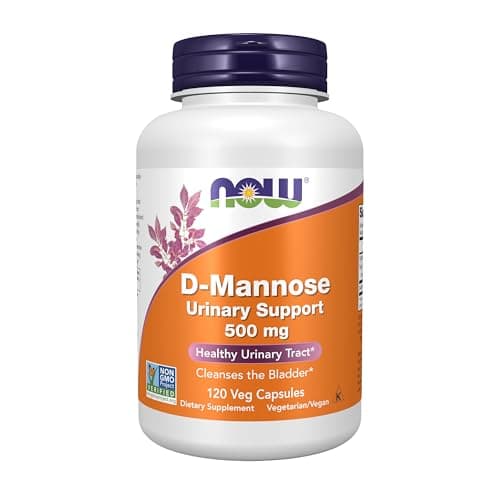
NOW Foods Supplements, D-Mannose 500 mg, Non-GMO Project…
Cost per serving
$0.12
120 servings · ~120-day supply
Related guides
Ubiquinol vs ubiquinone: which CoQ10 is worth it
Ubiquinol absorbs somewhat better, but it costs about 2.5x more per 100 mg than ubiquinone — a median $0.335 vs $0.133 across 55 listings we price. What that gap is worth, the dose, and the statin question.
P-5-P vs regular vitamin B6: is the active form worth it?
P-5-P costs about 2x more per 50 mg than plain pyridoxine — a median $0.146 vs $0.071 across 56 listings we price. Most healthy people convert plain B6 fine, so here is what the premium buys, and the safety ceiling that matters more than either form.
Beetroot vs citrulline: which for pumps, and which for endurance
Both raise nitric oxide, but by different routes and for different goals — beetroot has the endurance edge, citrulline is the gym-pump staple. Doses, the honest split, and cost per dose.
Beta-alanine: dose, the tingling, and what it actually does
Beta-alanine buffers muscle acid to extend high-intensity efforts in the 1–4 minute range. It works by loading over weeks, not as a pre-workout kick. Real dose, why it tingles, and cost per serving.