D-ribose: who it's actually for, dose, and cost
Quick answer
D-ribose is studied at about 5 g up to three times a day in specific conditions, not for general energy — and because that's ~15 g/day of a bulky powder, compare it by cost per gram.
Alex Soto, Founder, VitaminDB
6 min readUpdated 8/1/2026
On this page
D-ribose is studied at about 5 g up to three times a day — roughly 15 g/day — in specific conditions, not for general "energy," and because that's a large amount of a bulky, relatively pricey powder, the honest way to buy it is by cost per gram. For healthy people looking for a daily lift, the evidence is weak and it's usually unnecessary.
We sell nothing. We rank D-ribose by cost per gram.
What D-ribose is
D-ribose is a simple sugar your body uses as a building block to make ATP — the molecule cells use for energy. Because it sits early in the pathway that regenerates ATP, the theory is that supplying extra ribose could help tissues that are short on energy rebuild their stores faster.
That theory is most relevant where ATP regeneration is genuinely impaired — which is the key to understanding who it's for, and who it isn't.
Who D-ribose is actually for
This is where honesty matters. D-ribose is studied mainly in specific contexts, not as a general tonic:
- Chronic fatigue syndrome (CFS)
- Fibromyalgia
- Certain heart conditions
In those settings, limited research suggests it may help energy or recovery — the operative word being limited. The evidence base is small rather than the kind of large, consistent trial record that proves a benefit. Treat it as plausible in those contexts, not established.
For healthy people or anyone chasing generic "energy," it's a different story: there's little reason to expect a benefit, because a healthy body already regenerates ATP well. Whether D-ribose fits a particular medical situation is a question for a clinician, not a label. None of this is medical advice.
The dose: about 5 g, up to three times a day
The amount used in studies is notably larger than most supplements. A typical research intake is:
- About 5 g per dose, taken up to three times a day
- Which adds up to roughly 15 g per day
Two things follow from that. First, this is a studied research amount in specific conditions, not a blanket recommendation — the right approach for any individual should be confirmed with a clinician. Second, 15 g/day is a lot of powder, which makes cost per gram the number that really matters (more below).
Does it work for general energy or workouts?
Short version: for general energy and exercise performance in healthy people, the evidence is weak and it's usually unnecessary. Despite the "cellular energy" marketing, most people are already making plenty of ATP, so adding ribose doesn't reliably move the needle for everyday tiredness or gym performance.
If your interest is a daily pick-me-up or a pre-workout boost, D-ribose is a poor fit — there are better-supported (and cheaper) options. It's best framed as a targeted tool for specific conditions, not a broad energy supplement.
One practical note: D-ribose is a sugar, and it can lower blood sugar slightly. That's worth keeping in mind if you manage blood sugar or take related medication — another reason to loop in a clinician.
How to compare D-ribose by cost per gram
D-ribose is a bulky, relatively expensive powder, and the studied intake burns through a container quickly — at ~15 g/day, even a large tub doesn't last long. So cost per gram is decisive:
- Find the grams per serving on the label.
- Work out the total grams in the container.
- Cost per gram = price ÷ total grams.
Because the daily amount is so large, small per-gram differences add up fast. Powder is usually far cheaper per gram than capsules for a dose this size — capsules would mean swallowing a lot of them to reach 5 g, at a steep markup.
Our best D-ribose by cost per gram page ranks products cheapest-first; browse listings on the D-ribose nutrient page, and see how we normalize grams and servings in our methodology.
Bottom line
- D-ribose is a simple sugar the body uses to make ATP.
- It's studied mainly for CFS, fibromyalgia, and certain heart conditions, where limited research suggests it may help — not for general energy.
- For healthy people and workouts, the evidence is weak and it's usually unnecessary.
- Studied intake is about 5 g up to 3×/day (~15 g/day) — large, so it empties containers fast.
- It's a sugar and may lower blood sugar slightly.
- Buy on cost per gram, not per bottle — and powder usually wins for a dose this size.
Match it to the specific situations it's studied for, price it per gram, and check with a clinician. This is general information, not medical advice.
Covered nutrients: D-ribose
See the live cost-per-dose data
This guide is editorial — the prices below are real and current.
Frequently asked questions
Who is D-ribose actually for?
It's studied mainly in specific contexts — chronic fatigue syndrome, fibromyalgia, and certain heart conditions — where limited research suggests it may help energy or recovery. It is not established for healthy people chasing general 'energy.' Whether it fits a particular medical situation is a question for a clinician. Not medical advice.
How much D-ribose do studies use?
A typical amount in studies is about 5 g taken up to three times a day, which comes to roughly 15 g per day — higher than most supplements. That's a studied research amount in specific conditions, not a general recommendation, and the right approach for any individual should be confirmed with a clinician. Not medical advice.
Does D-ribose work for general energy or workouts?
For healthy people and general energy or exercise performance, the evidence is weak and it's usually unnecessary. Most people making enough ATP on their own won't notice a benefit. It's better thought of as a targeted option for specific conditions than a daily energy booster. Not medical advice.
How do I compare D-ribose products on cost?
Because the studied intake is large — around 15 g per day — a container empties fast, so cost per gram matters a lot. Find grams per serving, work out total grams in the container, and divide price by total grams. Powder is usually far cheaper per gram than capsules for a dose this size.
Where these numbers come from
Cost figures on this page are computed from 13 active D-ribose listings we track, last re-priced . Cost per dose is price ÷ (servings × dose), computed per listing — not a price we are quoted. Listings under $1 or with fewer than 3 servings are excluded, because both are usually a parse error rather than a bargain.
- Amazon.com · 13
Prices move. Figures written into the text are re-checked against live data on a schedule; the ranking pages are always the current number.
Deals on these nutrients
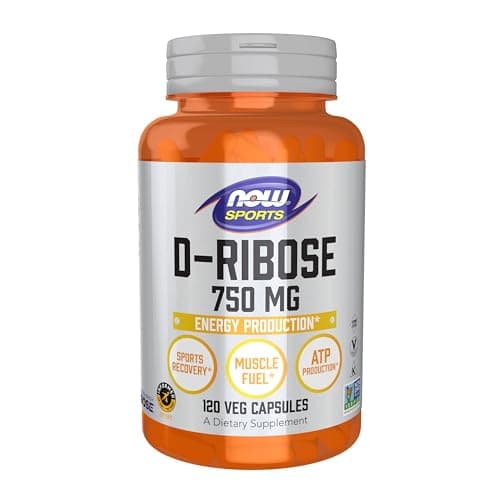
NOW Sports, D-Ribose 750 mg, Energy Production*, 120 Veg Caps
Cost per serving
$0.17
120 servings · ~120-day supply

Vitamatic NADH 20mg with D-Ribose & CoQ10 – 60 Capsules
Cost per serving
$0.17
60 servings · ~60-day supply

SOLARAY D-Ribose Powder 5000 mg | Healthy Cardiac and Cellular…
Cost per serving
$1.09
30 servings · ~30-day supply
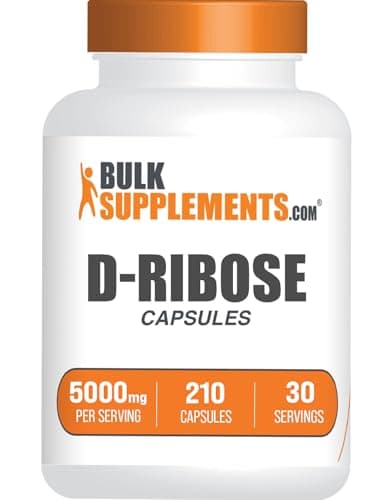
BulkSupplements.com D-Ribose Capsules - Ribose Supplement
Cost per serving
$0.70
30 servings · ~30-day supply
Related guides
Ubiquinol vs ubiquinone: which CoQ10 is worth it
Ubiquinol absorbs somewhat better, but it costs about 2.5x more per 100 mg than ubiquinone — a median $0.335 vs $0.133 across 55 listings we price. What that gap is worth, the dose, and the statin question.
P-5-P vs regular vitamin B6: is the active form worth it?
P-5-P costs about 2x more per 50 mg than plain pyridoxine — a median $0.146 vs $0.071 across 56 listings we price. Most healthy people convert plain B6 fine, so here is what the premium buys, and the safety ceiling that matters more than either form.
Beetroot vs citrulline: which for pumps, and which for endurance
Both raise nitric oxide, but by different routes and for different goals — beetroot has the endurance edge, citrulline is the gym-pump staple. Doses, the honest split, and cost per dose.
Beta-alanine: dose, the tingling, and what it actually does
Beta-alanine buffers muscle acid to extend high-intensity efforts in the 1–4 minute range. It works by loading over weeks, not as a pre-workout kick. Real dose, why it tingles, and cost per serving.