Functional mushrooms: lion's mane, reishi, cordyceps — dose and cost
Quick answer
The three popular functional mushrooms have honest, preliminary evidence — lion's mane (~500-1,000 mg/day) for cognition, cordyceps (~1-3 g/day) for exercise, reishi (~1-1.5 g/day) for sleep and immune interest — so buy a 'fruiting body' extract with a stated beta-glucan ratio, not cheap 'mycelium on grain,' and compare by cost per dose.
Alex Soto, Founder, VitaminDB
6 min readUpdated 7/31/2026 NIH-sourced
On this page
Lion's mane, cordyceps, and reishi are the three functional mushrooms you'll see everywhere. Here's what each is actually studied for, an honest dose range, and the single label detail that separates a real extract from expensive starch. Across all three the human evidence is early and mixed, so treat them as reasonable experiments, not proven treatments — and let cost per dose decide the specific bottle.
Lion's mane — cognition and focus
Lion's mane is the one people reach for to support memory, focus, and mood. A typical dose is ~500-1,000 mg/day of extract. The human evidence is preliminary: a handful of small studies hint at possible cognitive or mood benefit, but it's not an established nootropic. Reasonable to try if you keep expectations grounded.
Cordyceps — exercise and energy
Cordyceps is marketed for exercise performance, stamina, and energy, usually at ~1-3 g/day. The evidence here is genuinely mixed — some exercise studies show small improvements in measures like oxygen use, others find nothing. Most products use Cordyceps militaris rather than wild-harvested cordyceps, which is fine; what matters more is that it's a real fruiting-body extract.
Reishi — sleep, relaxation, and immune interest
Reishi has a long traditional use for calm and sleep, and it draws research interest for immune support, typically at ~1-1.5 g/day. Human data remains limited and preliminary, so frame it as a gentle, low-stakes trial rather than a sleep aid with proven effects. (Reishi picks are coming to the site soon; for now the cost-per-dose tooling covers lion's mane and cordyceps.)
On safety these two are reassuringly dull, which is worth saying plainly. NIH's LiverTox database records that lion's mane is generally recognised as safe and has not been linked to liver injury, with few adverse events and scant evidence of toxicity in the short human studies available, and that cordyceps extracts are generally well tolerated, with only mild effects such as abdominal discomfort, diarrhoea, dry mouth, nausea and rash. Neither entry says they work — only that they rarely hurt.
The one label detail that decides quality
This matters more than the brand or the price: fruiting body vs mycelium on grain.
- Fruiting body extract is the actual mushroom — the part with the highest beta-glucan content, the compounds these products are sold for.
- Mycelium on grain (sometimes labeled myceliated biomass or "full spectrum") is grown on grain and dried with the grain still attached. The result is mostly starch, with low levels of active compounds.
What to look for on the label:
- The words "fruiting body" (or "fruiting bodies").
- A stated beta-glucan percentage — not just "polysaccharides," a number that can include the leftover grain starch.
- An extract ratio (for example, an 8:1 concentration), which signals a real extraction rather than dried biomass.
A cheap tub of "mycelium" can look like a bargain and still be the worse deal, because you're paying for starch instead of active extract.
Do they actually work?
The honest answer for all three: the evidence is early and mixed. None is a proven treatment, and effects — where they show up — tend to be modest. That doesn't make them worthless; it makes them experiments worth running cheaply and evaluating for yourself. Just don't pay premium nootropic prices for preliminary evidence.
A note on safety and testing
These are generally well tolerated, but a few honest cautions:
- Check with a clinician if you take medication. Reishi in particular is sometimes flagged for possible effects on bleeding and blood pressure, so it can matter alongside certain prescriptions. Not medical advice.
- Prefer third-party tested product. Mushroom supplements vary in quality and can carry contaminants like heavy metals depending on how they're grown, so independent testing is worth looking for.
- Start low. If you're trying one for the first time, begin at the lower end of the dose range and see how you respond.
Buy by cost per dose
Because concentration and quality vary so much, sticker price tells you little. Do this instead:
- Confirm it's a fruiting body extract with a stated beta-glucan percentage.
- Find the dose per serving and how many servings are in the tub.
- Divide price by servings to get cost per dose, then compare like for like.
A slightly pricier fruiting-body extract often beats a "cheap" mycelium product once you account for what's actually in each dose. See current cost-per-dose picks on the lion's mane hub and the cordyceps hub, and see how we rank by cost per effective dose, not sticker price (methodology).
Covered nutrients: Lion's Mane, Cordyceps
See the live cost-per-dose data
This guide is editorial — the prices below are real and current.
Frequently asked questions
What is lion's mane good for?
It's most often taken for cognition, focus, and mood. The human evidence is preliminary — a few small studies suggest possible benefit, but it's not a proven nootropic, so keep expectations modest. Not medical advice.
Do functional mushrooms actually work?
Honestly, the evidence across lion's mane, cordyceps, and reishi is early and mixed. Some small studies are encouraging, others are null. They're reasonable to try if you keep expectations modest and don't overpay, but none is a proven treatment. Not medical advice.
Fruiting body vs mycelium — which should I buy?
Choose fruiting body extract. That's the actual mushroom, with higher beta-glucan content. Cheap 'mycelium on grain' is grown on grain and dried with the grain still in it, so it's largely starch with low active compounds. Look for 'fruiting body' plus a stated beta-glucan percentage, not just 'polysaccharides.'
What's a typical dose of each?
Common ranges are roughly 500-1,000 mg/day for lion's mane extract, 1-3 g/day for cordyceps, and 1-1.5 g/day for reishi. These are general reference ranges from typical use and small studies, not prescriptions. Not medical advice.
Where these numbers come from
Cost figures on this page are computed from 25 active Lion's Mane / Cordyceps listings we track, last re-priced . Cost per dose is price ÷ (servings × dose), computed per listing — not a price we are quoted. Listings under $1 or with fewer than 3 servings are excluded, because both are usually a parse error rather than a bargain.
- Amazon.com · 24
- SuperSmart · 1
Prices move. Figures written into the text are re-checked against live data on a schedule; the ranking pages are always the current number.
Sources
Health claims on this page are drawn from these sources. Prices and cost-per-dose figures come from our own tracked listings, not from the sources below.
- 1.Lion's Mane — LiverTox, NIH National Institute of Diabetes and Digestive and Kidney Diseases
- 2.Cordyceps — LiverTox, NIH National Institute of Diabetes and Digestive and Kidney Diseases
Deals on these nutrients
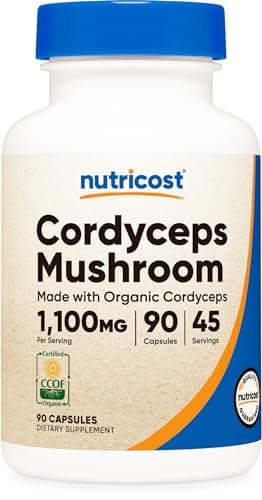
Nutricost Cordyceps Mushroom Capsules 1100mg
Cost per serving
$0.17
90 servings · ~90-day supply

Swanson Cordyceps 600 Milligrams, 120 Capsules, 2 Pack
Cost per serving
$0.16
240 servings · ~240-day supply

Lion's Mane 1500mg - SuperSmart | 30% Polysaccharides…
Cost per serving
$0.39
90 servings · ~90-day supply

Cordyceps Capsules (Cordyceps Sinensis Mushroom Extract)…
Cost per serving
$0.10
210 servings · ~210-day supply
Related guides
Ubiquinol vs ubiquinone: which CoQ10 is worth it
Ubiquinol absorbs somewhat better, but it costs about 2.5x more per 100 mg than ubiquinone — a median $0.335 vs $0.133 across 55 listings we price. What that gap is worth, the dose, and the statin question.
P-5-P vs regular vitamin B6: is the active form worth it?
P-5-P costs about 2x more per 50 mg than plain pyridoxine — a median $0.146 vs $0.071 across 56 listings we price. Most healthy people convert plain B6 fine, so here is what the premium buys, and the safety ceiling that matters more than either form.
Beetroot vs citrulline: which for pumps, and which for endurance
Both raise nitric oxide, but by different routes and for different goals — beetroot has the endurance edge, citrulline is the gym-pump staple. Doses, the honest split, and cost per dose.
Beta-alanine: dose, the tingling, and what it actually does
Beta-alanine buffers muscle acid to extend high-intensity efforts in the 1–4 minute range. It works by loading over weeks, not as a pre-workout kick. Real dose, why it tingles, and cost per serving.