GABA for sleep: the dose, the honest absorption caveat, and cost
Quick answer
GABA is usually taken at about 100-300 mg for sleep, but because it is debated how much oral GABA reaches the brain, treat the effect as uncertain and compare products on cost per dose.
Alex Soto, Founder, VitaminDB
6 min readUpdated 8/1/2026 NIH-sourced
On this page
GABA is usually taken at about 100-300 mg before bed for sleep and relaxation, with some products going up to 500-750 mg. The honest caveat you should know before buying is that it is debated how much oral GABA crosses the blood-brain barrier, so the mechanism is uncertain even though some people report a calming effect. It is not a treatment for anxiety disorders. If you try it, compare products on cost per dose.
What GABA is
GABA (gamma-aminobutyric acid) is the brain's main inhibitory, or calming, neurotransmitter. It is the "brake pedal" that quiets neural activity, which is exactly why a supplement version is marketed for sleep, stress, and relaxation. The reasoning sounds airtight: more of the calming molecule should mean more calm.
The catch is that the GABA your brain uses is made inside the brain, and a supplement has to get there from your gut first.
The dose
A practical starting range is 100-300 mg, taken 30-60 minutes before bed.
- Start at the low end (around 100 mg) and adjust.
- Some products go up to 500-750 mg, but more is not reliably better here.
- It is typically taken as needed at night rather than around the clock.
The honest absorption caveat
This is the part most labels skip. The blood-brain barrier tightly controls what gets from the bloodstream into the brain, and there is genuine scientific debate about how much oral GABA actually crosses it. Some research suggests little does, which would mean any effect works through another route, perhaps via the gut or the nervous system outside the brain.
So the honest position is:
- The mechanism is uncertain. We cannot confidently say swallowed GABA reaches the brain in meaningful amounts.
- Some people still report a calming effect, and a few small studies suggest a benefit for relaxation or sleep onset.
- The overall evidence is mixed and limited.
None of that makes it useless, but it does mean you should treat it as an experiment on yourself rather than a sure thing. Not medical advice.
A 2026 review of GABA as a functional nutrient lands in the same place: it concludes that while experimental studies show effects across many disease models, human studies remain limited and have not established clear clinical efficacy. That is the sentence to weigh against the price.
GABA vs L-theanine
L-theanine (from tea) comes up constantly next to GABA, and the comparison is useful:
- L-theanine is well absorbed and does reach the brain, where it is associated with a relaxed-but-alert state.
- GABA's brain access is the open question, as above.
- The two are often combined in sleep and calm formulas, on the theory that they act through different routes.
If you want the better-established option on absorption grounds, L-theanine has the edge; many people simply try a combined product. Which suits you is individual. Not medical advice.
Not a treatment for anxiety disorders
Worth stating plainly: GABA supplements are not a treatment for anxiety disorders, insomnia as a medical condition, or any diagnosed illness. If sleeplessness or anxiety is persistent or affecting your life, that is a reason to talk to a clinician, not to keep raising the dose. Not medical advice.
What to look for on the label
- The milligrams of GABA per serving (the number that matters for both effect and cost).
- Whether it is combined with L-theanine, magnesium, or glycine, which changes what you are really paying for.
- A plain product with a clear GABA amount is the easiest to compare.
How to buy GABA by cost per dose
Because strengths and blends vary, cost per dose is the fair comparison:
- Note the milligrams of GABA per serving.
- Divide the total price by the number of doses in the bottle.
- Compare at the same strength, and separate out combination products, since you may be paying for the L-theanine or magnesium alongside the GABA.
A cheap high-count bottle of low-dose GABA can cost more per effective dose than it first appears.
Compare current prices per dose on /nutrients/gaba, see the best current value picks on /best/gaba, and read exactly how we calculate cost per dose on /methodology.
If you want to try GABA, buy the option that hits your 100-300 mg target at the lowest cost per dose, keep the absorption caveat in mind, and judge it by how you actually sleep.
Covered nutrients: GABA
See the live cost-per-dose data
This guide is editorial — the prices below are real and current.
Frequently asked questions
How much GABA should I take for sleep?
A common range is about 100-300 mg before bed, with some products going up to 500-750 mg. Start at the low end and see how you respond. Not medical advice.
Does oral GABA actually work?
It is honestly uncertain. It is debated how much GABA taken by mouth crosses the blood-brain barrier, so the mechanism is unclear, even though some people report a calming effect and a few small studies suggest benefit. The evidence is mixed and limited. Not medical advice.
GABA or L-theanine, which is better for relaxation?
L-theanine is better absorbed and does reach the brain, and it is often combined with GABA in sleep and calm formulas. Which one suits you is individual, and neither is a treatment for a sleep disorder. Not medical advice.
How do I compare GABA cost per dose?
Note the milligrams of GABA per serving, then divide the total price by the number of doses in the bottle to get cost per dose, and compare products at the same milligram strength.
Where these numbers come from
Cost figures on this page are computed from 26 active GABA listings we track, last re-priced . Cost per dose is price ÷ (servings × dose), computed per listing — not a price we are quoted. Listings under $1 or with fewer than 3 servings are excluded, because both are usually a parse error rather than a bargain.
- Amazon.com · 25
- SuperSmart · 1
Prices move. Figures written into the text are re-checked against live data on a schedule; the ranking pages are always the current number.
Sources
Health claims on this page are drawn from these sources. Prices and cost-per-dose figures come from our own tracked listings, not from the sources below.
- 1.Supplementation of γ-Aminobutyric Acid as a Functional Nutrient — PubMed Central, NIH National Library of Medicine
- 2.Gamma-Aminobutyric Acid (CID 119) — PubChem, NIH National Library of Medicine
Deals on these nutrients
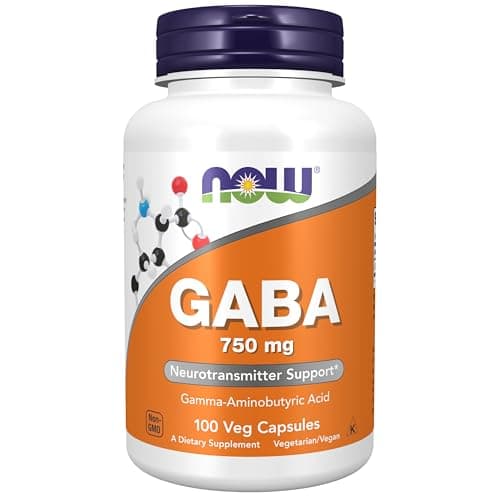
NOW Foods Supplements, GABA (Gamma-Aminobutyric Acid) 750mg…
Cost per serving
$0.12
100 servings · ~100-day supply

5-HTP 200mg with GABA, L-Theanine and Vitamin B6, 240 Softgels
Cost per serving
$0.10
240 servings · ~240-day supply
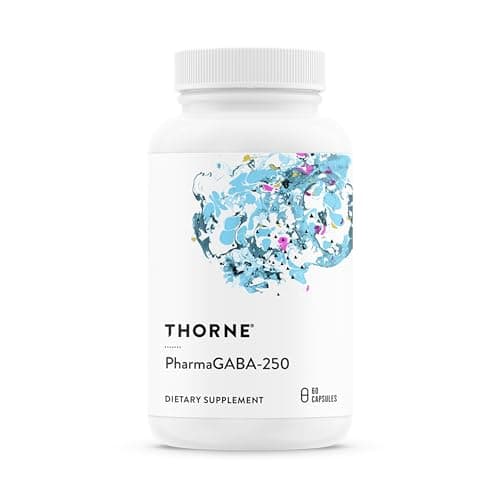
THORNE - PharmaGABA-250 - GABA Supplement - 250 mg Natural…
Cost per serving
$0.98
60 servings · ~60-day supply
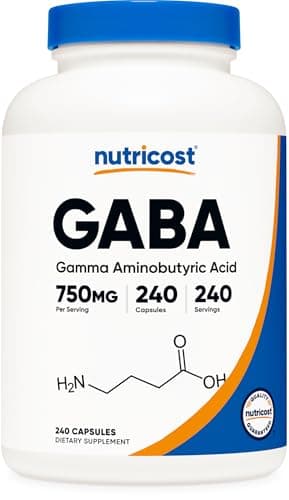
Nutricost GABA (Gamma Aminobutyric Acid) 750mg
Cost per serving
$0.08
240 servings · ~240-day supply
Related guides
Ubiquinol vs ubiquinone: which CoQ10 is worth it
Ubiquinol absorbs somewhat better, but it costs about 2.5x more per 100 mg than ubiquinone — a median $0.335 vs $0.133 across 55 listings we price. What that gap is worth, the dose, and the statin question.
P-5-P vs regular vitamin B6: is the active form worth it?
P-5-P costs about 2x more per 50 mg than plain pyridoxine — a median $0.146 vs $0.071 across 56 listings we price. Most healthy people convert plain B6 fine, so here is what the premium buys, and the safety ceiling that matters more than either form.
Beetroot vs citrulline: which for pumps, and which for endurance
Both raise nitric oxide, but by different routes and for different goals — beetroot has the endurance edge, citrulline is the gym-pump staple. Doses, the honest split, and cost per dose.
Beta-alanine: dose, the tingling, and what it actually does
Beta-alanine buffers muscle acid to extend high-intensity efforts in the 1–4 minute range. It works by loading over weeks, not as a pre-workout kick. Real dose, why it tingles, and cost per serving.