Ginkgo biloba: the standardized dose, the evidence, and cost
Quick answer
Studied doses are about 120-240 mg/day of a ginkgo leaf extract standardized to 24% flavone glycosides and 6% terpene lactones, usually split, so compare products on cost per standardized dose.
Alex Soto, Founder, VitaminDB
6 min readUpdated 8/1/2026 NIH-sourced
On this page
Studied doses of ginkgo biloba are about 120-240 mg per day of a standardized leaf extract, usually split into two or three doses. The label detail that matters is the "24/6" standardization (24% flavone glycosides and 6% terpene lactones), the ratio used in the well-studied EGb 761 extract. The honest picture on memory is that the evidence is weak and mixed in healthy people, so buy on cost per standardized dose rather than on marketing claims.
What ginkgo is used for
Ginkgo biloba is an extract of the leaves of the ginkgo tree, marketed mostly for memory and circulation. Its active compounds fall into two groups: flavone glycosides (antioxidant flavonoids) and terpene lactones (ginkgolides and bilobalide). The idea behind it is improved blood flow and antioxidant activity, which is why it shows up in "brain" and "focus" formulas.
It is one of the most-studied botanicals, but "most-studied" is not the same as "proven to work." The results depend heavily on who was tested and what was measured.
The standardized dose
A practical target is 120-240 mg per day of a standardized extract, taken as split doses rather than all at once.
- Start at the low end (around 120 mg) and give it several weeks, since effects, if any, build slowly.
- Split the dose into two or three servings across the day.
- Ginkgo is usually taken consistently rather than as an as-needed pill.
The dose only means something if the extract is standardized, which is where the label comes in.
What "24/6" means
The "24/6" you see on quality ginkgo products is a standardization spec:
- 24% flavone glycosides
- 6% terpene lactones
This is the ratio used in EGb 761, the extract behind most of the serious research. A capsule that just says "ginkgo leaf 500 mg" with no standardization tells you the weight of powder but nothing about active content, so two products at the same milligram count can differ a lot in what they actually deliver. When you compare cost, compare standardized 24/6 extracts with each other.
Does ginkgo improve memory?
Here is the honest version. In healthy people looking for a memory boost, the evidence is weak and inconsistent, and you should not count on a noticeable effect. Ginkgo has been studied more in older adults and specific clinical contexts, but it is not a proven treatment for dementia and should not be used as one. If memory or cognition is a real concern, that is a conversation for a doctor, not a supplement label. Not medical advice.
Safety: the blood-thinning caveat
The most important safety point is that ginkgo may have a mild blood-thinning effect. Standardised leaf extract itself is, per NCCIH, generally well tolerated, with dizziness, gastrointestinal symptoms and headache as the common complaints — the seeds are the dangerous part of the plant, and fresh ginkgo seeds are toxic taken orally, with serious effects also reported from roasted seeds and raw plant material. Nothing sold as a leaf-extract capsule contains them, but "whole ginkgo" preparations are worth avoiding.
- Avoid it with anticoagulant or antiplatelet medication (for example warfarin or aspirin) unless a clinician says otherwise.
- Stop it before scheduled surgery and tell your care team you have been taking it.
- Be cautious if you have a bleeding disorder.
Mild digestive upset and headaches are the other commonly reported effects. Discuss ginkgo with a pharmacist if you take any regular medication. Not medical advice.
How to buy ginkgo by cost per dose
Because active content varies so much, cost per dose is the only fair comparison:
- Confirm the extract is standardized to 24/6. If it is not, you cannot really compare it.
- Note the milligrams of standardized extract per serving and how many servings hit your 120-240 mg/day target.
- Divide the total price by the number of doses in the bottle to get a real cost per standardized dose.
A cheap bottle of unstandardized "ginkgo leaf" often looks like a bargain but delivers unknown active content, so it can cost more per effective dose than a standardized product.
Compare current prices per dose on /nutrients/ginkgo, see the best current value picks on /best/ginkgo, and read exactly how we calculate cost per dose on /methodology.
Buy a standardized 24/6 extract that reaches your target dose at the lowest cost per dose, and keep the blood-thinner caution in mind before you start.
Covered nutrients: Ginkgo Biloba
See the live cost-per-dose data
This guide is editorial — the prices below are real and current.
Frequently asked questions
How much ginkgo biloba should I take per day?
Studied doses are about 120-240 mg per day of a standardized leaf extract, usually split into two or three doses. Start at the lower end and see how you tolerate it. Not medical advice.
Does ginkgo improve memory?
The evidence is weak and mixed in healthy people, and ginkgo is not a proven treatment for dementia. It has been studied more in older adults and specific contexts, but do not expect a reliable memory boost. Not medical advice.
What does "24/6" mean on a ginkgo label?
It means the extract is standardized to 24% flavone glycosides and 6% terpene lactones, the ratio used in the well-studied EGb 761 extract. That standardization is what lets you compare one product with another.
Can I take ginkgo with blood thinners?
Ginkgo may have a mild blood-thinning effect, so it is generally avoided alongside anticoagulant medication and before surgery. Check with your doctor or pharmacist before combining them. Not medical advice.
Where these numbers come from
Cost figures on this page are computed from 29 active Ginkgo Biloba listings we track, last re-priced . Cost per dose is price ÷ (servings × dose), computed per listing — not a price we are quoted. Listings under $1 or with fewer than 3 servings are excluded, because both are usually a parse error rather than a bargain.
- Amazon.com · 28
- SuperSmart · 1
Prices move. Figures written into the text are re-checked against live data on a schedule; the ranking pages are always the current number.
Sources
Health claims on this page are drawn from these sources. Prices and cost-per-dose figures come from our own tracked listings, not from the sources below.
- 1.Ginkgo — NIH National Center for Complementary and Integrative Health
Deals on these nutrients

NusaPure Ginkgo Biloba Capsules
Cost per serving
$0.12
200 servings · ~200-day supply
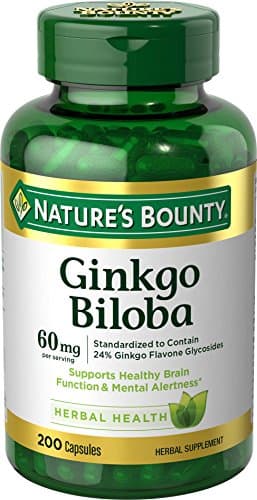
Nature's Bounty Ginkgo Biloba
Cost per serving
$0.05
200 servings · ~200-day supply

DEAL SUPPLEMENT Ginkgo Biloba 500mg Per Serving
Cost per serving
$0.08
240 servings · ~240-day supply

NOW Supplements, Ginkgo Biloba 120 mg, Double Strength…
Cost per serving
$0.11
200 servings · ~200-day supply
Related guides
Ubiquinol vs ubiquinone: which CoQ10 is worth it
Ubiquinol absorbs somewhat better, but it costs about 2.5x more per 100 mg than ubiquinone — a median $0.335 vs $0.133 across 55 listings we price. What that gap is worth, the dose, and the statin question.
P-5-P vs regular vitamin B6: is the active form worth it?
P-5-P costs about 2x more per 50 mg than plain pyridoxine — a median $0.146 vs $0.071 across 56 listings we price. Most healthy people convert plain B6 fine, so here is what the premium buys, and the safety ceiling that matters more than either form.
Beetroot vs citrulline: which for pumps, and which for endurance
Both raise nitric oxide, but by different routes and for different goals — beetroot has the endurance edge, citrulline is the gym-pump staple. Doses, the honest split, and cost per dose.
Beta-alanine: dose, the tingling, and what it actually does
Beta-alanine buffers muscle acid to extend high-intensity efforts in the 1–4 minute range. It works by loading over weeks, not as a pre-workout kick. Real dose, why it tingles, and cost per serving.