Oral Hyaluronic Acid for Skin: Does Swallowing It Work, and What It Should Cost
Quick answer
Oral hyaluronic acid shows early promise for skin hydration and wrinkles — short studies suggest swallowing it may help — but the benefit has not been proven to last, and the oral capsule is a completely different product from the injectable dermal filler, so evidence for one doesn't carry to the other. If you want to try it, the amount used in studies was roughly 120 to 200 mg a day; compare products by cost per that dose rather than by bottle price. This is general information, not medical advice.
Alex Soto, Founder, VitaminDB
6 min readUpdated 7/14/2026 NIH-sourced
On this page
Hyaluronic acid is having a moment, and most of the attention is on serums and injectable fillers. The supplement aisle sells a third version — a capsule you swallow — with the same skin-hydration promises. This guide answers the only two questions that matter before you buy one: does swallowing it actually do anything, and if you want to try it, what should it cost per dose?
We sell nothing. We rank hyaluronic acid by cost per dose like every other supplement.
What swallowing it does — the honest read
Hyaluronic acid is a large sugar molecule that naturally lives in your skin's connective tissue, where it holds water. The theory behind the pill is that supplying more of it orally supports skin hydration from the inside.
Reviewing the trials, Examine.com puts it carefully: oral hyaluronic acid "shows promise as an antiaging supplement, and studies indicate that oral intake may improve skin hydration and reduce wrinkles… although further long-term research is needed to confirm the sustainability of these effects." That is a genuinely more positive read than some beauty supplements get — there are multiple short randomized trials, not just anecdote — but the hedge is doing real work. "May improve" and "long-term research needed" are not "does improve." The short-term signal is encouraging; the durability is unproven.
There is no NIH or NCCIH fact sheet to weigh against this, so the peer-reviewed reviews and Examine's synthesis are the best available sources — better than a product label, weaker than a settled scientific consensus.
The capsule is not the injection — don't mix the evidence
This is the single most important thing to get straight, because the marketing blurs it constantly. There are three completely different hyaluronic acid products:
- Injectable dermal fillers — a medical procedure that places hyaluronic acid under the skin. This is where the dramatic before-and-after photos come from, and where the adverse effects (bruising, swelling, rare complications) belong.
- Topical serums — applied to the skin surface for short-term surface hydration.
- Oral supplements — the swallowed capsule this page is about.
Evidence, benefits and risks for one do not transfer to the others. When a claim says "hyaluronic acid reduces wrinkles," the honest question is always: which form was studied? The injection's results are not the pill's, and the pill is the only one of the three you're comparing on a cost-per-dose basis.
A recent placebo-controlled trial illustrates both the promise and the catch. It reported measurable clinical improvements in skin parameters — but from an oral supplement combining wheat oil extract and hyaluronic acid. Two actives, one result: nothing in it isolates what the hyaluronic acid did on its own, which is the recurring problem with this category's evidence.
Safety, briefly
Oral hyaluronic acid has generally been well tolerated in the short studies conducted so far, and there is no established tolerable upper limit (again, no formal NIH monograph exists). The bruising-and-swelling warnings you may find online describe the injectable filler procedure, not the capsule. As always, if you take medication or have a health condition, run a new supplement past your clinician first.
How to compare oral hyaluronic acid by cost per dose
The studies used roughly 120 to 200 mg of hyaluronic acid per day. Products vary widely — we've seen capsules from 100 mg to over 1,000 mg per serving — so the sticker price is almost meaningless until you divide it down to a dose. Two steps:
- Cost per serving = bottle price ÷ servings per container (from the Supplement Facts panel, not the marketing front).
- Cost per studied dose = adjust for how many milligrams a serving delivers against the ~120 mg studied floor.
Watch for "complex" products that pad the milligram number with other ingredients — a "1,500 mg complex" is not 1,500 mg of hyaluronic acid. Our best hyaluronic acid by cost per dose page does this math across the catalog and ranks cheapest-first; because prices move daily, we link to the live ranking rather than name a product here.
The bottom line
Oral hyaluronic acid is one of the better-evidenced "beauty from within" supplements — multiple short trials point the right way — but "shows promise" is not "proven," and the effect's durability is genuinely unknown. If you want to try it, treat it as an experiment: buy at a sensible cost per dose (the ~120–200 mg studied range), don't confuse the capsule with the injection, and give it a few months before judging. For the wider aisle, our hair, skin and nails hub compares every skin-and-nail nutrient by real cost per dose.
This is general information, not medical advice — talk to a clinician before starting, stopping or changing any supplement.
Covered nutrients: Hyaluronic Acid
See the live cost-per-dose data
This guide is editorial — the prices below are real and current.
Frequently asked questions
Does oral hyaluronic acid actually improve skin?
The evidence is encouraging but not settled. Reviewing the research, Examine.com says oral hyaluronic acid "shows promise" and that studies indicate oral intake "may improve skin hydration and reduce wrinkles," while cautioning that "further long-term research is needed to confirm the sustainability of these effects." In plain terms: short trials look positive, but whether the benefit lasts is unproven.
Is the pill the same as a hyaluronic acid injection or serum?
No, and this is the most common confusion. Injectable hyaluronic acid dermal fillers are a medical procedure, and topical serums sit on the skin surface; the oral supplement is a swallowed capsule. They are different products with different evidence, and results (or side effects) reported for the injection do not transfer to the pill. When you read that "hyaluronic acid works," check which form the claim is about.
How much oral hyaluronic acid, and what should it cost?
The doses used in the short trials were roughly 120 to 200 mg per day. Since bottle sizes and per-serving amounts vary, compare products by cost per that dose, not by sticker price — a larger, cheaper-per-dose bottle usually wins. Our ranked page sorts oral hyaluronic acid that way.
Where these numbers come from
Cost figures on this page are computed from 28 active Hyaluronic Acid listings we track, last re-priced . Cost per dose is price ÷ (servings × dose), computed per listing — not a price we are quoted. Listings under $1 or with fewer than 3 servings are excluded, because both are usually a parse error rather than a bargain.
- Amazon.com · 26
- SuperSmart · 2
Prices move. Figures written into the text are re-checked against live data on a schedule; the ranking pages are always the current number.
Sources
Health claims on this page are drawn from these sources. Prices and cost-per-dose figures come from our own tracked listings, not from the sources below.
- 1.Is hyaluronic acid effective as an anti-aging supplement? — Examine.com
- 2.Efficacy of an Oral Skincare Supplement on Skin Aging: A 12-Week Randomized, Double-Blind, Placebo-Controlled Trial — PubMed Central, NIH National Library of Medicine
Deals on these nutrients

Hyaluronic Acid Supplement 300mg - SuperSmart | High Molecular…
Cost per serving
$0.37
60 servings · ~60-day supply
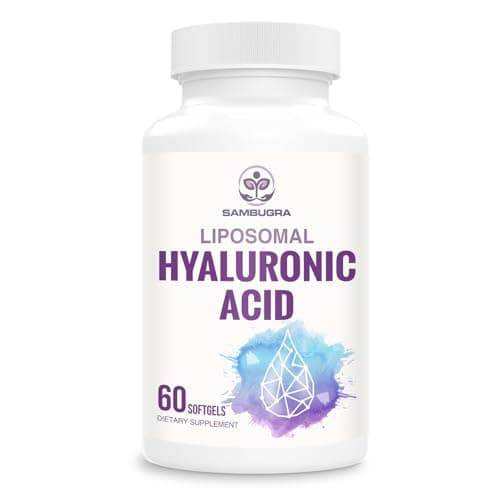
Sambugra Liposomal Hyaluronic Acid 1000mg, 60 Capsules
Cost per serving
$0.37
60 servings · ~60-day supply

Injuv Hyaluronic Acid 280mg - SuperSmart | Patented Hyaluronic…
Cost per serving
$0.98
60 servings · ~60-day supply
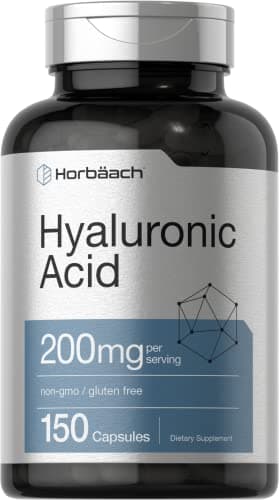
Horbaach Hyaluronic Acid Supplement | 200 mg | 150 Capsules
Cost per serving
$0.09
150 servings · ~150-day supply
Related guides
Ubiquinol vs ubiquinone: which CoQ10 is worth it
Ubiquinol absorbs somewhat better, but it costs about 2.5x more per 100 mg than ubiquinone — a median $0.335 vs $0.133 across 55 listings we price. What that gap is worth, the dose, and the statin question.
P-5-P vs regular vitamin B6: is the active form worth it?
P-5-P costs about 2x more per 50 mg than plain pyridoxine — a median $0.146 vs $0.071 across 56 listings we price. Most healthy people convert plain B6 fine, so here is what the premium buys, and the safety ceiling that matters more than either form.
Beetroot vs citrulline: which for pumps, and which for endurance
Both raise nitric oxide, but by different routes and for different goals — beetroot has the endurance edge, citrulline is the gym-pump staple. Doses, the honest split, and cost per dose.
Beta-alanine: dose, the tingling, and what it actually does
Beta-alanine buffers muscle acid to extend high-intensity efforts in the 1–4 minute range. It works by loading over weeks, not as a pre-workout kick. Real dose, why it tingles, and cost per serving.