L-lysine for cold sores: dose, the evidence, and cost
Quick answer
L-lysine is commonly taken at 1-3 g per day for cold sores, but the evidence that it helps is mixed rather than settled; since it's inexpensive, compare it on cost per gram of lysine.
Alex Soto, Founder, VitaminDB
6 min readUpdated 7/31/2026 NIH-sourced
On this page
Short version: people take 1-3 g of L-lysine a day for cold sores, the evidence that it helps is mixed rather than settled, and it is one of the cheapest supplements you can buy per dose — which is exactly why it is a low-stakes thing to try. This page is a value guide, not medical advice.
What L-lysine is
Lysine is an essential amino acid, meaning your body cannot make it and you have to get it from food. It is abundant in meat, fish, eggs, and dairy, and it is a building block your body uses for protein and connective tissue. As a supplement it is sold as plain L-lysine in capsules, tablets, and powder. Because it is a commodity amino acid, the active ingredient is the same across brands.
The cold-sore dose
Cold sores are caused by the herpes simplex virus (usually HSV-1), which stays dormant in the body and flares up periodically. The lysine amounts people use fall into a familiar range:
- Around 1-3 g per day total.
- Some people take the higher end during an active outbreak and a lower amount
as ongoing maintenance between flare-ups.
These are the figures commonly cited in the supplement world. They are a starting point for comparison, not a personalized medical dose.
The honest state of the evidence
This is the part most product pages skip, so here it is plainly: **the research is mixed.**
- Some studies have reported that lysine may reduce how often cold sores come
back, or make outbreaks less severe or shorter.
- Other studies found no clear benefit.
- The trials are generally small, use different doses, and do not add up to a
firm conclusion.
So lysine is best described as a **cheap, low-risk option some people find helpful**, not a treatment with strong proof behind it. If cold sores are frequent or severe, prescription antiviral medication has far better evidence, and that is a conversation for a clinician.
The strongest evidence available is also the least flattering. A Cochrane review of interventions for preventing cold sores states that the authors failed to find any evidence of efficacy for lysine in preventing herpes simplex labialis, and that in the one placebo-controlled crossover trial of 1,000 mg/day for six months, there was no significant difference in recurrence between lysine and placebo. Buy it, if you buy it, knowing that.
The lysine-versus-arginine theory
The reasoning behind lysine is worth understanding, because it explains why the supplement even exists:
- The herpes virus appears to rely on the amino acid arginine to replicate.
- Lysine is structurally similar to arginine and may compete with it.
- The idea is that tilting the balance toward lysine and away from arginine makes
conditions less friendly for the virus.
This is a plausible biological mechanism. It is important to keep the distinction clear, though: a sensible-sounding mechanism is not the same as a proven result in people, which is why the actual outcome data still matters more than the theory.
Safety
Lysine is an amino acid you already eat every day in any protein-containing meal, and at the 1-3 g amounts people use it is generally well tolerated. The most common complaint is mild stomach upset. As with any supplement taken in gram amounts, people who are pregnant, have kidney issues, or take prescription medication should check with a clinician first. This page is not medical advice.
Why cost per dose is easy here
Lysine is one of the least expensive supplements on the shelf. The active ingredient is identical across brands, so the smart way to buy is by **cost per gram of lysine**, not cost per bottle. A few pointers:
- Read the label amount. A "1000 mg" tablet is 1 g, so a 3 g day is three of
them. Do the arithmetic before comparing prices.
- Powder is cheapest per gram if you do not mind measuring; capsules and
tablets cost more for the convenience.
- Ignore "high potency" branding — the molecule is the same. You are only ever
paying for milligrams of lysine plus format.
The honest bottom line
- The commonly used cold-sore dose is 1-3 g of L-lysine per day.
- The evidence is mixed, so treat lysine as a cheap experiment, not a cure, and
see a clinician for frequent or severe outbreaks.
- It is safe for most people at these amounts and very cheap, so buy on **cost per
gram**.
Check live listings on the L-lysine nutrient page, compare the best-value L-lysine options ranked by cost per dose, and see how we calculate that in our methodology. Not medical advice.
Covered nutrients: L-Lysine
See the live cost-per-dose data
This guide is editorial — the prices below are real and current.
Frequently asked questions
How much L-lysine do people take for cold sores?
The commonly used range is about 1 to 3 g per day, sometimes taken at the higher end during an active outbreak and lower as ongoing maintenance. These are the amounts most often cited, not a personalized prescription, so treat this as general information, not medical advice.
Does L-lysine actually work for cold sores?
The evidence is genuinely mixed. Some studies suggest lysine may reduce how often cold sores recur or how severe they are, while others found no clear benefit, and the trials are generally small. It is reasonable to describe lysine as a cheap, low-risk thing some people try rather than a proven treatment. This is general information, not medical advice.
What is the lysine-versus-arginine idea?
The herpes simplex virus that causes cold sores appears to use the amino acid arginine to replicate, and lysine is structurally similar and may compete with it. The theory is that more lysine and less arginine makes conditions less favorable for the virus. It is a plausible mechanism, but a plausible mechanism is not the same as a proven clinical benefit. Not medical advice.
Is L-lysine safe?
L-lysine is an essential amino acid you already get from protein-rich food and is generally well tolerated at the 1-3 g amounts people use, with occasional mild stomach upset. If you are pregnant, have kidney problems, or take prescription medication, check with a clinician before taking large doses. Not medical advice.
Where these numbers come from
Cost figures on this page are computed from 40 active L-Lysine listings we track, last re-priced . Cost per dose is price ÷ (servings × dose), computed per listing — not a price we are quoted. Listings under $1 or with fewer than 3 servings are excluded, because both are usually a parse error rather than a bargain.
- Amazon.com · 40
Prices move. Figures written into the text are re-checked against live data on a schedule; the ranking pages are always the current number.
Sources
Health claims on this page are drawn from these sources. Prices and cost-per-dose figures come from our own tracked listings, not from the sources below.
- 1.Interventions for prevention of herpes simplex labialis (cold sores on the lips) — PubMed Central, NIH National Library of Medicine
- 2.Amino acids — MedlinePlus, U.S. National Library of Medicine
Deals on these nutrients
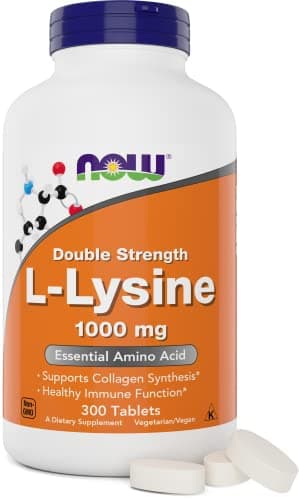
Now Foods L-Lysine 1000mg - Double Strength - 300 Tablets…
Cost per serving
$0.09
300 servings · ~300-day supply
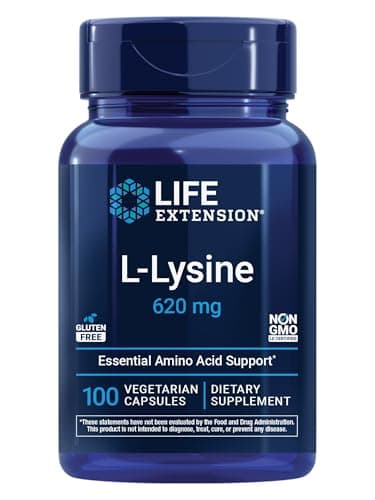
Life Extension L-Lysine
Cost per serving
$0.09
100 servings · ~100-day supply

BESTVITE Filler-Free L-Lysine 500mg (240 Veg Caps) - Vegan…
Cost per serving
$0.08
240 servings · ~240-day supply
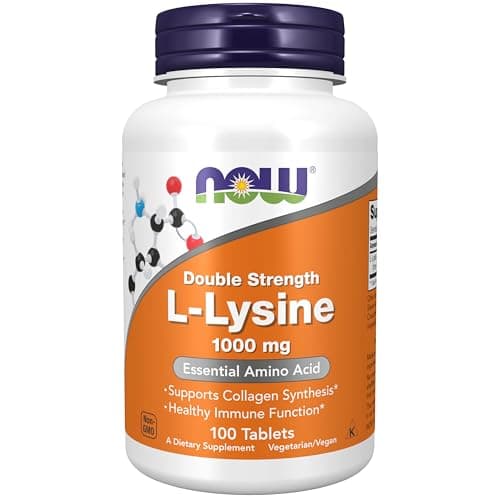
NOW Foods Supplements, (L-Lysine Hydrochloride) 1,000 mg…
Cost per serving
$0.07
100 servings · ~100-day supply
Related guides
Ubiquinol vs ubiquinone: which CoQ10 is worth it
Ubiquinol absorbs somewhat better, but it costs about 2.5x more per 100 mg than ubiquinone — a median $0.335 vs $0.133 across 55 listings we price. What that gap is worth, the dose, and the statin question.
P-5-P vs regular vitamin B6: is the active form worth it?
P-5-P costs about 2x more per 50 mg than plain pyridoxine — a median $0.146 vs $0.071 across 56 listings we price. Most healthy people convert plain B6 fine, so here is what the premium buys, and the safety ceiling that matters more than either form.
Beetroot vs citrulline: which for pumps, and which for endurance
Both raise nitric oxide, but by different routes and for different goals — beetroot has the endurance edge, citrulline is the gym-pump staple. Doses, the honest split, and cost per dose.
Beta-alanine: dose, the tingling, and what it actually does
Beta-alanine buffers muscle acid to extend high-intensity efforts in the 1–4 minute range. It works by loading over weeks, not as a pre-workout kick. Real dose, why it tingles, and cost per serving.