Licorice and DGL: which form for heartburn, dose, and cost
Quick answer
For heartburn or indigestion, choose DGL (deglycyrrhizinated licorice), typically about 380-760 mg chewed before meals, because regular licorice contains glycyrrhizin that can raise blood pressure.
Alex Soto, Founder, VitaminDB
6 min readUpdated 8/1/2026 NIH-sourced
On this page
For heartburn or indigestion, the form that matters is DGL (deglycyrrhizinated licorice), typically about 380-760 mg chewed before meals. The reason is safety: regular licorice contains glycyrrhizin, which in meaningful amounts can raise blood pressure and lower potassium, while DGL has that compound removed. If you want licorice for your gut, confirm the label says DGL.
The distinction that matters most
Licorice supplements come in two forms that look similar but behave very differently, and confusing them is the main risk here.
- Regular licorice contains glycyrrhizin. In meaningful amounts, and especially with prolonged use, glycyrrhizin can raise blood pressure and lower potassium, which can be dangerous for some people.
- DGL (deglycyrrhizinated licorice) has had the glycyrrhizin removed. That is what makes it far safer for regular use, and it is the form typically chosen for heartburn and indigestion.
So the first thing to check on any licorice product you plan to take regularly for your gut is whether it is DGL. If the label does not say so, assume it still contains glycyrrhizin.
Why DGL is the gut-symptom form
The traditional use of DGL is for heartburn and indigestion. The idea is that it supports the protective lining of the stomach and esophagus without carrying the blood-pressure risk of glycyrrhizin.
Two honest caveats:
- The evidence is limited and largely traditional, so DGL is better treated as worth trying than as a proven treatment.
- It does not replace evaluation of persistent or severe symptoms, which deserve a clinician's attention rather than self-treatment. Not medical advice.
The DGL dose for heartburn
A common approach is about 380-760 mg of DGL chewed before meals. Chewable tablets are the usual format, and taking it before eating is the traditional timing.
Practical notes:
- Start at the low end and follow the product label rather than stacking doses.
- Chewable forms are the typical delivery, since the traditional use involves contact with the upper digestive tract.
- If symptoms are frequent, severe, or not improving, that is a reason to see a clinician, not to keep escalating a supplement. Not medical advice.
The safety line on regular licorice
This is not a mild caution. Per NCCIH, licorice contains glycyrrhizin, which can cause serious adverse effects such as irregular heartbeat and cardiac arrest, especially in large amounts or over the long term, and interactions between licorice and corticosteroids have been reported. DGL exists precisely because that compound has been removed.
This is the part to take seriously. Regular, glycyrrhizin-containing licorice is not the same as DGL, and it should be avoided by several groups:
- People with high blood pressure.
- People with heart or kidney disease.
- People who are pregnant.
The concern is that glycyrrhizin can raise blood pressure and lower potassium, and prolonged use makes this worse. This applies to licorice supplements, licorice teas, and licorice candy made with real licorice extract. If you fall into any of those groups, or you are unsure, choose DGL or skip it and ask a clinician. Not medical advice.
What to look for on the label
- The word DGL or deglycyrrhizinated if you want it for daily gut use.
- A clear milligram amount of DGL per serving, not a vague blend.
- A chewable format if you are using it the traditional way, before meals.
How to buy DGL by cost per dose
Once you have confirmed it is the right form, the value question is straightforward.
- Confirm it is DGL if the purpose is daily heartburn or indigestion support.
- Note the milligrams of DGL per serving.
- Divide the total price by the number of servings in the bottle to get cost per dose, so a high-count bottle of low-dose tablets does not look cheaper than it really is.
Compare current prices per dose on /nutrients/licorice, see the best current value picks on /best/licorice, and read exactly how we calculate cost per dose on /methodology.
Buy the DGL product that hits your target dose at the lowest cost per dose, and if you have high blood pressure, heart or kidney disease, or you are pregnant, steer clear of regular glycyrrhizin-containing licorice.
Covered nutrients: Licorice (DGL)
See the live cost-per-dose data
This guide is editorial — the prices below are real and current.
Frequently asked questions
What is the difference between licorice and DGL?
Regular licorice contains glycyrrhizin, a compound that in meaningful amounts can raise blood pressure and lower potassium. DGL is deglycyrrhizinated licorice, meaning the glycyrrhizin has been removed, which makes it far safer for regular use for gut symptoms. For daily heartburn use, DGL is the form to look for. Not medical advice.
How much DGL should I take for heartburn?
A common approach is about 380-760 mg of DGL chewed before meals for heartburn or indigestion. The evidence is limited and largely traditional, so treat it as worth trying rather than proven. Follow the product label and start low. Not medical advice.
Is licorice safe?
DGL is generally considered safer for regular use because the glycyrrhizin is removed. Regular glycyrrhizin-containing licorice is different and can raise blood pressure and lower potassium, so it should be avoided by people with high blood pressure, heart or kidney disease, and in pregnancy. When in doubt, ask a clinician. Not medical advice.
How do I compare licorice cost per dose?
First confirm the product is DGL if you want it for daily gut use. Then note the milligrams of DGL per serving and divide the bottle price by the number of servings to get a real cost per dose.
Where these numbers come from
Cost figures on this page are computed from 35 active Licorice (DGL) listings we track, last re-priced . Cost per dose is price ÷ (servings × dose), computed per listing — not a price we are quoted. Listings under $1 or with fewer than 3 servings are excluded, because both are usually a parse error rather than a bargain.
- Amazon.com · 34
- SuperSmart · 1
Prices move. Figures written into the text are re-checked against live data on a schedule; the ranking pages are always the current number.
Sources
Health claims on this page are drawn from these sources. Prices and cost-per-dose figures come from our own tracked listings, not from the sources below.
- 1.Licorice Root — NIH National Center for Complementary and Integrative Health
Deals on these nutrients
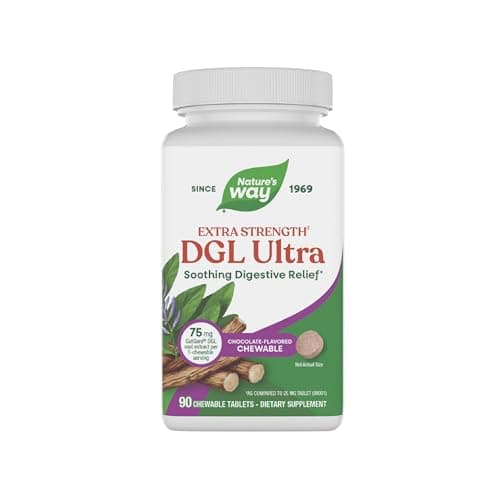
Nature's Way Extra Strength (1) DGL Ultra - DGL Chewable…
Cost per serving
$0.21
90 servings · ~90-day supply
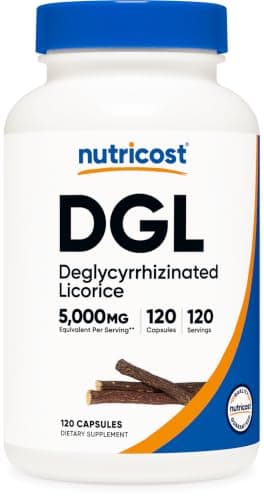
Nutricost DGL Extract 120 Capsules for 120 Servings Per Bottle
Cost per serving
$0.12
120 servings · ~120-day supply
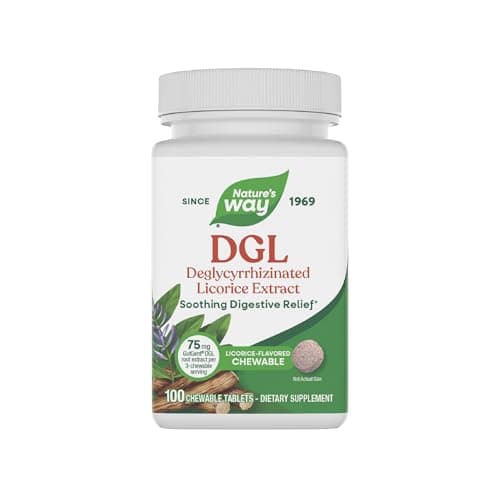
Nature's Way DGL - DGL Supplement for Digestive Support*…
Cost per serving
$0.45
33 servings · ~33-day supply

Piping Rock DGL Licorice Chewable Tablets | 180 Count
Cost per serving
$0.09
180 servings · ~180-day supply
Related guides
Ubiquinol vs ubiquinone: which CoQ10 is worth it
Ubiquinol absorbs somewhat better, but it costs about 2.5x more per 100 mg than ubiquinone — a median $0.335 vs $0.133 across 55 listings we price. What that gap is worth, the dose, and the statin question.
P-5-P vs regular vitamin B6: is the active form worth it?
P-5-P costs about 2x more per 50 mg than plain pyridoxine — a median $0.146 vs $0.071 across 56 listings we price. Most healthy people convert plain B6 fine, so here is what the premium buys, and the safety ceiling that matters more than either form.
Beetroot vs citrulline: which for pumps, and which for endurance
Both raise nitric oxide, but by different routes and for different goals — beetroot has the endurance edge, citrulline is the gym-pump staple. Doses, the honest split, and cost per dose.
Beta-alanine: dose, the tingling, and what it actually does
Beta-alanine buffers muscle acid to extend high-intensity efforts in the 1–4 minute range. It works by loading over weeks, not as a pre-workout kick. Real dose, why it tingles, and cost per serving.