Psyllium husk: the fiber dose, cholesterol, and cost per gram
Quick answer
Most people use about 5-10 g of psyllium husk per day (often split into two doses) with a full glass of water, and powder is usually far cheaper per gram of fiber than capsules.
Alex Soto, Founder, VitaminDB
6 min readUpdated 7/31/2026 NIH-sourced
On this page
Most people use about 5-10 g of psyllium husk per day, often split into two servings and always taken with a full glass of water. Psyllium is a soluble fiber, and if your goal is regularity, lower LDL cholesterol, or steadier blood sugar with meals, the dose and the water matter more than the brand on the label.
What psyllium husk actually is
Psyllium comes from the seed husks of Plantago ovata. It is a soluble, gel-forming fiber: in water it swells into a viscous gel that moves through the gut largely intact. That gel is the reason psyllium does what it does. It adds bulk and softness to stool, it slows how fast the stomach empties, and it binds some of the bile acids and cholesterol passing through your intestine.
Because the fiber content is what you are paying for, the useful number on any product is grams of fiber per serving, not the size of the scoop or the count of capsules.
The dose for regularity
For everyday regularity, a typical starting point is one teaspoon (roughly 5 g) of powder once or twice a day, mixed into a full glass of water and drunk promptly before it thickens too much. Working up to around 10 g total per day is common.
Two practical points:
- Start low and build up. Jumping straight to a high dose is the fastest way to gas and bloating. Increasing over a week or two lets your gut adjust.
- Timing is flexible. Psyllium works for both constipation and loose stool because it normalizes the gel content of stool either way.
The cholesterol claim, honestly
Psyllium is one of the better-supported fibers for modestly lowering LDL cholesterol. The gel binds bile acids so your body pulls cholesterol from the blood to make more. The effect is real but moderate, and it works best as part of a heart-healthy diet rather than as a stand-in for medication. If you are managing cholesterol, treat psyllium as a helper and discuss targets with your clinician. This is general information, not medical advice.
Blood sugar with meals
Taken with food, the same gel slows glucose absorption, which can blunt the post-meal blood-sugar spike. People managing blood sugar sometimes take psyllium just before carbohydrate-heavy meals for this reason. If you take medication that lowers blood sugar, coordinate with your clinician, since fiber can change how other things are absorbed. Not medical advice.
The water caution is not optional
MedlinePlus states the requirement rather than suggesting it: for psyllium to work properly and to prevent side effects, you must drink at least 8 ounces (240 ml) of liquid when you take it. The same page notes psyllium can change how other medicines are absorbed, so space it away from prescriptions.
Psyllium swells on contact with liquid. Taken with too little fluid, it can thicken in the throat or gut and cause choking or blockage. Always take it with a full glass of water, and drink more through the day. Space it a couple of hours away from medications, because the same binding action can reduce absorption of some drugs.
Powder vs capsules: where the cost hides
This is the part most buyers get wrong. Capsules are convenient, but each one holds only a fraction of a gram of husk. To match a single 5 g teaspoon of powder, you may need a large handful of capsules, and you are paying a premium for the shell and the packaging on every one.
So the honest value comparison is cost per gram of fiber:
- Powder almost always wins on cost per gram and lets you dial the dose up or down.
- Capsules cost more per gram of fiber and mean swallowing many pills, but some people prefer them for travel or taste.
If the flavor of plain powder is the barrier, an unflavored version stirred into more water usually beats paying the capsule tax.
How to buy by cost per dose
Ignore the sticker price and the scoop size. Do the math on grams of soluble fiber per serving, then divide the total price by the number of real doses in the tub.
- Compare current prices per dose on /nutrients/psyllium.
- See the best current value picks on /best/psyllium.
- Read exactly how we calculate cost per dose on /methodology.
Buy the format that gives you the most fiber per dollar at a dose you will actually take with enough water. For most people, that is plain powder.
Covered nutrients: Psyllium Husk
See the live cost-per-dose data
This guide is editorial — the prices below are real and current.
Frequently asked questions
How much psyllium husk should I take per day?
A common range is about 5-10 g of psyllium husk per day, frequently split into two doses and taken with a full glass of water. Start at the low end and increase slowly to reduce gas and bloating. This is general information, not medical advice.
Does psyllium lower cholesterol?
Soluble fiber like psyllium is one of the better-supported dietary options for modestly lowering LDL cholesterol, but the effect is moderate and works best alongside diet changes rather than replacing prescribed treatment. Talk to your clinician about your targets. Not medical advice.
Is psyllium powder or capsules a better value?
Powder is usually far cheaper per gram of fiber. A single teaspoon of powder can hold as much fiber as several capsules, so matching a powder dose with capsules often means swallowing many pills at a higher cost per gram.
Do I really need to drink water with psyllium?
Yes. Psyllium absorbs water and swells, so taking it with too little fluid can cause choking or blockage. Always take it with a full glass of water. If you have swallowing difficulties or a bowel condition, check with your clinician first. Not medical advice.
Where these numbers come from
Cost figures on this page are computed from 17 active Psyllium Husk listings we track, last re-priced . Cost per dose is price ÷ (servings × dose), computed per listing — not a price we are quoted. Listings under $1 or with fewer than 3 servings are excluded, because both are usually a parse error rather than a bargain.
- Amazon.com · 17
Prices move. Figures written into the text are re-checked against live data on a schedule; the ranking pages are always the current number.
Sources
Health claims on this page are drawn from these sources. Prices and cost-per-dose figures come from our own tracked listings, not from the sources below.
- 1.Psyllium — MedlinePlus, U.S. National Library of Medicine
Deals on these nutrients

Nature's Wonder Psyllium Husk 500 mg Capsules for Digestive…
Cost per serving
$0.02
200 servings · ~200-day supply

Yerba Prima Psyllium Husks Caps Dietary Fiber 625 mg
Cost per serving
$0.11
180 servings · ~180-day supply

Yerba Prima Psyllium Husks Veg Caps
Cost per serving
$0.07
800 servings · ~800-day supply
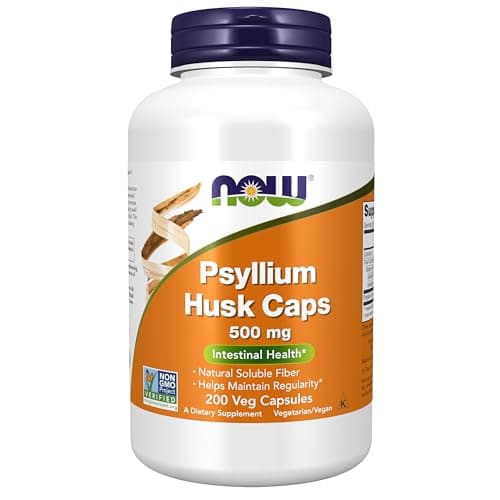
NOW Foods Supplements, Psyllium Husk Caps 500 mg, Non-GMO…
Cost per serving
$0.06
200 servings · ~200-day supply
Related guides
Ubiquinol vs ubiquinone: which CoQ10 is worth it
Ubiquinol absorbs somewhat better, but it costs about 2.5x more per 100 mg than ubiquinone — a median $0.335 vs $0.133 across 55 listings we price. What that gap is worth, the dose, and the statin question.
P-5-P vs regular vitamin B6: is the active form worth it?
P-5-P costs about 2x more per 50 mg than plain pyridoxine — a median $0.146 vs $0.071 across 56 listings we price. Most healthy people convert plain B6 fine, so here is what the premium buys, and the safety ceiling that matters more than either form.
Beetroot vs citrulline: which for pumps, and which for endurance
Both raise nitric oxide, but by different routes and for different goals — beetroot has the endurance edge, citrulline is the gym-pump staple. Doses, the honest split, and cost per dose.
Beta-alanine: dose, the tingling, and what it actually does
Beta-alanine buffers muscle acid to extend high-intensity efforts in the 1–4 minute range. It works by loading over weeks, not as a pre-workout kick. Real dose, why it tingles, and cost per serving.