Rhodiola rosea: the standardized dose for stress and energy, and cost
Quick answer
Rhodiola is typically taken at about 200-600 mg per day of an extract standardized to 3% rosavins and 1% salidroside, ideally in the morning, and compared on cost per standardized dose.
Alex Soto, Founder, VitaminDB
6 min readUpdated 8/1/2026 NIH-sourced
On this page
Rhodiola rosea is typically taken at about 200-600 mg per day of an extract standardized to 3% rosavins and 1% salidroside (the "3/1" ratio), ideally in the morning because it can be mildly stimulating. It is an adaptogen studied for stress, fatigue, and mental energy, and it is among the more promising ones, though the evidence is still preliminary. The label detail that matters is the standardization, so compare products on cost per standardized dose.
What rhodiola is
Rhodiola rosea is a herb that grows in cold, high-altitude regions and has a long history in traditional use. It is classed as an adaptogen, the loose term for plants thought to help the body cope with stress and fatigue. Its two headline active compounds are rosavins and salidroside, and quality extracts are standardized to a set ratio of both.
Unlike caffeine, it is not a jolt-and-crash stimulant. The interest is in a steadier effect on stress resilience and mental stamina.
The standardized dose
A practical range is 200-600 mg per day of a standardized extract.
- Start around 200 mg and adjust upward if needed.
- Many people take a single morning dose; others split it into morning and early afternoon.
- Effects, if they come, tend to build over one to several weeks of consistent use.
As with any botanical, the milligram number is only meaningful if the extract is standardized.
When to take it
Timing matters more with rhodiola than with most supplements because it can be mildly stimulating:
- Take it in the morning or early afternoon.
- Avoid late-day doses, which may interfere with sleep.
- If you are sensitive to stimulants, start low and see how you react. Not medical advice.
Does rhodiola help stress and fatigue?
The honest picture is cautiously positive. Rhodiola is among the better-studied and more promising adaptogens for stress-related fatigue and mental energy, and several small studies report improvements in tiredness and stress symptoms. But the research base is preliminary, with modest sample sizes and varied designs, so it is reasonable to try without treating it as proven. It is a support, not a fix for burnout, and persistent fatigue is worth discussing with a clinician. Not medical advice.
What "3% rosavins, 1% salidroside" means
This is the standardization spec that separates a real rhodiola extract from filler:
- 3% rosavins
- 1% salidroside
That "3/1" ratio matches what most research used. Set expectations against the official read first: NCCIH states there isn't enough reliable evidence to determine whether rhodiola is useful for any health-related purpose, and reports an interaction with losartan, a blood-pressure drug. A product that just says "rhodiola root 500 mg" with no standardization tells you the powder weight but nothing about active content, so two products at the same milligram count can deliver very different amounts of the actives. Compare standardized 3/1 extracts with each other.
What to look for on the label
- The 3% rosavins / 1% salidroside standardization, stated explicitly.
- The milligrams of standardized extract per serving.
- A clear, single-ingredient product is easiest to compare; "energy blend" formulas hide how much rhodiola you actually get.
How to buy rhodiola by cost per dose
Because active content varies, cost per standardized dose is the fair comparison:
- Confirm the 3/1 standardization first. Without it, the milligram number is not comparable.
- Note the milligrams per serving and how many servings reach your 200-600 mg/day target.
- Divide the total price by the number of doses in the bottle to get cost per standardized dose.
A cheap bottle of unstandardized rhodiola powder can cost more per effective dose than a properly standardized extract, once you account for what is actually in it.
Compare current prices per dose on /nutrients/rhodiola, see the best current value picks on /best/rhodiola, and read exactly how we calculate cost per dose on /methodology.
Buy a standardized 3/1 extract that hits your target dose at the lowest cost per dose, take it in the morning, and give it a few weeks before you judge it.
Covered nutrients: Rhodiola Rosea
See the live cost-per-dose data
This guide is editorial — the prices below are real and current.
Frequently asked questions
How much rhodiola should I take per day?
A typical range is about 200-600 mg per day of an extract standardized to 3% rosavins and 1% salidroside. Start at the lower end and see how you respond. Not medical advice.
Does rhodiola help with stress and fatigue?
It is among the more promising adaptogens for stress and fatigue, and several small studies are encouraging, but the evidence is still preliminary rather than settled. Treat it as worth trying rather than guaranteed. Not medical advice.
When should I take rhodiola?
Most people take it in the morning or early afternoon because it can be mildly stimulating and may interfere with sleep if taken late in the day. Not medical advice.
How do I compare rhodiola cost per dose?
Confirm the extract is standardized to 3% rosavins and 1% salidroside, note the milligrams per serving, then divide the total price by the number of doses to get cost per standardized dose.
Where these numbers come from
Cost figures on this page are computed from 12 active Rhodiola Rosea listings we track, last re-priced . Cost per dose is price ÷ (servings × dose), computed per listing — not a price we are quoted. Listings under $1 or with fewer than 3 servings are excluded, because both are usually a parse error rather than a bargain.
- Amazon.com · 12
Prices move. Figures written into the text are re-checked against live data on a schedule; the ranking pages are always the current number.
Sources
Health claims on this page are drawn from these sources. Prices and cost-per-dose figures come from our own tracked listings, not from the sources below.
- 1.Rhodiola — NIH National Center for Complementary and Integrative Health
Deals on these nutrients
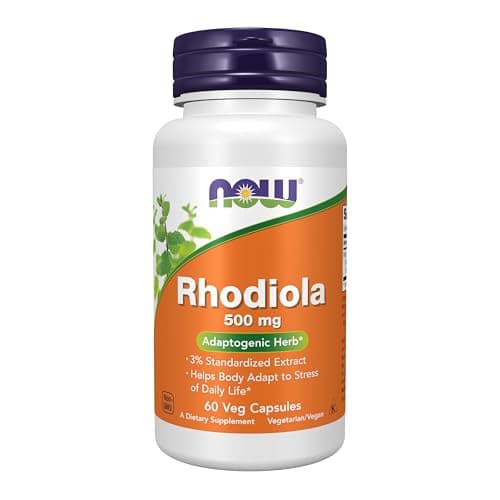
NOW Supplements, Rhodiola 500 mg, Helps Body Adapt to Stress…
Cost per serving
$0.32
60 servings · ~60-day supply
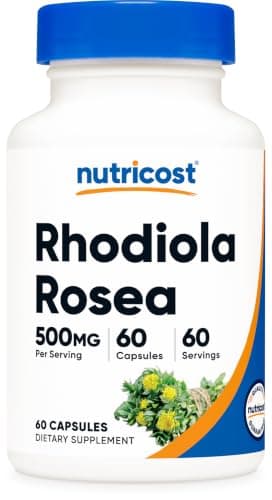
Nutricost Rhodiola Rosea 500mg
Cost per serving
$0.30
60 servings · ~60-day supply
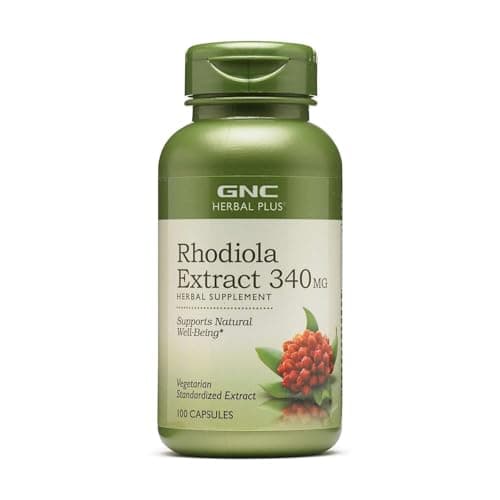
GNC Herbal Plus Rhodiola Extract 340mg
Cost per serving
$0.35
100 servings · ~100-day supply
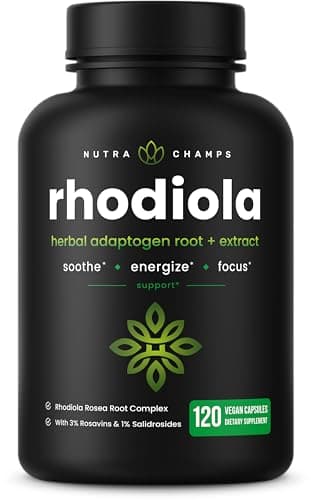
Rhodiola Rosea Supplement 600mg | 120 Vegan Capsules…
Cost per serving
$0.21
120 servings · ~120-day supply
Related guides
Rhodiola vs ashwagandha: which adaptogen for your kind of stress
Both are stress adaptogens, but they pull in opposite directions — ashwagandha calms a wired, anxious stress; rhodiola lifts a tired, burned-out one. How to pick, the doses, and cost per dose.
Ubiquinol vs ubiquinone: which CoQ10 is worth it
Ubiquinol absorbs somewhat better, but it costs about 2.5x more per 100 mg than ubiquinone — a median $0.335 vs $0.133 across 55 listings we price. What that gap is worth, the dose, and the statin question.
P-5-P vs regular vitamin B6: is the active form worth it?
P-5-P costs about 2x more per 50 mg than plain pyridoxine — a median $0.146 vs $0.071 across 56 listings we price. Most healthy people convert plain B6 fine, so here is what the premium buys, and the safety ceiling that matters more than either form.
Beetroot vs citrulline: which for pumps, and which for endurance
Both raise nitric oxide, but by different routes and for different goals — beetroot has the endurance edge, citrulline is the gym-pump staple. Doses, the honest split, and cost per dose.