Saw palmetto: the prostate dose, the evidence, and cost
Quick answer
The standard saw palmetto dose is about 320 mg/day of an extract standardized to 85-95% fatty acids and sterols, so compare products by cost per standardized 320 mg dose, not per capsule.
Alex Soto, Founder, VitaminDB
6 min readUpdated 8/1/2026 NIH-sourced
On this page
The standard saw palmetto dose is about 320 mg/day of an extract standardized to roughly 85-95% fatty acids and sterols, usually taken as 160 mg twice daily. The one thing to get right before buying: compare products by the cost per standardized 320 mg dose, not by price per capsule, because capsule sizes and standardization vary widely.
What saw palmetto is
Saw palmetto (Serenoa repens) is an extract from the berries of a small palm native to the southeastern United States. It is the most popular herb men use for the urinary symptoms of benign prostatic hyperplasia (BPH) — the non-cancerous prostate enlargement that becomes common with age and can cause weak stream, frequent urination, and getting up at night.
The active fraction is a set of fatty acids and sterols in the berry oil. That is why standardization matters: a capsule of raw ground berry powder is not the same as a standardized lipid extract, even at the same milligram count.
The dose
The dose used in most research is:
- About 320 mg/day of a standardized extract, often split as 160 mg twice daily.
- Standardized to roughly 85-95% fatty acids and sterols.
- Taken with food, which can reduce stomach upset.
If a product lists "saw palmetto berry" without a standardization spec, you cannot assume it delivers the same active content as the 320 mg standardized extract used in trials. Follow the specific product's label, and give any trial several weeks before judging it. This is general information, not medical advice.
What the evidence actually shows
Here is the honest summary: the evidence is mixed.
- Some earlier and smaller trials suggested modest improvement in urinary symptoms.
- Several large, well-designed, placebo-controlled trials found saw palmetto no better than placebo, even at higher doses.
So saw palmetto sits in an uncomfortable middle: widely used, generally well tolerated, but without consistent proof that it beats a placebo for BPH symptoms. Some men report they feel a difference; the controlled data as a whole does not strongly support it. A reasonable framing is that it may help some people modestly, but it is not an established treatment, and effective prescription options exist for BPH. Persistent or worsening urinary symptoms deserve a medical evaluation rather than self-treatment. Not medical advice.
What saw palmetto is not
NCCIH is blunt about the boundary: there is not enough evidence to determine whether saw palmetto is useful for other health purposes beyond the prostate question — which rules out the hair-loss and testosterone claims the marketing leans on.
This matters enough to state plainly:
- It is not a treatment for prostate cancer.
- It does not reliably lower PSA (prostate-specific antigen).
- It should not replace a workup for urinary symptoms, which can have several causes.
If you have a rising PSA, urinary changes, or any prostate concern, that is a conversation for a doctor. A supplement that quietly masked a symptom without addressing the cause would be the worst outcome. Not medical advice.
The label details that matter
Because the active is the standardized lipid fraction, check for:
- A standardization claim — ideally 85-95% fatty acids and sterols — not just "berry" milligrams.
- The daily dose the bottle delivers, so you can line it up against the 320 mg/day benchmark.
- Third-party testing where available.
A bottle advertising a big milligram number of unstandardized berry powder can be weaker than a smaller, properly standardized extract. Volume on the front label is not the same as active content.
How to buy saw palmetto by cost per dose
Do not compare bottles by price per capsule — capsule size and standardization differ, so that number is misleading. Instead:
- Anchor on a standardized 320 mg/day dose.
- Divide the bottle price by how many 320 mg days it provides to get a real cost per dose.
- Favor standardized extracts, since they are the only products you can compare fairly.
Compare current prices per dose on /nutrients/saw-palmetto, see the best current value picks on /best/saw-palmetto, and read exactly how we calculate cost per dose on /methodology.
Buy the standardized 320 mg option with the lowest cost per dose, keep expectations modest given the mixed evidence, and take any real prostate concern to a clinician.
Covered nutrients: Saw Palmetto
See the live cost-per-dose data
This guide is editorial — the prices below are real and current.
Frequently asked questions
How much saw palmetto should I take per day?
The commonly studied dose is about 320 mg per day of an extract standardized to roughly 85-95% fatty acids and sterols, often taken as 160 mg twice daily. Follow the product label. This is general information, not medical advice.
Does saw palmetto work for an enlarged prostate (BPH)?
The evidence is mixed. Some trials suggest modest relief of urinary symptoms, but several large, well-designed trials found it no better than placebo. Treat it as unproven rather than established, and talk to a clinician about persistent urinary symptoms. Not medical advice.
Does saw palmetto lower PSA or treat prostate cancer?
No. Saw palmetto is not a treatment for prostate cancer and does not reliably lower PSA. Any prostate-cancer concern or abnormal PSA needs a doctor, not a supplement. Not medical advice.
How do I compare saw palmetto cost per dose?
Compare the price against a standardized 320 mg daily dose, not per capsule, since capsule sizes and standardization differ. Divide the bottle price by how many 320 mg days it provides.
Where these numbers come from
Cost figures on this page are computed from 26 active Saw Palmetto listings we track, last re-priced . Cost per dose is price ÷ (servings × dose), computed per listing — not a price we are quoted. Listings under $1 or with fewer than 3 servings are excluded, because both are usually a parse error rather than a bargain.
- Amazon.com · 25
- SuperSmart · 1
Prices move. Figures written into the text are re-checked against live data on a schedule; the ranking pages are always the current number.
Sources
Health claims on this page are drawn from these sources. Prices and cost-per-dose figures come from our own tracked listings, not from the sources below.
- 1.Saw Palmetto — NIH National Center for Complementary and Integrative Health
Deals on these nutrients

Saw Palmetto for Men with Pumpkin Seed Oil
Cost per serving
$0.08
300 servings · ~300-day supply

Nature's Bounty Saw Palmetto Support for Prostate and Urinary…
Cost per serving
$0.07
250 servings · ~250-day supply

Saw Palmetto for Men, 500mg Capsules, Prostate Health, Urinary…
Cost per serving
$0.17
100 servings · ~100-day supply
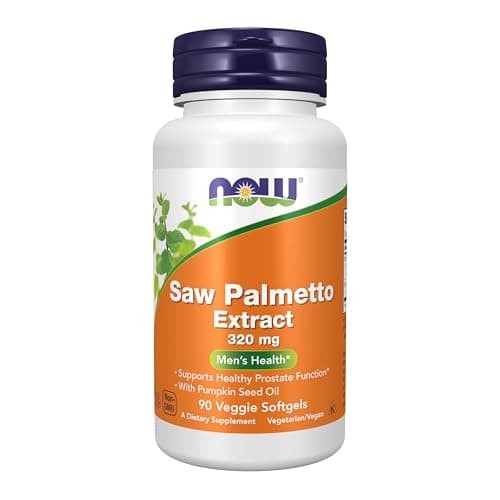
NOW Supplements, Saw Palmetto Extract 320 mg with Pumpkin Seed…
Cost per serving
$0.27
90 servings · ~90-day supply
Related guides
Ubiquinol vs ubiquinone: which CoQ10 is worth it
Ubiquinol absorbs somewhat better, but it costs about 2.5x more per 100 mg than ubiquinone — a median $0.335 vs $0.133 across 55 listings we price. What that gap is worth, the dose, and the statin question.
P-5-P vs regular vitamin B6: is the active form worth it?
P-5-P costs about 2x more per 50 mg than plain pyridoxine — a median $0.146 vs $0.071 across 56 listings we price. Most healthy people convert plain B6 fine, so here is what the premium buys, and the safety ceiling that matters more than either form.
Beetroot vs citrulline: which for pumps, and which for endurance
Both raise nitric oxide, but by different routes and for different goals — beetroot has the endurance edge, citrulline is the gym-pump staple. Doses, the honest split, and cost per dose.
Beta-alanine: dose, the tingling, and what it actually does
Beta-alanine buffers muscle acid to extend high-intensity efforts in the 1–4 minute range. It works by loading over weeks, not as a pre-workout kick. Real dose, why it tingles, and cost per serving.