Silica supplements: dose for hair, skin, and nails, and cost
Quick answer
ch-OSA studies used about 10 mg of silicon per day; doses vary widely by form, so compare on cost per serving and note whether you are buying ch-OSA, bamboo, or horsetail.
Alex Soto, Founder, VitaminDB
6 min readUpdated 8/1/2026 NIH-sourced
On this page
Silica supplements are sold for hair, skin, and nails, and the dose depends entirely on the form. Research on ch-OSA (choline-stabilized orthosilicic acid) used about 10 mg of silicon per day, while bamboo and horsetail products list far higher silica amounts because much less is absorbed. The evidence is limited but the biology is real: silicon has a role in collagen formation. Compare on cost per serving, and always note the form, because the forms are not interchangeable.
What silica does
"Silica" and "silicon" get used loosely on labels. Silicon is the element; silica (silicon dioxide) and orthosilicic acid are forms it takes. In the body, silicon is involved in the formation and stability of collagen and connective tissue, which is the reason it is marketed for hair, skin, nails, and bone support.
Most people get some silicon from food and water. Supplements aim to top that up, and the question is less "does silicon matter" and more "how much of what you swallow actually gets absorbed."
The forms
Three forms dominate the shelf, and they behave very differently:
- ch-OSA (choline-stabilized orthosilicic acid). The form used in most human research and the most readily absorbed. Sold as drops or small capsules with a low milligram dose of silicon. It is the priciest option.
- Bamboo extract. Naturally very high in silica by weight (often standardized to a high silica percentage), which makes the label numbers large, though absorbed silicon is less certain. Cheaper.
- Horsetail (Equisetum). A traditional herbal source of silica, also cheap, with the same absorption question and a note that it should be a standardized, thiaminase-safe extract.
The dose
Because the forms differ, there is no single number:
- ch-OSA: research used around 10 mg of silicon per day, a deliberately small dose because absorption is high.
- Bamboo and horsetail: labels show much larger silica figures (hundreds of milligrams), reflecting total silica in the powder rather than absorbed silicon.
Follow the product's stated serving size, start low, and give it time, since hair and nail changes are slow by nature. Not medical advice.
Does it help hair and nails?
The honest answer is maybe, modestly. Silicon's role in collagen gives a plausible mechanism, and some small studies report improvements in hair strength and nail quality, particularly with ch-OSA. But the overall evidence is limited and preliminary, with small sample sizes, so it is reasonable to try without expecting a dramatic result. If hair loss is significant or sudden, that is a reason to see a clinician rather than to buy more supplements. Not medical advice.
Which form is best
The review we rely on ranks the forms directly: orthosilicic acid (OSA) presents the highest bioavailability, while other forms absorb in inverse proportion to their degree of polymerisation. That is the reason a "silica from bamboo" powder and a choline-stabilised OSA product are not interchangeable at equal milligrams.
It is a trade-off between evidence and price:
- Choose ch-OSA if you want the most-studied, best-absorbed form and are willing to pay more per serving.
- Choose bamboo or horsetail if you want a cheap high-silica source and accept that absorbed silicon is less certain.
There is no proven benefit to combining all three; pick a form and give it a fair trial.
What to look for on the label
- For ch-OSA, look for the milligrams of silicon (elemental) per serving, not just "orthosilicic acid."
- For bamboo, check the standardized silica percentage and the serving weight.
- For horsetail, prefer a standardized extract from a reputable brand.
How to buy silica by cost per serving
The comparison only works within the same form:
- Compare like with like: ch-OSA against ch-OSA, bamboo against bamboo.
- Note the silicon (or silica) per serving and the servings per bottle.
- Divide the total price by the number of servings to get cost per serving.
A cheap bamboo capsule with a big silica number is not automatically better value than a ch-OSA product, because the two deliver different amounts of absorbed silicon.
Compare current prices per serving on /nutrients/silica, see the best current value picks on /best/silica, and read exactly how we calculate cost per dose on /methodology.
Decide on a form first, then buy the option that delivers your target at the lowest cost per serving.
Covered nutrients: Silica
See the live cost-per-dose data
This guide is editorial — the prices below are real and current.
Frequently asked questions
How much silica should I take per day?
It depends on the form. Research on ch-OSA (choline-stabilized orthosilicic acid) used about 10 mg of silicon per day, while bamboo and horsetail products list much higher silica amounts because far less is absorbed. Follow the product's serving size and check with a clinician if unsure. Not medical advice.
Does silica help hair, skin, and nails?
Silicon has a role in collagen formation, and some small studies report benefits for hair and nail quality, but the evidence is limited and preliminary rather than settled. Treat it as worth trying rather than guaranteed. Not medical advice.
Which form of silica is best?
ch-OSA (choline-stabilized orthosilicic acid) is the most-studied and most bioavailable form, but it is pricier. Bamboo extract and horsetail are cheaper and very high in silica by weight, though how much your body absorbs is less clear.
How do I compare silica cost?
Compare products of the same form on cost per serving, and note the form itself, since a cheap high-silica bamboo capsule is not directly comparable to a ch-OSA product on absorbed silicon.
Where these numbers come from
Cost figures on this page are computed from 17 active Silica listings we track, last re-priced . Cost per dose is price ÷ (servings × dose), computed per listing — not a price we are quoted. Listings under $1 or with fewer than 3 servings are excluded, because both are usually a parse error rather than a bargain.
- Amazon.com · 17
Prices move. Figures written into the text are re-checked against live data on a schedule; the ranking pages are always the current number.
Sources
Health claims on this page are drawn from these sources. Prices and cost-per-dose figures come from our own tracked listings, not from the sources below.
- 1.Use of silicon for skin and hair care: an approach of chemical forms available and efficacy — PubMed Central, NIH National Library of Medicine
Deals on these nutrients
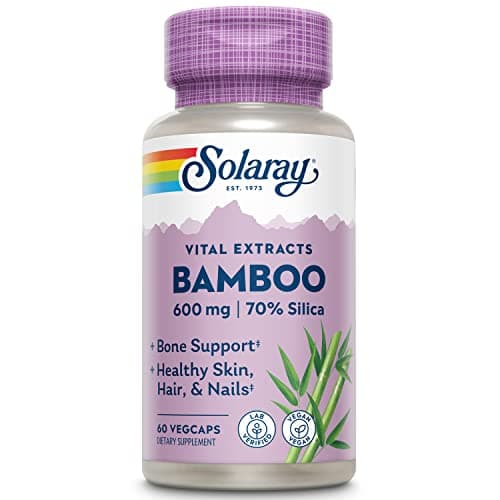
SOLARAY Bamboo Silica Supplement for Men & Women - Bamboo Stem…
Cost per serving
$0.32
60 servings · ~60-day supply
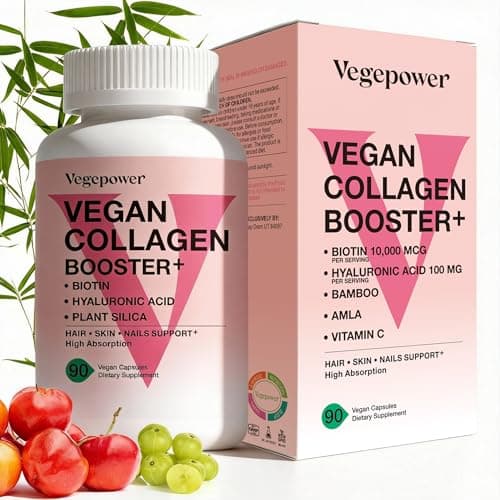
Vegan Collagen Booster with Biotin 10,000 mcg
Cost per serving
$0.25
90 servings · ~90-day supply
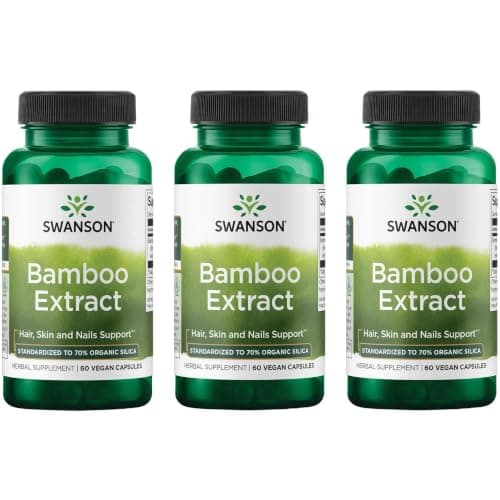
Swanson Bamboo Extract - Natural Hair
Cost per serving
$0.19
180 servings · ~180-day supply

WAY 4 ORGANIC W4O Bamboo Extract Capsules 500 mg – 70% Silica
Cost per serving
$0.08
180 servings · ~180-day supply
Related guides
Ubiquinol vs ubiquinone: which CoQ10 is worth it
Ubiquinol absorbs somewhat better, but it costs about 2.5x more per 100 mg than ubiquinone — a median $0.335 vs $0.133 across 55 listings we price. What that gap is worth, the dose, and the statin question.
P-5-P vs regular vitamin B6: is the active form worth it?
P-5-P costs about 2x more per 50 mg than plain pyridoxine — a median $0.146 vs $0.071 across 56 listings we price. Most healthy people convert plain B6 fine, so here is what the premium buys, and the safety ceiling that matters more than either form.
Beetroot vs citrulline: which for pumps, and which for endurance
Both raise nitric oxide, but by different routes and for different goals — beetroot has the endurance edge, citrulline is the gym-pump staple. Doses, the honest split, and cost per dose.
Beta-alanine: dose, the tingling, and what it actually does
Beta-alanine buffers muscle acid to extend high-intensity efforts in the 1–4 minute range. It works by loading over weeks, not as a pre-workout kick. Real dose, why it tingles, and cost per serving.