Turmeric and curcumin: why absorption, not dose, is the whole game
Quick answer
With turmeric, absorption beats dose: raw turmeric is only ~2–5% curcumin and curcumin barely absorbs. Buy a standardized curcumin (95% curcuminoids) with an absorption aid — piperine, or a branded high-absorption form like Meriva (phytosome, most joint research) or Longvida (lipid particle, cognition research) — and compare on cost per effective dose.
Alex Soto, Founder, VitaminDB
6 min readUpdated 7/31/2026 NIH-sourced
Meriva
phytosome
Longvida
lipid particle
Delivery
Most-studied use
Absorption vs plain curcumin
Cheaper high-absorption route
Verdict: Both are branded high-absorption curcumin forms that beat plain curcumin — pick by use case, then cost per dose. Meriva (curcumin phytosome) has the most human joint/osteoarthritis research; Longvida (a solid-lipid particle) was developed with a cognition/brain focus. Neither is universally better.
On this page
Turmeric is one of the most-bought "wellness" supplements — and one of the easiest to waste money on, because the number on the front of the bottle ("1,000 mg turmeric!") tells you almost nothing about what reaches your bloodstream.
Turmeric ≠ curcumin
Turmeric is the root. The active compounds are curcuminoids — mostly curcumin — and they make up only about 2–5% of raw turmeric by weight. So a "1,000 mg turmeric root" capsule might deliver only ~20–50 mg of actual curcumin.
That's why serious products list a standardized curcumin figure — typically "95% curcuminoids." If the label only says "turmeric 1000 mg" with no curcuminoid percentage, assume the active dose is small.
The real problem: curcumin barely absorbs
Even pure curcumin has notoriously poor oral bioavailability — it's not absorbed well, is rapidly metabolized, and is cleared fast. Taken plain, most of it leaves your body without doing much. This is the single fact that should drive your purchase.
Manufacturers solve it three main ways:
- Piperine (black pepper extract) — slows curcumin's clearance and can raise its blood levels several-fold. A few milligrams is enough; it's the cheapest and most common booster.
- Lipid / phytosome formulations (e.g. curcumin bound to phospholipids, "Meriva") — improve uptake and are often better tolerated.
- Micellar / nanoparticle delivery — marketed for very high relative absorption, at a premium.
A "curcumin 95% + piperine" product, or a phytosome formula, will out-deliver a bigger "raw turmeric" capsule that has neither.
Meriva vs Longvida: the two big branded forms
If you go for a branded high-absorption curcumin, the two you'll see most are Meriva and Longvida — and they were developed with different goals:
- Meriva is a curcumin phytosome (curcumin bound to a phospholipid). It has the largest body of human research in joints and osteoarthritis, and is often better tolerated.
- Longvida is a solid-lipid curcumin particle (SLCP), originally engineered to deliver free curcumin with a cognition/brain focus.
Neither is categorically superior — pick the one whose studied use case matches yours. And keep perspective: for general "I just want it to absorb," a plain curcumin 95% + piperine capsule usually costs less per dose than either branded form. Let the goal decide, then compare cost per effective dose.
How much, and how to read the label
Research commonly uses around 500 mg of curcumin per day (often split into two doses), with an absorption aid — a general reference from the literature, not a prescription. When you shop, check, in order:
- Is a curcumin/curcuminoid amount stated (not just "turmeric")?
- Is there an absorption enhancer (piperine, phytosome, lipid)?
- What does a real daily dose cost — not the bottle?
That last one is where most of the savings hide: see the live best-value turmeric ranking and the turmeric hub for current cost-per-dose picks. We rank by what an effective dose actually costs, not the sticker price (methodology).
Caution
The one worth knowing before you pay extra for absorption: NCCIH warns that highly bioavailable formulations of curcumin, which enhance the body's ability to absorb it, may harm your liver. It also lists the ordinary complaints — nausea and vomiting, acid reflux, stomach upset, diarrhoea or constipation — from oral turmeric.
Curcumin can interact with blood thinners and may not suit people with gallbladder issues or before surgery. If that's you, clear it with a clinician first.
Bottom line
Ignore the "turmeric mg" headline. Buy a product with a standardized curcumin dose plus an absorption aid (piperine or a lipid/phytosome carrier), target ~500 mg curcumin/day, and compare on cost per effective dose. Otherwise you're paying for bright-yellow excretion.
Covered nutrients: Turmeric Curcumin
See the live cost-per-dose data
This guide is editorial — the prices below are real and current.
Frequently asked questions
Is turmeric the same as curcumin?
No. Turmeric is the root; curcuminoids (mainly curcumin) are the active compounds, and they're only about 2–5% of raw turmeric by weight. A "1,000 mg turmeric" capsule may contain very little actual curcumin — look for a standardized curcumin/curcuminoid figure (often "95% curcuminoids").
Why black pepper?
Curcumin is poorly absorbed on its own and cleared fast. Piperine (from black pepper) slows that clearance and can raise curcumin blood levels substantially, which is why so many formulas add a few milligrams of it. Lipid, phytosome (e.g. Meriva), or micellar formulations are alternative ways to boost absorption.
How much curcumin per day?
Studies commonly use around 500 mg of curcumin per day (often split), paired with piperine or a lipid/phytosome carrier. That's a general research reference, not medical advice — and curcumin can interact with blood thinners and some other drugs, so check with a clinician if that applies to you.
Meriva or Longvida — which curcumin is better?
Both are branded high-absorption curcumin forms that far outperform plain curcumin; neither is universally better. Meriva is a phytosome (curcumin bound to a phospholipid) with the most human research in joints and osteoarthritis. Longvida is a solid-lipid curcumin particle originally developed with a cognition/brain focus. Match the form to your use case, then compare cost per dose — a plain "curcumin 95% + piperine" product is usually cheaper if you just want general absorption. Not medical advice.
Where these numbers come from
Cost figures on this page are computed from 37 active Turmeric Curcumin listings we track, last re-priced . Cost per dose is price ÷ (servings × dose), computed per listing — not a price we are quoted. Listings under $1 or with fewer than 3 servings are excluded, because both are usually a parse error rather than a bargain.
- Amazon.com · 36
- SuperSmart · 1
Prices move. Figures written into the text are re-checked against live data on a schedule; the ranking pages are always the current number.
Sources
Health claims on this page are drawn from these sources. Prices and cost-per-dose figures come from our own tracked listings, not from the sources below.
- 1.Turmeric — NIH National Center for Complementary and Integrative Health
Deals on these nutrients
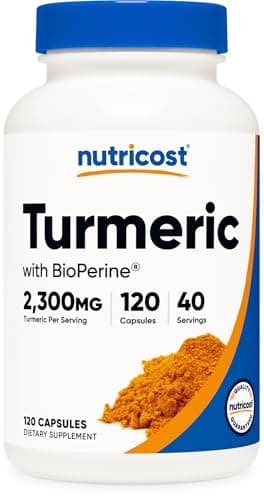
Nutricost Turmeric Curcumin with BioPerine and 95%…
Cost per serving
$0.37
40 servings · ~40-day supply
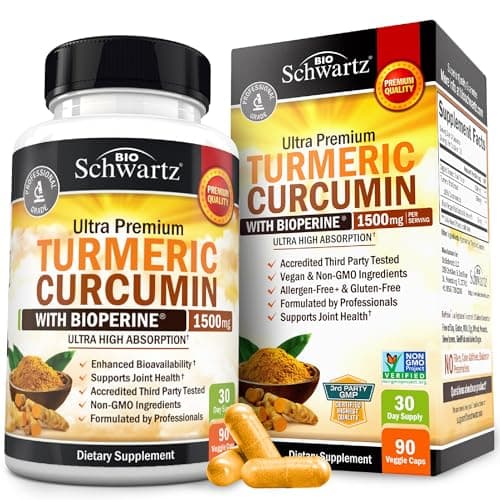
Turmeric Curcumin with Black Pepper Extract 1500mg - High…
Cost per serving
$0.22
90 servings · ~90-day supply
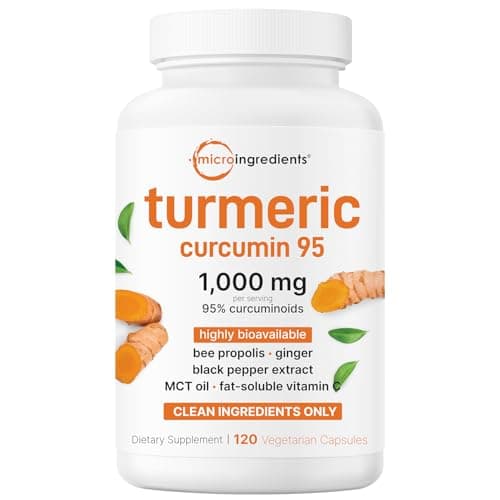
Micro Ingredients Pure Turmeric Curcumin Supplement 1,000mg…
Cost per serving
$0.22
120 servings · ~120-day supply

Turmeric Curcumin Supplement - 2400mg Organic Turmeric Per…
Cost per serving
$0.10
240 servings · ~240-day supply
Related guides
Turmeric vs fish oil: which for inflammation, joints, and heart
Both support a healthy inflammatory response — by different mechanisms, so they aren't interchangeable. Fish oil leans cardiovascular and general; curcumin leans joints. Doses and cost per dose.
Best anti-inflammatory supplements, by cost per clinical dose
The anti-inflammatory supplements with the best evidence, each with an honest clinical dose: omega-3 fish oil, curcumin, and ginger, compared by cost per effective dose.
Ubiquinol vs ubiquinone: which CoQ10 is worth it
Ubiquinol absorbs somewhat better, but it costs about 2.5x more per 100 mg than ubiquinone — a median $0.335 vs $0.133 across 55 listings we price. What that gap is worth, the dose, and the statin question.
P-5-P vs regular vitamin B6: is the active form worth it?
P-5-P costs about 2x more per 50 mg than plain pyridoxine — a median $0.146 vs $0.071 across 56 listings we price. Most healthy people convert plain B6 fine, so here is what the premium buys, and the safety ceiling that matters more than either form.