Fenugreek: dose, the testosterone claims, and cost
Quick answer
Fenugreek is typically dosed at about 500-600 mg/day of a standardized extract; libido effects in some trials are small, and evidence for large testosterone increases is weak.
Alex Soto, Founder, VitaminDB
6 min readUpdated 7/31/2026 NIH-sourced
On this page
Fenugreek is typically dosed at about 500-600 mg/day of a standardized extract. If you are taking it for the reasons it is usually marketed, the honest summary is this: some trials show small effects on libido or well-being, but the case for large testosterone jumps is weak. Here is what the dose looks like and how to buy it without overpaying.
What fenugreek is and how it is sold
Fenugreek (Trigonella foenum-graecum) is a culinary herb whose seeds contain saponins and other compounds thought to be responsible for its supplement effects. It is sold in two very different forms:
- Standardized extracts concentrated for specific saponins. A common branded one is Testofen. These are the forms used in most of the human trials behind the marketing.
- Whole-seed powder or crude seed capsules, which are much less concentrated and dosed at higher gram amounts.
Because the extract is where the studied activity is concentrated, a standardized extract at roughly 500-600 mg/day is the version most people should compare when they read the claims.
The testosterone and libido claims, without the hype
Fenugreek is one of the most heavily marketed "testosterone booster" ingredients, so it is worth being direct.
- Libido and sexual well-being: Some trials of standardized extracts report small improvements in libido or sexual function scores. The effects tend to be modest, and study quality varies.
- Testosterone itself: Evidence that fenugreek meaningfully raises testosterone is weak and inconsistent. Some studies show small shifts, others show none, and the numbers rarely support the dramatic promises on product labels.
The reasonable read: fenugreek may do a little for how some men feel, but if a bottle promises a big testosterone spike, the science does not back that up. This is general information, not medical advice.
The blood-sugar use
Separate from the testosterone marketing, fenugreek has a long traditional use for blood-sugar support, and the soluble fiber and saponins in the seed may lower blood sugar somewhat. This is actually one of its better-studied traditional uses.
If you take a medication that lowers blood sugar, this matters in a practical way: adding fenugreek could push blood sugar lower than intended. Coordinate with your clinician before combining them. Not medical advice.
Other traditional uses
Fenugreek is also used traditionally to support lactation (as a galactagogue). Evidence here is limited and mixed, and anyone nursing should talk to a clinician before using any supplement. Not medical advice.
Who should be cautious
- People on blood-sugar or blood-thinning medication should check with a clinician first. Large doses may cause a harmful drop in blood sugar, per NCCIH, which is the specific risk behind that advice.
- Pregnant people are generally advised to avoid fenugreek supplements.
- Fenugreek can cause a maple-syrup-like body odor, which is harmless but surprising.
How to buy fenugreek by cost per dose
The trap with fenugreek is paying extract prices for crude seed, or paying a premium bottle price without checking how many real doses are inside.
Do this instead:
- Confirm it is a standardized extract (Testofen or an equivalent), and note the milligrams of extract per serving.
- Divide the total price by the number of doses in the bottle to get cost per dose, not cost per bottle.
- Compare on a level basis: a cheap bottle of crude seed powder is not the same product as a standardized extract, even if both say "fenugreek."
You can compare current prices per dose and standardization on /nutrients/fenugreek, see the best current value picks on /best/fenugreek, and read exactly how we calculate cost per dose on /methodology.
Set realistic expectations, buy a standardized extract at the studied dose, and pick the option with the lowest cost per dose rather than the boldest label.
Covered nutrients: Fenugreek
See the live cost-per-dose data
This guide is editorial — the prices below are real and current.
Frequently asked questions
How much fenugreek should I take?
A common dose for a standardized extract is about 500-600 mg/day, taken as directed on the product. Whole-seed powder is used at higher amounts. Follow the label for the specific extract you buy. This is general information, not medical advice.
Does fenugreek raise testosterone?
The evidence is mixed and modest. Some trials of standardized extracts report small effects on libido or well-being, but support for large testosterone increases is weak and inconsistent. Treat big claims with caution. Not medical advice.
Can fenugreek affect blood sugar?
Fenugreek has traditionally been used for blood-sugar support, and it may lower blood sugar somewhat. If you take medication that lowers blood sugar, coordinate with your clinician to avoid it going too low. Not medical advice.
How do I compare fenugreek cost per dose?
Look for a standardized extract, note the milligrams of extract per serving, and divide the total price by the number of doses in the bottle. That gives you a real cost per dose instead of a per-bottle price.
Where these numbers come from
Cost figures on this page are computed from 14 active Fenugreek listings we track, last re-priced . Cost per dose is price ÷ (servings × dose), computed per listing — not a price we are quoted. Listings under $1 or with fewer than 3 servings are excluded, because both are usually a parse error rather than a bargain.
- Amazon.com · 14
Prices move. Figures written into the text are re-checked against live data on a schedule; the ranking pages are always the current number.
Sources
Health claims on this page are drawn from these sources. Prices and cost-per-dose figures come from our own tracked listings, not from the sources below.
- 1.Fenugreek — NIH National Center for Complementary and Integrative Health
Deals on these nutrients

Pure Mountain Botanicals Fenugreek Capsules 600mg Organic…
Cost per serving
$0.19
90 servings · ~90-day supply

Bronson Fenugreek Seed Extract 240 mg, 300 Vegetarian Capsules
Cost per serving
$0.05
300 servings · ~300-day supply

Bronson Fenugreek Seed Extract 240 mg, 150 Vegetarian Capsules
Cost per serving
$0.07
150 servings · ~150-day supply
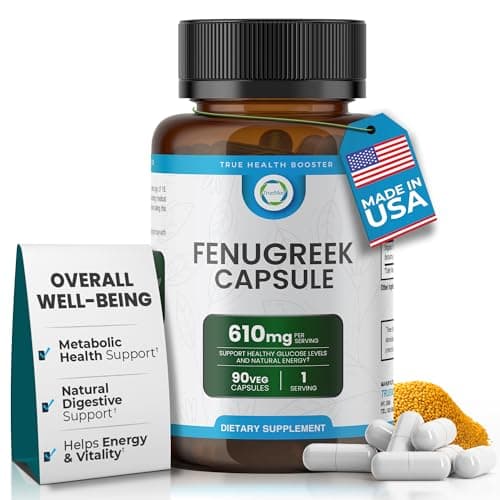
Organic Fenugreek Capsules 610 mg – Fenugreek Supplement…
Cost per serving
$0.11
90 servings · ~90-day supply
Related guides
Ubiquinol vs ubiquinone: which CoQ10 is worth it
Ubiquinol absorbs somewhat better, but it costs about 2.5x more per 100 mg than ubiquinone — a median $0.335 vs $0.133 across 55 listings we price. What that gap is worth, the dose, and the statin question.
P-5-P vs regular vitamin B6: is the active form worth it?
P-5-P costs about 2x more per 50 mg than plain pyridoxine — a median $0.146 vs $0.071 across 56 listings we price. Most healthy people convert plain B6 fine, so here is what the premium buys, and the safety ceiling that matters more than either form.
Beetroot vs citrulline: which for pumps, and which for endurance
Both raise nitric oxide, but by different routes and for different goals — beetroot has the endurance edge, citrulline is the gym-pump staple. Doses, the honest split, and cost per dose.
Beta-alanine: dose, the tingling, and what it actually does
Beta-alanine buffers muscle acid to extend high-intensity efforts in the 1–4 minute range. It works by loading over weeks, not as a pre-workout kick. Real dose, why it tingles, and cost per serving.