Glucosamine for joints: does it work, and what should it cost?
Quick answer
Glucosamine's evidence for joint (mostly knee osteoarthritis) pain is mixed: some trials show modest relief, the largest ones show little beyond placebo. Glucosamine sulfate at 1,500 mg/day has more supportive data than the HCl form. It's low-risk and takes weeks to judge, so it's a reasonable trial — but not a sure thing. It's cheap, so compare on cost per serving and don't overpay for blends.
Alex Soto, Founder, VitaminDB
6 min readUpdated 8/14/2026 NIH-sourced
On this page
Glucosamine is one of the best-selling joint supplements in the world, which makes the honest verdict awkward: the evidence that it works is genuinely mixed. That doesn't make it a scam — it makes it a maybe, and a maybe that's cheap enough to test. Here's what the research actually says, how to pick a form, and what a fair price looks like.
What the evidence really shows
Glucosamine is a building block of cartilage, and the theory is that supplementing it supports joint tissue. The reality in trials is muddier:
- Some trials — often industry-funded and using glucosamine sulfate — show a modest reduction in knee osteoarthritis pain and stiffness.
- The largest, most rigorous independent trials (including the well-known GAIT trial) found glucosamine no better than placebo overall, with at most a weak signal in people with moderate-to-severe pain.
So the fair summary is: it helps some people a little, it does nothing measurable for many, and it will not regrow cartilage or act as a painkiller. Major guidelines are lukewarm for exactly this reason. It's low-risk, though, so a time-limited trial is a defensible choice — just go in with realistic expectations.
Sulfate vs HCl — match the studies
Two forms dominate the shelf:
- Glucosamine sulfate — the form used in most of the positive research, typically 1,500 mg once daily. If you want to replicate what was studied, this is it.
- Glucosamine hydrochloride (HCl) — more glucosamine per gram, but thinner supporting evidence. Cheaper isn't automatically better here if the data behind it is weaker.
Glucosamine is also frequently sold stacked with chondroitin and MSM. Combination products are popular, but the added ingredients have their own mixed evidence, and the bundle usually costs more — so don't pay a premium for a blend on the assumption that more ingredients means more benefit.
Dose and how long to try
One caveat before any number: because glucosamine is a supplement rather than an approved drug, there is no validated effective dose — the 1,500 mg you see everywhere is the amount the trials used, not an established one.
The studied dose is 1,500 mg/day of glucosamine sulfate (as a single dose or split). Give any trial 8–12 weeks — it works gradually if at all, and there's no point judging it in a few days. No improvement by then is a reasonable cue to stop.
Two safety notes
- Shellfish allergy: most glucosamine comes from shellfish shells. Choose a product labeled shellfish-free (some are fermentation-derived) or check with a clinician.
- Blood thinners: glucosamine may interact with warfarin — tell your prescriber if that's you.
How to buy without overpaying
Glucosamine is inexpensive, which is the good news: a trial shouldn't cost much. In our catalog the cost per serving runs from about $0.06 at the cheap end to well over $0.15 for blends and premium branding — for what is, at the sulfate dose, the same molecule. Because you'll be taking it daily for a couple of months to judge it, those per-serving differences add up.
Pick your form (sulfate if you're matching the studies), check the milligrams, and compare on cost per serving: best-value glucosamine and the glucosamine hub. We rank by real cost per dose, not sticker price (methodology). If your goal is broader joint comfort, the turmeric vs fish oil guide covers two better-studied options worth weighing alongside it.
Bottom line
Glucosamine is a reasonable, low-cost experiment for knee osteoarthritis, not a proven fix. Use glucosamine sulfate at 1,500 mg/day, give it 8–12 weeks, and buy the cheapest plain product that hits the dose — the evidence doesn't justify paying up for a branded blend. If it helps you, great; if it doesn't by three months, stop without regret. This is general information, not medical advice — talk to a clinician about your joints.
Covered nutrients: Glucosamine
See the live cost-per-dose data
This guide is editorial — the prices below are real and current.
Frequently asked questions
Does glucosamine actually work for joint pain?
The honest answer is "sometimes, modestly, for some people." Trials are genuinely split — some show a small reduction in knee osteoarthritis pain and stiffness, while the largest and most rigorous trials find it no better than placebo overall, with a possible signal in people with moderate-to-severe pain. It is not a painkiller and won't rebuild cartilage. Because it's low-risk and inexpensive, a time-limited trial is reasonable, but manage expectations. This is general information, not medical advice.
Glucosamine sulfate or hydrochloride (HCl)?
Most of the positive evidence used glucosamine sulfate, typically at 1,500 mg once daily, so that's the form to try if you want to match the studies. Glucosamine HCl is more concentrated per gram but has thinner supporting data. If you buy HCl, don't assume the sulfate results transfer directly.
How long before I know if glucosamine is helping?
Give it a fair trial of about 8–12 weeks. Glucosamine works gradually if it works at all — there's no same-day effect — so judge it after a couple of months, not a few days. If you notice no difference in pain or function by then, it's reasonable to stop.
Is glucosamine safe if I'm allergic to shellfish?
Most glucosamine is derived from shellfish shells, so if you have a shellfish allergy, either choose a product explicitly labeled shellfish-free (some are made by fermentation) or discuss it with a clinician first. Glucosamine can also interact with blood thinners like warfarin, so mention it to your prescriber if that applies to you.
Where these numbers come from
Cost figures on this page are computed from 34 active Glucosamine listings we track, last re-priced . Cost per dose is price ÷ (servings × dose), computed per listing — not a price we are quoted. Listings under $1 or with fewer than 3 servings are excluded, because both are usually a parse error rather than a bargain.
- Amazon.com · 33
- SuperSmart · 1
Prices move. Figures written into the text are re-checked against live data on a schedule; the ranking pages are always the current number.
Sources
Health claims on this page are drawn from these sources. Prices and cost-per-dose figures come from our own tracked listings, not from the sources below.
- 1.Glucosamine Sulfate — StatPearls, NCBI Bookshelf
Deals on these nutrients
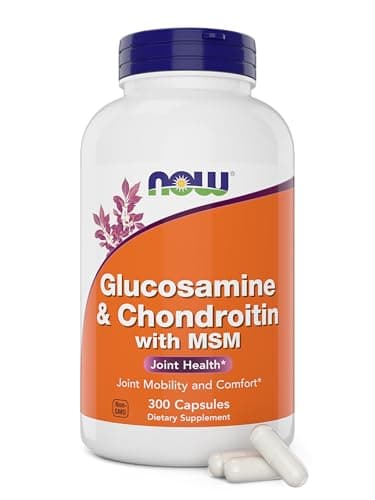
Now Glucosamine & Chondroitin with MSM, 300 Capsules
Cost per serving
$0.16
300 servings · ~300-day supply
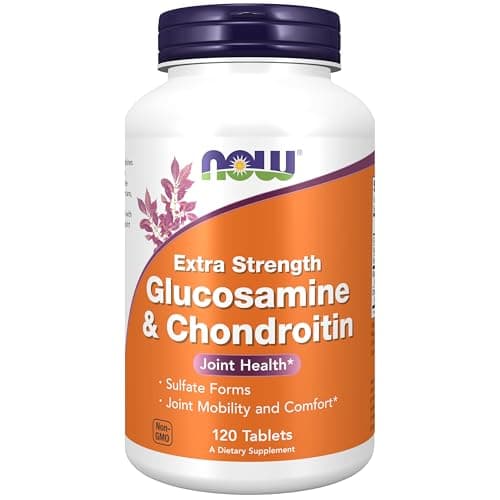
NOW Foods Supplements, Glucosamine & Chondroitin Extra…
Cost per serving
$0.21
120 servings · ~120-day supply
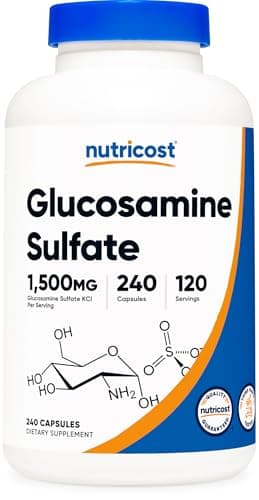
Nutricost Glucosamine Sulfate 1500mg
Cost per serving
$0.08
240 servings · ~240-day supply
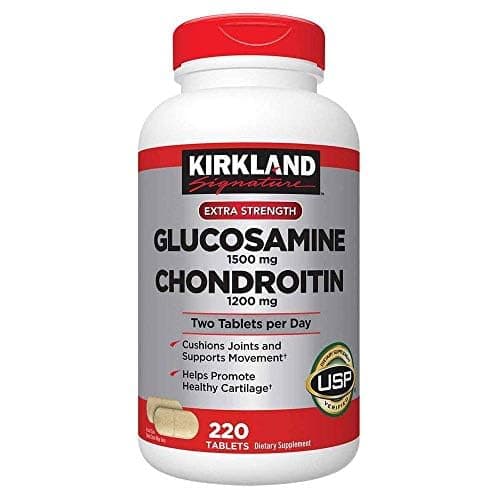
Kirkland Extra Strength Glucosamine 1500 mg Chondroitin…
Cost per serving
$0.13
220 servings · ~220-day supply
Related guides
Ubiquinol vs ubiquinone: which CoQ10 is worth it
Ubiquinol absorbs somewhat better, but it costs about 2.5x more per 100 mg than ubiquinone — a median $0.335 vs $0.133 across 55 listings we price. What that gap is worth, the dose, and the statin question.
P-5-P vs regular vitamin B6: is the active form worth it?
P-5-P costs about 2x more per 50 mg than plain pyridoxine — a median $0.146 vs $0.071 across 56 listings we price. Most healthy people convert plain B6 fine, so here is what the premium buys, and the safety ceiling that matters more than either form.
Beetroot vs citrulline: which for pumps, and which for endurance
Both raise nitric oxide, but by different routes and for different goals — beetroot has the endurance edge, citrulline is the gym-pump staple. Doses, the honest split, and cost per dose.
Beta-alanine: dose, the tingling, and what it actually does
Beta-alanine buffers muscle acid to extend high-intensity efforts in the 1–4 minute range. It works by loading over weeks, not as a pre-workout kick. Real dose, why it tingles, and cost per serving.