Melatonin for Sleep: What It Helps, the Right Dose, and the Real Cost
Quick answer
Melatonin is best supported for jet lag and for delayed sleep-wake phase, and NIH says the evidence for chronic insomnia isn't strong enough to recommend it. It's a timing signal, not a sedative, so when you take it (about an hour before your target bedtime) matters as much as how much. Product doses vary widely and the right amount is genuinely uncertain, so many people start low; more isn't reliably better. Short-term use appears safe; long-term safety data is lacking. Compare products by cost per dose. This is general information, not medical advice.
Alex Soto, Founder, VitaminDB
6 min readUpdated 7/18/2026 NIH-sourced
On this page
Melatonin is the best-selling sleep supplement in the US, and it's also one of the most misunderstood. People treat it like an over-the-counter sleeping pill — take more for a worse night. That's not what it is. Melatonin is a hormone your body already makes to tell you it's night; a supplement is a timing signal, not a sedative. Getting that one idea right changes both what you expect from it and how much you should pay.
We sell nothing. We rank melatonin by cost per dose.
What melatonin is, and what it isn't
Your brain releases melatonin as darkness falls; it's part of the signal that shifts your body toward sleep. A supplement adds to that signal. Crucially, it works by nudging your internal clock, not by chemically sedating you. That's why a "stronger" dose doesn't reliably buy a deeper sleep the way a sedative would, and why when you take it matters as much as how much.
What the evidence actually supports
Here is the NIH NCCIH assessment, quoted by condition, because melatonin is genuinely good for some sleep problems and weak for others:
- Jet lag: "Research suggests that melatonin supplements may help with jet lag."
- Delayed sleep-wake phase disorder (a body-clock problem where you can't fall asleep until very late): melatonin supplements "appear to help with sleep," but "it's uncertain whether the benefits outweigh the possible harms."
- Chronic insomnia: "There's not enough strong evidence on the effectiveness or safety of melatonin supplementation for chronic insomnia to recommend its use."
- Shift work: the studies were "generally small or inconclusive."
So the honest map: melatonin is best supported for timing problems — jet lag and delayed sleep phase — and is not well supported as a general fix for tossing and turning. If your problem is chronic insomnia, NCCIH's own position is that the evidence isn't there.
The dose question — and why "less is a smart start" is honest
People expect a number here. The honest answer is that there isn't a firmly established one. NCCIH treats the correct dose, the timing, and the long-term effects as open questions rather than issuing a recommendation. Products on the shelf range enormously — commonly from about 0.5 mg to 10 mg per serving, a twentyfold spread for the same molecule.
Because melatonin is a timing signal rather than a sedative, a larger dose is not reliably more effective, and some people feel groggy or "hungover" the next morning on higher amounts. That's why starting low is a common, sensible approach — not because a low dose is proven superior, but because there's no evidence a high one is, and the downside of overshooting is real. Whatever you choose, that's a conversation to have with a clinician, especially for children (see safety below).
Timing matters as much as dose
In the research NCCIH points to, taking melatonin about 1 hour before the desired bedtime, paired with going to bed at a consistent time, is what produced improvements. Take it too early or too late and you can blunt the effect or shift your clock the wrong way. If you're using it for jet lag, the direction of travel changes the ideal timing — another reason it's worth reading up rather than just swallowing one at 2 a.m.
Safety
Per NCCIH, "short-term use of melatonin supplements appears to be safe for most people," but "information on the long-term safety of supplementing with melatonin is lacking." The bigger caution is for children: NCCIH notes there aren't many studies in kids, with uncertainties about dose, timing and long-term use, and — because melatonin is a hormone — a theoretical possibility that supplements "could affect hormonal development, including puberty and menstrual cycles." Melatonin for a child is a decision to make with a pediatrician, not off a gummy label.
How to compare melatonin by cost per dose
Melatonin is cheap to manufacture, so the price you pay is mostly brand, form (gummies carry a premium) and bottle size — not the molecule. That makes cost per dose the whole game.
- Cost per serving = bottle price ÷ servings per container.
- Match the dose before comparing — a 10 mg tablet and a 1 mg tablet aren't the same product, and cheaper-per-pill isn't cheaper if it's ten times the dose you want.
- Skip the gummy tax unless you specifically need a gummy — the format typically costs more per serving for the same melatonin.
Our best melatonin by cost per dose page ranks products cheapest-first; because prices move, we link to the live ranking rather than naming one here.
Bottom line
Melatonin is a timing signal, not a sleeping pill. It's genuinely useful for jet lag and delayed sleep phase, weakly supported for general insomnia, and its ideal dose is uncertain enough that starting low and getting the timing right (about an hour before bed) beats reaching for a bigger number. It's inexpensive, so don't overpay — compare on cost per dose at the strength you actually want. Start with the cost-per-dose ranking.
This is general information, not medical advice — talk to a clinician before starting melatonin, especially for a child or if you take other medication.
Covered nutrients: Melatonin
See the live cost-per-dose data
This guide is editorial — the prices below are real and current.
Frequently asked questions
Does melatonin actually work for sleep?
It depends on the problem. Per NIH's NCCIH, research suggests melatonin "may help with jet lag," and it "appears to help" people with delayed sleep-wake phase disorder — though NCCIH adds "it's uncertain whether the benefits outweigh the possible harms." For chronic insomnia, NCCIH says there's "not enough strong evidence on the effectiveness or safety of melatonin supplementation for chronic insomnia to recommend its use." So it's genuinely useful for some sleep-timing problems and unproven for general insomnia. This is general information, not medical advice.
How much melatonin should I take?
The honest answer is that the right dose is uncertain — NCCIH flags the dose, timing, and long-term effects as open questions rather than giving a number. Products commonly sell 0.5 mg to 10 mg, and because melatonin is a timing signal rather than a sedative, many people start at the low end; a bigger dose is not reliably more effective and can leave some people groggy. Talk to a clinician about what's appropriate for you.
When should I take melatonin?
Timing is a big part of how melatonin works. In the research NCCIH cites, taking melatonin about 1 hour before the desired bedtime, combined with going to bed at a set time, led to improvements. Because it shifts your body clock rather than knocking you out, taking it at the wrong time can be ineffective or even shift your sleep the wrong way.
Where these numbers come from
Cost figures on this page are computed from 62 active Melatonin listings we track, last re-priced . Cost per dose is price ÷ (servings × dose), computed per listing — not a price we are quoted. Listings under $1 or with fewer than 3 servings are excluded, because both are usually a parse error rather than a bargain.
- Amazon.com · 57
- SuperSmart · 5
Prices move. Figures written into the text are re-checked against live data on a schedule; the ranking pages are always the current number.
Sources
Health claims on this page are drawn from these sources. Prices and cost-per-dose figures come from our own tracked listings, not from the sources below.
- 1.Melatonin: What You Need To Know — NIH National Center for Complementary and Integrative Health
Deals on these nutrients
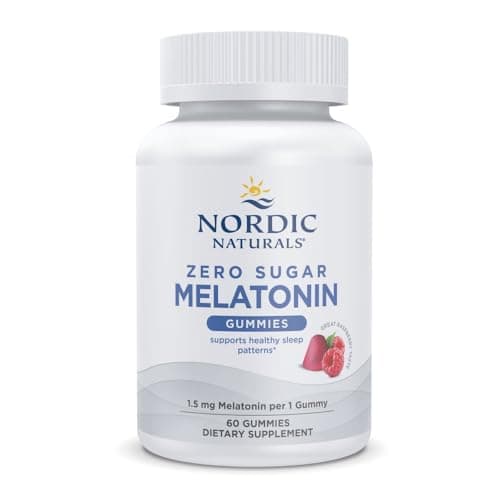
Nordic Naturals Zero Sugar Melatonin Gummies
Cost per serving
$0.28
60 servings · ~60-day supply

Carlyle Melatonin Gummies 10mg | 180 Count | Berry Flavor
Cost per serving
$0.09
180 servings · ~180-day supply

Life Extension Melatonin, Sleep Support, 3 mg, 60 Capsules
Cost per serving
$0.13
60 servings · ~60-day supply

Natrol Melatonin Gummies
Cost per serving
$0.12
90 servings · ~90-day supply
Related guides
Valerian vs melatonin: which one for your sleep problem
Melatonin fixes timing, valerian helps you wind down — they solve different sleep problems and one is a hormone, the other an herb. How to choose, the doses, and cost per dose.
Ubiquinol vs ubiquinone: which CoQ10 is worth it
Ubiquinol absorbs somewhat better, but it costs about 2.5x more per 100 mg than ubiquinone — a median $0.335 vs $0.133 across 55 listings we price. What that gap is worth, the dose, and the statin question.
P-5-P vs regular vitamin B6: is the active form worth it?
P-5-P costs about 2x more per 50 mg than plain pyridoxine — a median $0.146 vs $0.071 across 56 listings we price. Most healthy people convert plain B6 fine, so here is what the premium buys, and the safety ceiling that matters more than either form.
Beetroot vs citrulline: which for pumps, and which for endurance
Both raise nitric oxide, but by different routes and for different goals — beetroot has the endurance edge, citrulline is the gym-pump staple. Doses, the honest split, and cost per dose.