Valerian vs melatonin: which one for your sleep problem
Quick answer
Use melatonin to fix timing — jet lag, a shifted schedule, or falling asleep too late — at a LOW 0.5–3 mg dose; it's a clock signal, not a sedative. Use valerian (300–600 mg) as a gentle, non-hormonal wind-down herb for general trouble relaxing into sleep. Timing problem → melatonin; can't-wind-down → valerian.
Alex Soto, Founder, VitaminDB
6 min readUpdated 8/14/2026 NIH-sourced
Melatonin
timing
Valerian
wind-down
What it is
Best for
Dose
Onset
Verdict: Different tools. Melatonin is a hormone that signals 'night' — best for jet lag and a shifted sleep schedule, at a low 0.5–3 mg dose (more isn't better). Valerian is a mild sedative herb (300–600 mg) for general wind-down, non-hormonal, and builds over days. Match it to the problem. Not medical advice.
On this page
Reaching for "a sleep supplement" without knowing which problem you're solving is why so many people say melatonin "didn't work." It works — for the thing it's actually for.
They solve different problems
- Melatonin is about timing. It's a hormone your body makes at night; supplementing it shifts your internal clock. That makes it genuinely useful for jet lag, a delayed sleep schedule, or trouble falling asleep — and largely useless as a general "make me drowsy" pill.
- Valerian is about winding down. It's a mild sedative herb, non-hormonal, taken for general trouble relaxing into sleep.
So: timing problem → melatonin; can't-wind-down → valerian.
The dose people get wrong
Melatonin is the one to get right: 0.5–3 mg is plenty. It's a clock signal, not a sedative, so more doesn't mean sleepier — the 5, 10, even 20 mg gummies on the shelf can leave you groggy the next day without helping. Take it a couple hours before your target bedtime.
Valerian runs 300–600 mg of root extract, often standardized to valerenic acid, taken before bed. Unlike melatonin, its effect tends to build over several nights rather than hit on night one.
Hormone vs herb
This is the part worth knowing: melatonin is a hormone and valerian is a plant. If you'd rather not take a hormone nightly — or you only need help on shifted-schedule nights — valerian (or the wind-down route) is the non-hormonal option. If your issue is squarely a clock problem, the hormone is the right tool, used sparingly.
How to buy without overpaying
Both are cheap. For melatonin, don't pay for mega-doses you shouldn't take — a low-dose product is often the better and cheaper choice. Compare cost per dose on the melatonin hub and the valerian hub (methodology).
NCCIH's read on valerian is weaker than the shelf implies: the evidence on whether valerian is helpful for sleep problems is inconsistent, and while it is generally safe for short-term use, with apparent safety at 300 to 600 mg daily for up to 6 weeks, the safety of long-term use is unknown. For melatonin the open questions are dose, timing and long-term use rather than short-term safety.
Bottom line
Melatonin fixes timing (jet lag, shifted schedule; 0.5–3 mg, low). Valerian helps you wind down (non-hormonal herb; 300–600 mg, builds over days). They're different tools for different sleep problems — pick by yours, and keep melatonin low. This is general information, not medical advice.
Covered nutrients: Melatonin, Valerian root
See the live cost-per-dose data
This guide is editorial — the prices below are real and current.
Frequently asked questions
Valerian or melatonin for sleep?
Melatonin if your problem is timing — jet lag, a late/shifted body clock, or trouble falling asleep — at a low 0.5–3 mg dose. Valerian if you just can't wind down and want a non-hormonal herb (300–600 mg). They target different problems. This is general information, not medical advice.
Is melatonin a sedative?
No — it's a hormone that tells your body it's night, shifting your sleep timing. It doesn't knock you out like a sedative, which is why more isn't better; 0.5–3 mg is plenty, and high doses can leave you groggy without helping.
Can you take valerian and melatonin together?
Some sleep formulas combine them, and they work by different mechanisms, so it's plausible. Start with one to see what helps, keep melatonin low, and check with a clinician if you take other sedating medication. Not medical advice.
Is melatonin habit-forming?
It's not considered habit-forming, but that's not a reason to over-dose it. Use the lowest amount that works, mainly to correct timing, rather than nightly out of habit.
Where these numbers come from
Cost figures on this page are computed from 92 active Melatonin / Valerian root listings we track, last re-priced . Cost per dose is price ÷ (servings × dose), computed per listing — not a price we are quoted. Listings under $1 or with fewer than 3 servings are excluded, because both are usually a parse error rather than a bargain.
- Amazon.com · 87
- SuperSmart · 5
Prices move. Figures written into the text are re-checked against live data on a schedule; the ranking pages are always the current number.
Sources
Health claims on this page are drawn from these sources. Prices and cost-per-dose figures come from our own tracked listings, not from the sources below.
- 1.Melatonin: What You Need To Know — NIH National Center for Complementary and Integrative Health
- 2.Valerian: Usefulness and Safety — NIH National Center for Complementary and Integrative Health
Deals on these nutrients
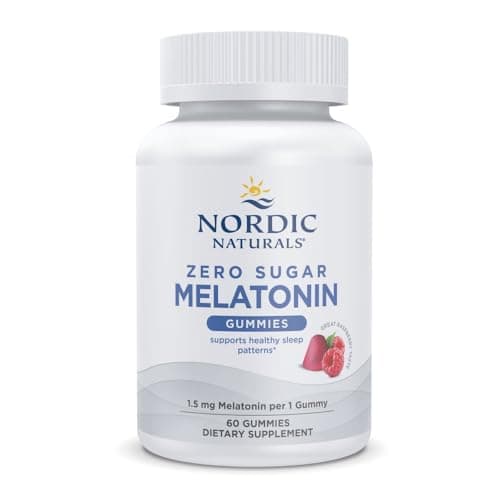
Nordic Naturals Zero Sugar Melatonin Gummies
Cost per serving
$0.28
60 servings · ~60-day supply

Carlyle Melatonin Gummies 10mg | 180 Count | Berry Flavor
Cost per serving
$0.09
180 servings · ~180-day supply

Life Extension Melatonin, Sleep Support, 3 mg, 60 Capsules
Cost per serving
$0.13
60 servings · ~60-day supply

Natrol Melatonin Gummies
Cost per serving
$0.12
90 servings · ~90-day supply
Related guides
Melatonin for Sleep: What It Helps, the Right Dose, and the Real Cost
What NIH says melatonin actually helps with, why a smaller dose is often the smart starting point, the timing that matters, and how to compare products by cost per dose.
Ubiquinol vs ubiquinone: which CoQ10 is worth it
Ubiquinol absorbs somewhat better, but it costs about 2.5x more per 100 mg than ubiquinone — a median $0.335 vs $0.133 across 55 listings we price. What that gap is worth, the dose, and the statin question.
P-5-P vs regular vitamin B6: is the active form worth it?
P-5-P costs about 2x more per 50 mg than plain pyridoxine — a median $0.146 vs $0.071 across 56 listings we price. Most healthy people convert plain B6 fine, so here is what the premium buys, and the safety ceiling that matters more than either form.
Beetroot vs citrulline: which for pumps, and which for endurance
Both raise nitric oxide, but by different routes and for different goals — beetroot has the endurance edge, citrulline is the gym-pump staple. Doses, the honest split, and cost per dose.