Red yeast rice for cholesterol: the honest safety guide, dose, and cost
Quick answer
Red yeast rice lowers LDL because it contains monacolin K, which is chemically identical to the statin lovastatin, so it carries the same risks as a statin and should be used under a doctor's supervision, not self-prescribed.
Alex Soto, Founder, VitaminDB
7 min readUpdated 8/1/2026 NIH-sourced
On this page
Red yeast rice can lower LDL cholesterol because it contains monacolin K, which is chemically identical to the prescription statin lovastatin. That is why it works, and it is also why it carries the same risks as a statin. Because the active dose is unregulated and unpredictable, red yeast rice for cholesterol is something to do under a doctor's supervision, not to self-prescribe. This is general information, not medical advice.
What red yeast rice is, and why it works
Red yeast rice (RYR) is rice fermented with a specific mold, and the compound that gives it any cholesterol effect is monacolin K. The important fact is that monacolin K is the same molecule as lovastatin, a prescription statin. So when RYR lowers LDL, it is doing it by the exact mechanism a statin uses.
That single fact drives everything else in this guide. RYR is not a gentle herbal alternative to a statin. Functionally, it is a statin, just sold as a supplement with an unpredictable dose.
The risks are statin risks
Because monacolin K is lovastatin, RYR can cause the same side effects a statin can. These deserve to be stated plainly:
- Muscle pain is the most common concern.
- Muscle breakdown (rhabdomyolysis) is rare but serious.
- Liver injury is possible, which is why statin users are monitored.
None of this is unusual for a statin, but people often take RYR precisely because they think they are avoiding statin risks. They are not. Not medical advice.
NCCIH states both halves of the trade plainly: products with considerable amounts of monacolin K may effectively lower blood cholesterol, and products containing significant monacolin K can have the same potential side effects as statin drugs, including muscle, kidney and liver damage — plus the same drug interactions.
Do not stack it, and some people should not take it at all
Several situations make RYR a clear no without medical guidance:
- Do not combine it with a prescription statin. That is effectively doubling your statin dose, with more risk of muscle and liver problems.
- Do not take it if you have liver disease.
- Avoid it in pregnancy and breastfeeding.
If any of these apply, RYR is not a gray area. And even outside these groups, because it is a statin with an uncertain dose, the right move is to decide with a clinician. Not medical advice.
The dose problem: monacolin K is unregulated
Here is the practical trap. Studies have used roughly 1,200-2,400 mg of red yeast rice per day, but the milligrams of RYR are not the number that matters. What matters is the monacolin K content, and that is where products fall apart:
- Monacolin K content is unregulated and varies enormously from product to product.
- Two bottles with the same RYR weight can deliver very different amounts of active statin.
- Labels often do not disclose the monacolin K amount at all.
That means you frequently cannot know what dose of statin you are actually taking, which is not a small detail when the ceiling includes muscle breakdown and liver injury.
Contamination: citrinin
There is a second product-quality issue. Some red yeast rice products have been found contaminated with citrinin, a kidney-toxic byproduct that certain molds can produce during fermentation. Because RYR is a fermented product, this is a real manufacturing risk, and it is another reason that third-party testing matters more than a low price.
What actually matters when choosing
For most supplements, the buying advice is about dose and cost. For RYR, the priorities are different, and safety comes first:
- Disclosed monacolin K content, so you have any idea of the active dose.
- Third-party testing for citrinin, to reduce the contamination risk.
- A clinician in the loop, because this is statin therapy in a supplement bottle.
Price is a distant consideration behind those three. A cheap product with an undisclosed dose and no contamination testing is not a bargain.
How to think about cost per dose
You can still compare cost, but read this section with the safety warnings above firmly in mind.
- Note the milligrams of RYR per serving, and the monacolin K content if it is disclosed.
- Divide the bottle price by the number of servings to get cost per dose.
- Remember that a disclosed monacolin K figure and third-party citrinin testing matter more than price. A lower cost per dose is not worth an unknown statin dose or a contamination risk.
Compare current prices per dose on /nutrients/red-yeast-rice, see the current value picks on /best/red-yeast-rice, and read exactly how we calculate cost per dose on /methodology.
Cholesterol management belongs with a clinician. If you and your doctor decide RYR is appropriate, prioritize disclosed monacolin K and citrinin testing, and treat cost as the last factor, not the first. Not medical advice.
Covered nutrients: Red yeast rice
See the live cost-per-dose data
This guide is editorial — the prices below are real and current.
Frequently asked questions
Does red yeast rice lower cholesterol?
It can. Red yeast rice contains monacolin K, which is chemically identical to the prescription statin lovastatin, and that is why it can lower LDL cholesterol. It is the same mechanism as a statin, which also means it carries the same risks. Cholesterol management belongs with a clinician rather than self-treatment. Not medical advice.
Is red yeast rice safe?
It carries the same risks as a statin, because monacolin K is lovastatin. That includes muscle pain and, rarely, muscle breakdown (rhabdomyolysis) and liver injury. Some products have also been found contaminated with citrinin, a kidney-toxic mold byproduct. Do not combine it with a prescription statin, and use it only under a doctor's supervision. Not medical advice.
How much red yeast rice should I take?
Studies have used roughly 1,200-2,400 mg of red yeast rice per day, but the number that actually matters is the monacolin K content, which varies enormously between products and is often not disclosed on the label. That inconsistency is a big reason to involve a clinician rather than dose it yourself. Not medical advice.
Who should avoid red yeast rice?
Anyone already taking a prescription statin, anyone with liver disease, and anyone who is pregnant or breastfeeding should avoid it. More generally, because it is effectively a statin with an unpredictable dose, cholesterol treatment should be decided with a doctor. Not medical advice.
Where these numbers come from
Cost figures on this page are computed from 27 active Red yeast rice listings we track, last re-priced . Cost per dose is price ÷ (servings × dose), computed per listing — not a price we are quoted. Listings under $1 or with fewer than 3 servings are excluded, because both are usually a parse error rather than a bargain.
- Amazon.com · 27
Prices move. Figures written into the text are re-checked against live data on a schedule; the ranking pages are always the current number.
Sources
Health claims on this page are drawn from these sources. Prices and cost-per-dose figures come from our own tracked listings, not from the sources below.
- 1.Red Yeast Rice — NIH National Center for Complementary and Integrative Health
Deals on these nutrients
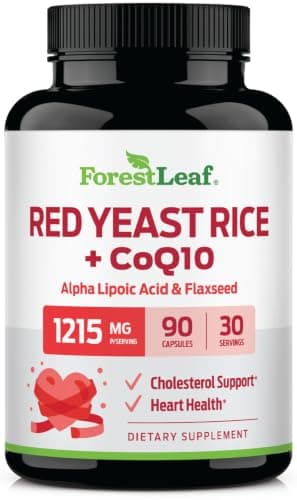
Red Yeast Rice 1215 mg. Capsules - Extra Strength Red Rice…
Cost per serving
$0.24
90 servings · ~90-day supply
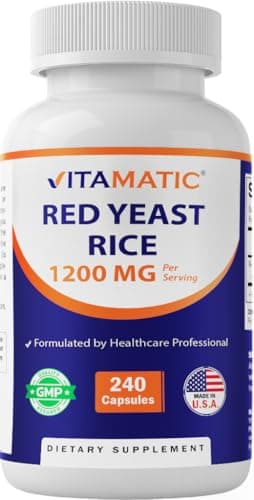
Vitamatic Red Yeast Rice 1200 mg Per Serving - 240 Veg…
Cost per serving
$0.06
240 servings · ~240-day supply

Horbäach Red Yeast Rice 1200 mg | 120 Capsules
Cost per serving
$0.08
120 servings · ~120-day supply
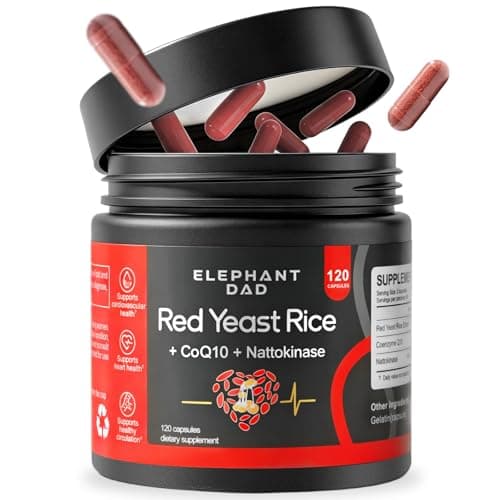
Red Yeast Rice 1200mg with Nattokinase & CoQ10 – Extra…
Cost per serving
$0.25
120 servings · ~120-day supply
Related guides
Ubiquinol vs ubiquinone: which CoQ10 is worth it
Ubiquinol absorbs somewhat better, but it costs about 2.5x more per 100 mg than ubiquinone — a median $0.335 vs $0.133 across 55 listings we price. What that gap is worth, the dose, and the statin question.
P-5-P vs regular vitamin B6: is the active form worth it?
P-5-P costs about 2x more per 50 mg than plain pyridoxine — a median $0.146 vs $0.071 across 56 listings we price. Most healthy people convert plain B6 fine, so here is what the premium buys, and the safety ceiling that matters more than either form.
Beetroot vs citrulline: which for pumps, and which for endurance
Both raise nitric oxide, but by different routes and for different goals — beetroot has the endurance edge, citrulline is the gym-pump staple. Doses, the honest split, and cost per dose.
Beta-alanine: dose, the tingling, and what it actually does
Beta-alanine buffers muscle acid to extend high-intensity efforts in the 1–4 minute range. It works by loading over weeks, not as a pre-workout kick. Real dose, why it tingles, and cost per serving.