Vitamin B12 deficiency: who's at risk, the warning signs, and how to fix it
Quick answer
B12 only comes from animal foods, so vegans, people over 50, and anyone on metformin or acid-reducing drugs are most at risk. Here are the symptoms (some can become permanent), the right tests, and how to correct it — oral, sublingual, or injection.
Alex Soto, Founder, VitaminDB
10 min readUpdated 6/29/2026 NIH-sourced
On this page
Vitamin B12 (cobalamin) is one of the few nutrients where a deficiency can do lasting damage if it's missed for too long — and it's also one of the easiest to overlook, because the early signs are vague and the highest-risk groups often feel fine. This guide covers who's at risk, what to watch for, how it's diagnosed, and how it's corrected.
What B12 does — and where it comes from
B12 is essential for healthy nerves, red blood cell formation, and DNA synthesis. The catch: it's made by microbes and reaches us almost entirely through animal foods — meat, fish, eggs, dairy. Plants don't reliably contain it. That single fact drives most of the risk map below.
Absorbing it is also unusually fragile: B12 needs stomach acid to be released from food and a protein called intrinsic factor to be taken up in the gut. Anything that disrupts acid, intrinsic factor, or the gut lining cuts absorption.
Who's most at risk
- Vegans and most vegetarians — no reliable dietary B12 without animal foods or fortification. Supplementation is essential, not optional.
- People over ~50 — stomach acid declines with age (atrophic gastritis), reducing how much B12 you free from food.
- Long-term metformin users — the diabetes drug lowers B12 absorption over time.
- Long-term acid-reducer users — PPIs and H2 blockers cut the stomach acid B12 needs.
- Pernicious anemia — an autoimmune condition that destroys intrinsic factor; absorption fails regardless of diet.
- Gut surgery / malabsorption — bariatric surgery, Crohn's, celiac, or ileal resection.
- Heavy alcohol use (flagged by broader clinical literature rather than the core NIH at-risk list).
If you're in two or more of these groups, low B12 is a real possibility even on a "normal" diet.
The warning signs
B12 deficiency hits the blood and the nervous system:
- fatigue, weakness, light-headedness
- pale or slightly yellow skin (from megaloblastic anemia)
- tingling or numbness in hands and feet (peripheral neuropathy)
- balance and coordination problems
- memory, concentration, or mood changes
- a sore, smooth, red tongue (glossitis)
⚠️ The nerve damage can become permanent if a deficiency goes uncorrected for long enough — which is why B12 symptoms (especially numbness/tingling or balance issues) deserve testing rather than waiting. The blood (anemia) effects usually reverse with treatment; some neurological damage may not.
How it's diagnosed
- Serum B12 is the first-line blood test. A clearly low value confirms deficiency.
- Borderline results are common and misleading, so clinicians add methylmalonic acid (MMA) and homocysteine — both rise when B12 is functionally low, making them more sensitive than serum B12 alone.
Don't self-diagnose from symptoms; the tests exist precisely because the symptoms are non-specific.
How it's corrected
- Form: both methylcobalamin (the active form) and cyanocobalamin (cheap, very stable, well studied) work. For most people the difference is minor — the full breakdown is in B12: methyl vs cyano and the side-by-side methyl vs cyano comparison.
- Dose: the Daily Value is only **2.4 mcg, but supplements use much more (often 250–1,000 mcg) because absorption is limited per dose. There's no established upper limit** — B12 is water-soluble and the excess is excreted, so high label numbers aren't a safety problem.
- Route: high-dose oral works for most deficiencies (a small fraction absorbs by passive diffusion even when intrinsic-factor uptake is impaired). Injections are for severe deficiency, neurological involvement, or pernicious anemia — a clinician's decision. Sublingual tablets are popular but offer no clear edge over high-dose oral.
- Severe or nerve-symptom cases are a doctor's job, not a self-treatment with a low-dose gummy.
A special note for vegans
This is the one group where a supplement is genuinely non-negotiable. A reliable B12 source — a supplement or consistently fortified foods — is part of doing a plant-based diet safely. Don't rely on "B12 in spirulina/nutritional yeast" unless the yeast is explicitly fortified; many plant sources contain inactive analogues, not usable B12.
How to buy
Pick your form (methyl or cyano), a sensible dose, and compare on real cost per dose — see best-value B12 and the B12 hub. We rank by cost per effective dose, not sticker price (methodology).
Bottom line
B12 comes from animal foods, so vegans, the over-50s, and people on metformin or acid reducers are most at risk — and the nerve effects can become permanent, so don't wait out numbness or balance changes. Confirm with serum B12 plus MMA/homocysteine, correct with high-dose oral (injections for severe/neurological cases), and remember B12 has no upper limit. General references from the NIH, not medical advice — a confirmed or symptomatic deficiency is a conversation with your clinician.
Covered nutrients: Vitamin B12 (Cobalamin)
See the live cost-per-dose data
This guide is editorial — the prices below are real and current.
Frequently asked questions
Who actually needs to supplement B12?
Vegans and most vegetarians (B12 is essentially only in animal foods), most people over 50 (absorption drops with age), long-term users of metformin or acid-reducing drugs (PPIs/H2 blockers), people with pernicious anemia or gut surgery/malabsorption, and heavy drinkers. For these groups a B12 supplement is not optional — it's the dependable source.
Is oral B12 as good as injections?
For most deficiencies, high-dose oral B12 works well — a small fraction is absorbed by passive diffusion even without normal gut uptake. Injections are reserved for severe deficiency, neurological symptoms, or pernicious anemia, and are a clinician's call. Sublingual tablets are popular but high-dose oral is similarly effective.
How much B12 should I take?
The Daily Value is just 2.4 mcg, but supplements use far more (often 250–1,000 mcg) because only a little is absorbed at a time — and that's fine, as B12 has no established upper limit and the excess is excreted. Correcting an actual deficiency should be guided by a clinician, especially if there are nerve symptoms.
Where these numbers come from
Cost figures on this page are computed from 201 active Vitamin B12 (Cobalamin) listings we track, last re-priced . Cost per dose is price ÷ (servings × dose), computed per listing — not a price we are quoted. Listings under $1 or with fewer than 3 servings are excluded, because both are usually a parse error rather than a bargain.
- Amazon.com · 200
- SuperSmart · 1
Prices move. Figures written into the text are re-checked against live data on a schedule; the ranking pages are always the current number.
Sources
Health claims on this page are drawn from these sources. Prices and cost-per-dose figures come from our own tracked listings, not from the sources below.
- 1.Vitamin B12: Fact Sheet for Health Professionals — NIH Office of Dietary Supplements
Deals on these nutrients
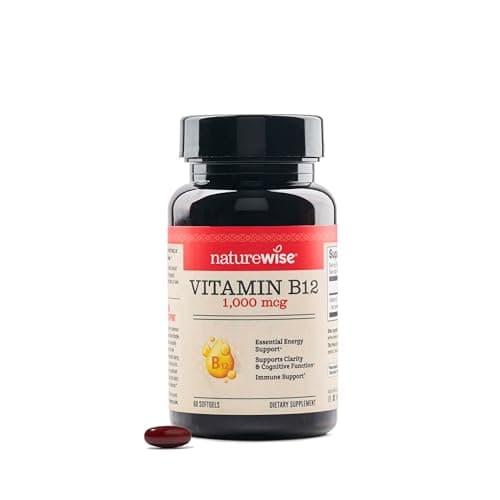
NatureWise Vitamin B12 1000 mcg - Dietary Supplement…
Cost per serving
$0.12
60 servings · ~60-day supply
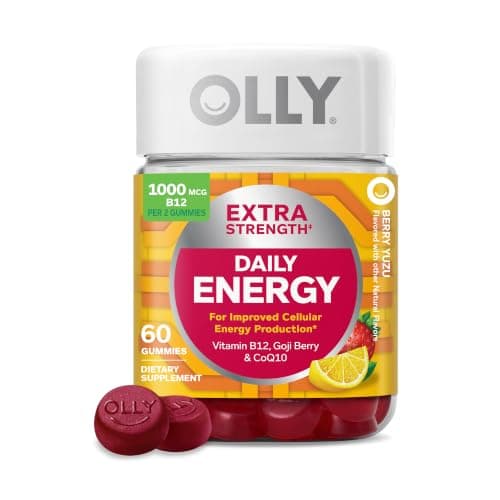
OLLY Extra Strength Daily Energy Gummy
Cost per serving
$0.26
60 servings · ~60-day supply
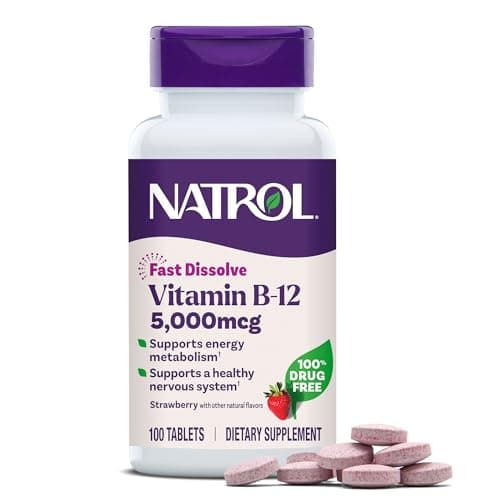
Natrol Vitamin B12 5000 mcg Fast Dissolve B12 Supplement
Cost per serving
$0.13
100 servings · ~100-day supply

Pure Encapsulations Methylcobalamin 1,000 mcg - Vitamin B12…
Cost per serving
$0.34
60 servings · ~60-day supply
Related guides
Vegan Vitamin B12: Which Form to Buy and the Real Cost Per Dose
A practical guide to buying vegan vitamin B12 — why most B12 is already vegan, cyanocobalamin vs methylcobalamin, and the real cost per dose.
The Full GLP-1 Supplement Stack: What to Take & Cost Per Day
A cost-per-dose companion supplement stack for GLP-1 users (Ozempic/Mounjaro): protein, vitamin D, magnesium, B12, omega-3 — and the full daily cost.
Vitamin B12: methylcobalamin vs cyanocobalamin, and who actually needs to care
The internet says methyl-B12 is the only 'natural' form and cyano is toxic. The evidence is more boring: both work for most people. Here's when the form genuinely matters.
We Analyzed 3,397 Supplements: How Much You Overpay
We tracked 3,397 supplements across 194 nutrients. For the same nutrient at the same dose, cost per unit of active ingredient varies by a median of 7.3x — and up to about 34x. Here's why, and how to check any bottle in ten seconds.