Vitamin D deficiency: the signs, the blood test, and how to actually fix it
Quick answer
Vitamin D deficiency is common and often silent. Here's who's most at risk, the one blood test that settles it (25-OH-D), what the numbers mean, and how to correct a low level without overdoing a fat-soluble vitamin.
Alex Soto, Founder, VitaminDB
10 min readUpdated 6/29/2026 NIH-sourced
On this page
Vitamin D deficiency is one of the most common nutrient shortfalls worldwide, and one of the sneakiest — because for a long time it produces no obvious symptoms at all. This is the practical guide: who's actually at risk, the single blood test that ends the guesswork, what your number means, and how to correct a low level without tipping a fat-soluble vitamin into the danger zone.
Why deficiency is so common
Your body makes vitamin D when UVB light hits your skin — but that pathway is easy to lose. It drops with higher latitude and winter (at northern latitudes the sun is too low to make vitamin D for months), with darker skin (more melanin = less synthesis per minute of sun), with age (skin makes less), with time spent indoors, and with sunscreen (correctly — it blocks the UVB you'd otherwise use). Add that almost no foods carry much vitamin D, and a large share of people sit below optimal for part of the year.
Who's most at risk
You're more likely to be low if you:
- live far from the equator or spend little time outdoors, especially October–March
- have darker skin
- are an older adult — skin synthesis and dietary intake both fall with age (the NIH raises the RDA at 70+)
- carry more body weight — vitamin D is sequestered in fat tissue, lowering blood levels
- have a malabsorption condition (celiac, Crohn's, ulcerative colitis) or have had bariatric surgery
- are an exclusively breastfed infant (breast milk is low in vitamin D — supplementation is standard advice)
If two or more of those apply to you, low vitamin D is the default assumption until a test says otherwise.
The symptoms (and why they mislead)
Here's the honest part: mild-to-moderate deficiency is often completely asymptomatic, which is exactly why testing matters more than how you feel. When symptoms do appear they're non-specific and overlap with a dozen other things:
- fatigue and low energy
- bone aching or tenderness, muscle weakness or cramps
- low mood
- more frequent minor infections
- hair shedding
None of these prove deficiency, and feeling fine doesn't rule it out. Severe, prolonged deficiency is different — it causes real bone disease (rickets in children, osteomalacia in adults). The takeaway: don't diagnose by symptom. Diagnose by the test.
The one test that settles it: 25-OH-D
Ask for a 25-hydroxyvitamin D [25(OH)D] blood test — this is the storage form and the standard marker of vitamin D status. (Don't confuse it with 1,25-dihydroxyvitamin D, which is not the right test for status.)
Interpreting the result (general references — the NIH Office of Dietary Supplements):
- Below 12 ng/mL (30 nmol/L) — deficient; risk of bone disease.
- 12–20 ng/mL (30–50 nmol/L) — potentially inadequate for some people.
- 20 ng/mL (50 nmol/L) or above — adequate for most people.
- Above 50 ng/mL (125 nmol/L) — no added benefit, and possible harm at sustained high levels.
⚠️ Units trip everyone up. US labs report ng/mL; much of the world uses nmol/L. Multiply ng/mL by 2.5 to get nmol/L. A "30" in nmol/L (deficient) is a very different message than a "30" in ng/mL (comfortable). Some clinicians still aim for a higher 30 ng/mL, though the Endocrine Society's current (2024) guidance no longer sets a specific sufficiency cutoff for healthy people — there's genuine debate above 20, so treat 20–30 as a personal-judgment zone with your clinician.
How to correct a low level
Correction has two parts: a higher dose to refill, then a maintenance dose to hold.
- Form: use D3, not D2. Cholecalciferol (D3) raises and holds 25(OH)D more reliably than ergocalciferol (D2) per dose — see vitamin D3 vs D2.
- Maintenance is commonly 1,000–2,000 IU/day (25–50 mcg). The Daily Value is 800 IU; the practical maintenance range sits above that for many people. Full dosing detail is in vitamin D3 dosing.
- Correcting an established deficiency often needs more for a while — sometimes 2,000–4,000+ IU/day, or a clinician-directed high-dose protocol. The adult Tolerable Upper Intake Level is 4,000 IU (100 mcg); going above it is a doctor's call, not a self-experiment, because vitamin D is fat-soluble and accumulates.
- Take it with a meal that contains fat — vitamin D absorbs far better with dietary fat.
- Cofactors: at higher doses, pairing with K2 and adequate magnesium is a reasonable strategy for how the extra calcium is handled — see vitamin D3 and K2 together.
- Retest at ~3 months, then settle on the maintenance dose that keeps you in range.
Don't overcorrect
More is not better here. Chronically high vitamin D raises blood calcium and can cause kidney stones and worse — the reason it has a real ceiling (the only fat-soluble vitamins with this concern are covered in supplement upper limits). Dose to a blood test, not to a vibe.
Buying it sensibly
Vitamin D is one of the cheapest supplements that exists, so there's no reason to overpay. Pick D3 in your target dose and compare on real cost per dose — current value picks are on the best-value vitamin D3 ranking and the vitamin D3 hub. We rank by cost per effective dose, not the sticker price (methodology).
Bottom line
Vitamin D deficiency is common, usually silent, and easy to confirm with a 25(OH)D test. If you're at risk (northern winter, darker skin, older, higher body weight, malabsorption), test rather than guess. Correct a low level with D3, take it with fat, respect the 4,000 IU ceiling, retest at 3 months, and then hold a maintenance dose. These are general references from the NIH, not medical advice — a confirmed deficiency, or any dosing above the upper limit, is a conversation with your clinician.
Covered nutrients: Vitamin D3
See the live cost-per-dose data
This guide is editorial — the prices below are real and current.
Frequently asked questions
What 25-OH-D level counts as deficient?
Most labs and the NIH treat a 25-hydroxyvitamin D below 12 ng/mL (30 nmol/L) as deficient, 12–20 ng/mL (30–50 nmol/L) as potentially inadequate, and 20 ng/mL (50 nmol/L) or above as adequate for bone and overall health in most people. Some clinicians aim for 30 ng/mL. Watch your units — ng/mL × 2.5 = nmol/L. This is a general reference, not medical advice.
How long does it take to correct a low vitamin D level?
With consistent daily dosing it usually takes a couple of months to raise 25-OH-D meaningfully, and retesting after about 3 months is the honest way to confirm. Clinician-directed higher-dose protocols correct faster. Levels drift back down if you stop, especially through winter, so correction is followed by a maintenance dose.
Can I fix a deficiency with sun and food alone?
Sometimes, but it's unreliable. Sun synthesis depends on latitude, season, time of day, skin tone, age and sunscreen, and very few foods carry meaningful vitamin D (fatty fish, egg yolk, fortified milk). For an established deficiency — and through winter at higher latitudes — a D3 supplement is the dependable fix.
Where these numbers come from
Cost figures on this page are computed from 362 active Vitamin D3 listings we track, last re-priced . Cost per dose is price ÷ (servings × dose), computed per listing — not a price we are quoted. Listings under $1 or with fewer than 3 servings are excluded, because both are usually a parse error rather than a bargain.
- Amazon.com · 361
- SuperSmart · 1
Prices move. Figures written into the text are re-checked against live data on a schedule; the ranking pages are always the current number.
Sources
Health claims on this page are drawn from these sources. Prices and cost-per-dose figures come from our own tracked listings, not from the sources below.
- 1.Vitamin D: Fact Sheet for Health Professionals — NIH Office of Dietary Supplements
Deals on these nutrients
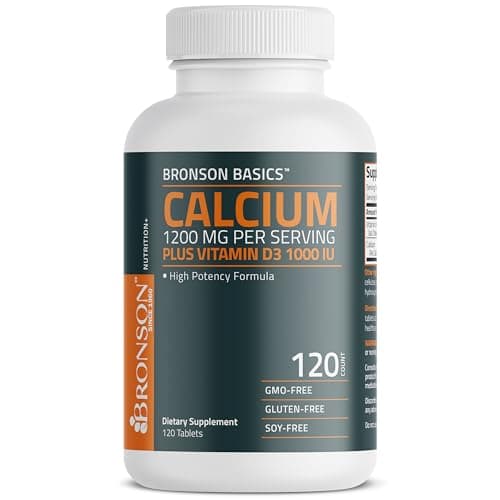
Bronson Calcium 1200mg Per Serving Plus Vitamin D3 1000 IU…
Cost per serving
$0.08
120 servings · ~120-day supply

Solgar Vitamin D3 (Cholecalciferol) 250 MCG (10,000 IU)
Cost per serving
$0.12
120 servings · ~120-day supply
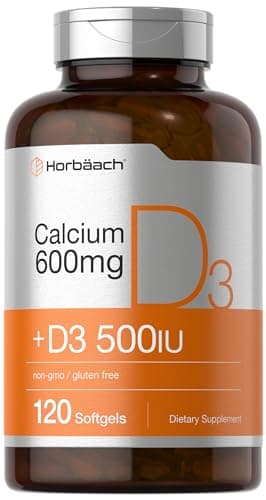
Horbäach Calcium Supplement with Vitamin D3 | 600 mg…
Cost per serving
$0.04
120 servings · ~120-day supply
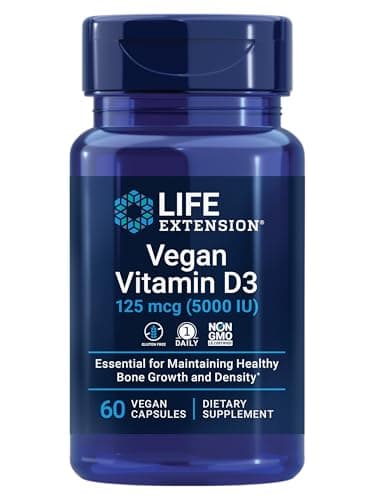
Life Extension Vegan Vitamin D3, 125 mcg (5000 IU)
Cost per serving
$0.28
60 servings · ~60-day supply
Related guides
The Full GLP-1 Supplement Stack: What to Take & Cost Per Day
A cost-per-dose companion supplement stack for GLP-1 users (Ozempic/Mounjaro): protein, vitamin D, magnesium, B12, omega-3 — and the full daily cost.
Testosterone Supplements: What the Evidence Actually Supports
A hedged, evidence-minded look at testosterone supplements: why most "T-booster" blends underdeliver, and the cheap deficiency-correction approach.
Vitamin D3 vs D2: which form actually raises your levels (and why it matters)
D3 and D2 are not interchangeable. D3 raises and holds your blood vitamin D more effectively per dose, while D2 — the common US prescription form — is less efficient. Here's the evidence, the sourcing, and what vegans should know.
Can you take too much? The supplement upper limits that actually matter
Water-soluble vitamins you flush out; fat-soluble vitamins and minerals accumulate and have real ceilings. The NIH upper limits worth knowing — vitamin A, D, iron, zinc, B6, selenium — and why megadoses backfire.