Vitamin D3 and K2: should you take them together?
Quick answer
D3 helps you absorb calcium; K2 is thought to steer that calcium into bone instead of arteries. Here's what the evidence actually supports, sensible doses, and the one group who must check with a doctor first.
Alex Soto, Founder, VitaminDB
6 min readUpdated 6/28/2026 NIH-sourced
On this page
"D3 + K2" is one of the most-marketed supplement pairings, and the logic behind it is genuinely interesting. But "interesting mechanism" and "proven you need it" are different things, so here's the honest version.
What each one does
Vitamin D3 (cholecalciferol) is what lets your gut absorb calcium in the first place, and it's the form that raises and holds your blood 25(OH)D best — more reliably than plant-derived D2 (the full comparison is on vitamin D3 vs D2). The Daily Value is 800 IU (20 mcg); a common maintenance dose is 1,000–2,000 IU/day, and the adult Tolerable Upper Intake Level is 4,000 IU (100 mcg) — per the NIH Office of Dietary Supplements.
Vitamin K2 (menaquinone) activates proteins — chiefly osteocalcin and matrix-Gla protein — that are involved in putting calcium into bone and keeping it out of arterial walls. MK-7 is the long-acting form most combos use.
The actual case for taking them together
The hypothesis is clean: D3 increases how much calcium you absorb, and K2 helps route that calcium to the skeleton rather than soft tissue. Some randomized trials suggest K2 supports bone-mineral density and arterial flexibility. But the evidence is promising, not definitive — most people with a normal diet aren't K2-deficient, and the headline benefits of vitamin D were established with D3 alone.
So the fair takeaway: a D3+K2 combo is a reasonable, low-risk pairing — most compelling if you're taking higher D doses or specifically care about bone and vascular health — but plain D3 is perfectly fine for general supplementation.
The buying trap
Combos love to put "+ K2" on the label with a token, near-useless amount. Two rules:
- Check the K2 dose — aim for roughly 90–120 mcg of MK-7, not 5 mcg.
- Compare on cost per dose, not the front-of-bottle number. Vitamin D is one of the cheapest supplements that exists, so don't pay a big premium for the combo. See the live best-value vitamin D3 ranking and the vitamin D3 hub and vitamin K2 hub for current cost-per-dose picks. (How we compute that is on the methodology page.)
The one real caution
If you take a vitamin-K-antagonist blood thinner (warfarin), do not add K2 without your prescriber's sign-off — it can blunt the drug. This is the single most important line in this guide.
Bottom line
Take D3 for the well-established benefit; add K2 (as MK-7, ~100 mcg) if you want the bone/vascular-routing rationale and you're not on warfarin. Don't overpay for a tiny K2 add-on, and dose D3 to a blood test where you can.
Covered nutrients: Vitamin D3, Vitamin K2
See the live cost-per-dose data
This guide is editorial — the prices below are real and current.
Frequently asked questions
Do I actually need K2 with vitamin D?
No — plain D3 is fine for most people, and the strongest evidence for vitamin D is on its own. The case for adding K2 is mechanistic and promising rather than settled, and it matters most at higher D doses where calcium handling is under more load. If you take a combo, just don't overpay for a token amount of K2.
How much of each should I take?
A common maintenance range is 1,000–2,000 IU (25–50 mcg) of D3 per day, ideally guided by a 25(OH)D blood test; the adult upper limit is 4,000 IU (100 mcg). K2 is usually dosed around 90–120 mcg as MK-7, the long-acting form. These are general references from the NIH, not medical advice.
Who should NOT take K2 freely?
Anyone on a vitamin-K-antagonist blood thinner such as warfarin. K2 can interfere with how that drug works — you must talk to the prescriber before adding it. (Newer anticoagulants like apixaban are not affected the same way, but still clear it with your doctor.)
Where these numbers come from
Cost figures on this page are computed from 396 active Vitamin D3 / Vitamin K2 listings we track, last re-priced . Cost per dose is price ÷ (servings × dose), computed per listing — not a price we are quoted. Listings under $1 or with fewer than 3 servings are excluded, because both are usually a parse error rather than a bargain.
- Amazon.com · 395
- SuperSmart · 1
Prices move. Figures written into the text are re-checked against live data on a schedule; the ranking pages are always the current number.
Sources
Health claims on this page are drawn from these sources. Prices and cost-per-dose figures come from our own tracked listings, not from the sources below.
- 1.Vitamin D: Fact Sheet for Health Professionals — NIH Office of Dietary Supplements
- 2.Vitamin K: Fact Sheet for Health Professionals — NIH Office of Dietary Supplements
Deals on these nutrients
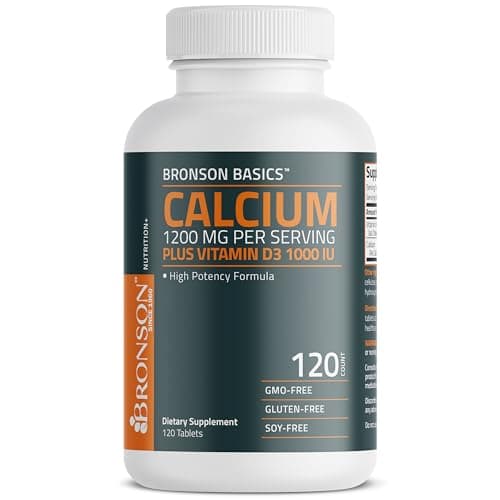
Bronson Calcium 1200mg Per Serving Plus Vitamin D3 1000 IU…
Cost per serving
$0.08
120 servings · ~120-day supply

Solgar Vitamin D3 (Cholecalciferol) 250 MCG (10,000 IU)
Cost per serving
$0.12
120 servings · ~120-day supply
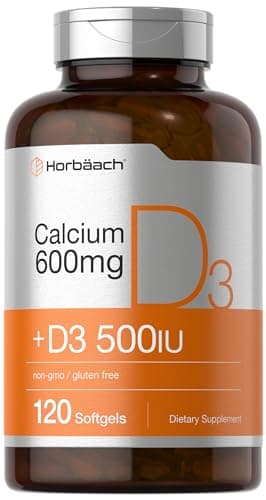
Horbäach Calcium Supplement with Vitamin D3 | 600 mg…
Cost per serving
$0.04
120 servings · ~120-day supply
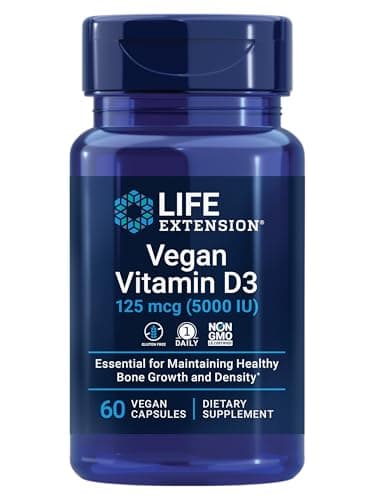
Life Extension Vegan Vitamin D3, 125 mcg (5000 IU)
Cost per serving
$0.28
60 servings · ~60-day supply
Related guides
Vitamin D3: how much do you actually need through winter?
Official RDAs are floors, not optima. Here's the practical dosing range, when to take it, and why D3 + K2 is usually a smarter buy than D3 alone.
Vitamin K2 (MK-7): dose, why it pairs with D3, and cost
Vitamin K2 helps route calcium to bone and away from arteries, which is why it pairs with D3. MK-7 vs MK-4, the 90-180 mcg dose, the warfarin warning, and cost per mcg.
The Full GLP-1 Supplement Stack: What to Take & Cost Per Day
A cost-per-dose companion supplement stack for GLP-1 users (Ozempic/Mounjaro): protein, vitamin D, magnesium, B12, omega-3 — and the full daily cost.
Testosterone Supplements: What the Evidence Actually Supports
A hedged, evidence-minded look at testosterone supplements: why most "T-booster" blends underdeliver, and the cheap deficiency-correction approach.