Does creatine cause hair loss? What the evidence actually says
Quick answer
No study has ever shown creatine causes hair loss. The concern comes from one 2009 trial in rugby players that found a rise in DHT (a hormone linked to male-pattern baldness) — but it measured the hormone, not actual hair, and it has never been replicated. If you're genetically prone to baldness, that's a theoretical reason for caution, not evidence of a real effect.
Alex Soto, Founder, VitaminDB
5 min readUpdated 7/31/2026 NIH-sourced
On this page
If you've read that creatine causes hair loss, the entire idea traces back to one study, from 2009, that never actually looked at hair. It's a good case study in how a single result gets amplified into received wisdom. Here's the honest version.
Where the fear comes from
In 2009, a study of 20 college-aged rugby players found that three weeks of creatine supplementation (a loading phase followed by maintenance) was associated with an increase in DHT — dihydrotestosterone — and in the ratio of DHT to testosterone.
DHT is relevant because it's the hormone most tied to male-pattern hair loss in genetically susceptible people. So the logic became: creatine → more DHT → more hair loss.
What that study did and didn't show
Here's the part that matters:
- It measured a hormone in the blood, not hair. No hair counts, no follicle assessment, no reported shedding. The link to actual hair loss is an inference, not a finding.
- It was small (20 people) and short (three weeks).
- No subsequent study has replicated the DHT increase. Later reviews looking at creatine and hormones have not confirmed it.
So the state of the evidence is: zero studies showing creatine causes hair loss, and one unreplicated study showing a hormonal change that could theoretically be relevant in people already prone to baldness.
How to think about it honestly
If you have no family history of male-pattern baldness, there's no meaningful signal here to act on.
If you are genetically predisposed and want to be conservative, that's a reasonable personal choice — but be clear about what you're deciding on. You'd be avoiding a supplement with a strong safety and performance record based on a single hormone measurement in 20 rugby players that no one has been able to reproduce. Some people make that trade; many don't. If it worries you, raise it with a clinician or dermatologist.
The rest of creatine's safety picture
For everything other than hair, the NIH summary is unremarkable: few safety concerns reported at typical doses — up to 20 g/day for a week of loading and 3–5 g/day for up to 12 weeks — with weight gain from water retention the adverse effect it lists. Hair loss is not among them.
For context, creatine monohydrate is among the most-studied supplements in existence. At the standard 3–5 g/day, it has a strong safety record in healthy people. The one consistent, real side effect is a small amount of water-weight gain early on. The commonly repeated claims about kidney damage in healthy people haven't held up in the research either.
If you want the value and dosing details, see creatine cost per gram and the creatine hub.
Bottom line
No study has shown creatine causes hair loss. The worry rests on a single 2009 trial that measured a hormone (DHT), not hair, and has never been replicated. If baldness runs in your family and you'd rather be cautious, that's your call — but it's a decision made on a theoretical signal, not on evidence. This is general information, not medical advice.
Covered nutrients: Creatine
See the live cost-per-dose data
This guide is editorial — the prices below are real and current.
Frequently asked questions
Does creatine cause hair loss?
No study has shown that it does. The worry comes from a single 2009 study that found creatine raised DHT — a hormone associated with male-pattern hair loss — but it did not measure or find any actual hair loss, and the result has not been replicated. This is general information, not medical advice.
What did the 2009 creatine study actually find?
In 20 college rugby players, three weeks of creatine (a loading dose then maintenance) was associated with higher levels of DHT (dihydrotestosterone) and a higher DHT-to-testosterone ratio. It measured a hormone, not hair follicles, and no hair loss was observed or assessed. No later study has reproduced the DHT finding.
Should I avoid creatine if male-pattern baldness runs in my family?
There's no direct evidence creatine causes or accelerates baldness. If you're genetically predisposed and want to be cautious, that's a personal risk call — but you'd be acting on a single unreplicated hormone measurement, not on evidence of hair loss. Discuss it with a clinician if you're concerned.
Is creatine safe otherwise?
Creatine monohydrate is one of the most studied supplements there is, with a strong safety record at the standard 3–5 g/day in healthy people. The main real side effect is a small amount of water-weight gain. Not medical advice.
Where these numbers come from
Cost figures on this page are computed from 78 active Creatine listings we track, last re-priced . Cost per dose is price ÷ (servings × dose), computed per listing — not a price we are quoted. Listings under $1 or with fewer than 3 servings are excluded, because both are usually a parse error rather than a bargain.
- Amazon.com · 78
Prices move. Figures written into the text are re-checked against live data on a schedule; the ranking pages are always the current number.
Sources
Health claims on this page are drawn from these sources. Prices and cost-per-dose figures come from our own tracked listings, not from the sources below.
- 1.Dietary Supplements for Exercise and Athletic Performance: Fact Sheet for Health Professionals — NIH Office of Dietary Supplements
Deals on these nutrients
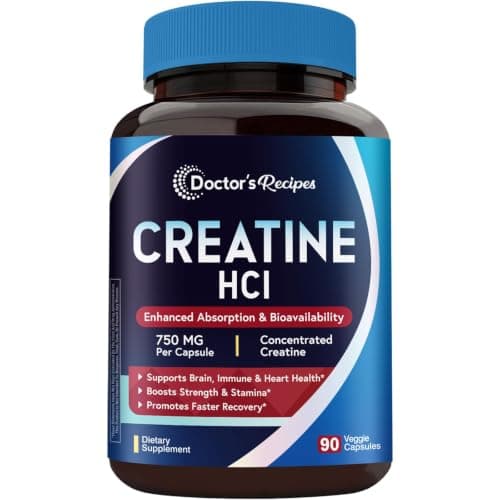
Doctor's Recipes Creatine HCl Capsules
Cost per serving
$0.13
90 servings · ~90-day supply
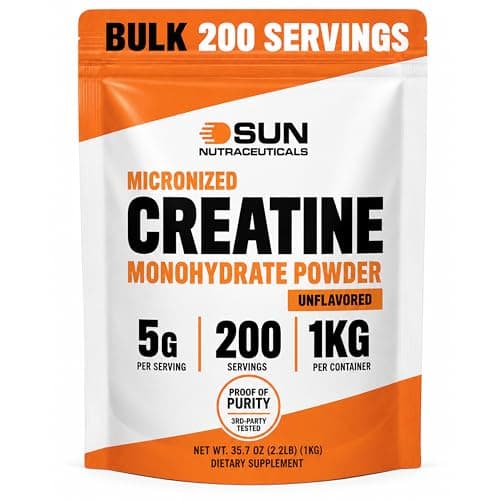
Micronized Creatine Monohydrate Powder 1kg (2.2lbs
Cost per serving
$0.12
200 servings · ~200-day supply
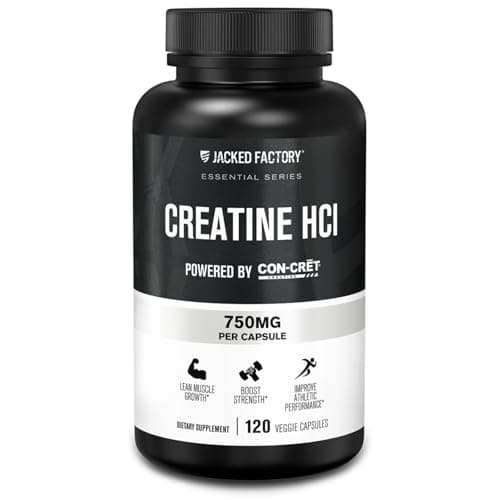
Jacked Factory Creatine HCl Capsules - CON CRET Creatine Pills…
Cost per serving
$0.17
120 servings · ~120-day supply
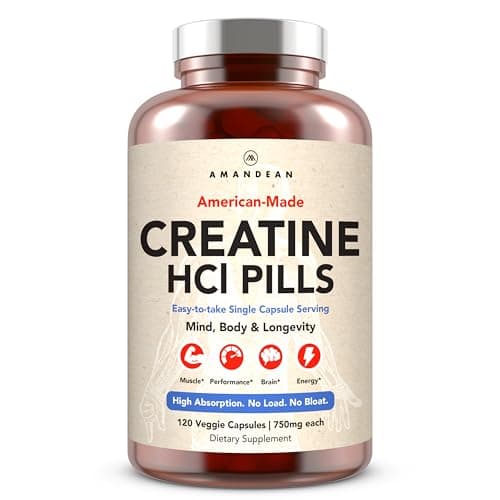
AMANDEAN Creatine HCl Capsules & Pills
Cost per serving
$0.25
120 servings · ~120-day supply
Related guides
Creatine for Women: Does It Work, How Much to Take, and What It Costs
An honest, data-backed guide to creatine for women — the studied form, the ~3-5 g dose, the "will it make me bulky" question, and real cost per dose.
Creatine Side Effects: What the Evidence Actually Shows
An honest, hedged look at creatine monohydrate side effects — water weight, GI upset, and the kidney myth — using only what the research generally supports.
When to Take Creatine: Does Timing Actually Matter?
An honest, data-informed guide to creatine timing — why consistency and total daily dose matter far more than the exact hour you take it.
Creatine Cost Per Gram: Monohydrate vs "Advanced" Forms
Creatine monohydrate is the value and evidence winner. Compare cost per gram across 47 tracked listings and why "advanced" forms cost more.